
















9 Quick Length Measurement Conversion Guide Shortcuts You’ll Love
If you’ve ever found yourself stuck converting meters to feet in the middle of a task, or pausing mid-calculation just to remember how many centimeters are in an inch, you’re not alone. Length conversions seem simple on paper, but in real life they can slow you down, interrupt your flow, and introduce unnecessary mistakes. What most people don’t realize is that you don’t always need exact formulas—you need smart shortcuts.
This guide is built from practical experience, not textbook theory. These are the kinds of tricks that save time when you’re measuring furniture, working on DIY projects, studying, or even traveling. The goal here isn’t perfection—it’s speed, confidence, and accuracy that’s “good enough” for real-world use.
Let’s get into the shortcuts that actually make life easier.
shortcut 1: the “multiply by 3” trick for meters to feet
One of the fastest and most useful approximations is converting meters to feet by simply multiplying by 3.
1 meter ≈ 3.28 feet
Shortcut: just use 3
So:
- 2 meters ≈ 6 feet
- 5 meters ≈ 15 feet
You lose a little precision, but for everyday use, it’s surprisingly reliable. If you want slightly better accuracy, multiply by 3 and add a tiny bit (around 10%). For example:
5 meters → 5 × 3 = 15 → add ~1.5 → ≈ 16.5 feet
This shortcut is perfect when estimating room sizes, heights, or distances without needing a calculator.
mini exercise
Try estimating the height of a 1.8 meter person using this trick.
shortcut 2: inches to centimeters using “times 2.5”
The exact conversion is:
1 inch = 2.54 cm
But you don’t need that level of detail most of the time.
Shortcut: multiply inches by 2.5
Examples:
- 10 inches ≈ 25 cm
- 20 inches ≈ 50 cm
If you need a bit more precision, just add a tiny adjustment:
Add 1 cm for every 20 inches.
This shortcut is especially helpful for screen sizes, clothing measurements, and small objects.
quick tip
Think “inch → double it, then add half of it again.”
shortcut 3: kilometers to miles using “divide by 1.6”
The exact relation:
1 km ≈ 0.621 miles
Shortcut:
Divide kilometers by 1.6
Examples:
- 16 km ÷ 1.6 = 10 miles
- 8 km ÷ 1.6 = 5 miles
If dividing feels slow, use an even faster trick:
Half the number, then subtract 10%
Example:
10 km → half is 5 → minus 10% (0.5) → 4.5 miles (close enough)
This is incredibly useful for travel, running, and navigation.
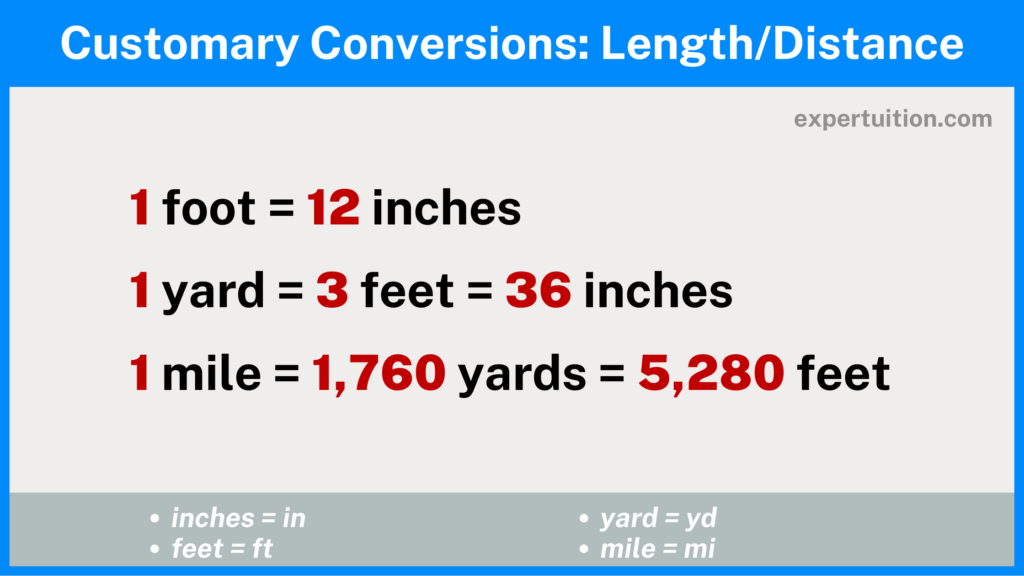
shortcut 4: feet to meters using “divide by 3”
Since 1 meter ≈ 3.28 feet, you can reverse the earlier shortcut.
Shortcut:
Divide feet by 3
Examples:
- 9 feet ÷ 3 = 3 meters
- 15 feet ÷ 3 = 5 meters
For slightly better accuracy, subtract a small fraction afterward.
This is useful when converting heights, room dimensions, or construction measurements.
mental check
If your answer feels too large, you probably forgot to divide.
shortcut 5: centimeters to meters by shifting the decimal
This is one of the simplest but most overlooked shortcuts.
100 cm = 1 meter
Shortcut:
Move the decimal point two places left
Examples:
- 250 cm → 2.5 m
- 75 cm → 0.75 m
No math required—just shift the decimal.
This is especially helpful in schoolwork and engineering basics.
shortcut 6: millimeters to centimeters by “divide by 10”
10 mm = 1 cm
Shortcut:
Move decimal one place left
Examples:
- 50 mm → 5 cm
- 7 mm → 0.7 cm
This is essential when working with small measurements like tools, screws, or technical drawings.
real-life use
If you’re measuring something with a ruler, this shortcut helps you quickly switch units without confusion.
shortcut 7: yards to meters using “same number minus a bit”
1 yard ≈ 0.914 meters
Shortcut:
Keep the number, subtract about 10%
Examples:
- 10 yards → 10 − 1 = 9 meters
- 50 yards → 50 − 5 = 45 meters
It’s not exact, but it’s quick and surprisingly close.
This is useful in sports fields, fabric measurements, and outdoor distances.
shortcut 8: miles to kilometers using “times 1.5”
Exact:
1 mile ≈ 1.609 km
Shortcut:
Multiply miles by 1.5, then add a little extra
Examples:
- 10 miles → 15 km (add ~1 → 16 km)
- 5 miles → 7.5 km (add ~0.5 → 8 km)
This gives a quick mental estimate without needing precise multiplication.
use case
Great for converting road distances when traveling internationally.
shortcut 9: “anchor values” method
Instead of memorizing dozens of formulas, remember a few key anchor values:
- 1 meter ≈ 3.3 feet
- 1 inch ≈ 2.5 cm
- 1 mile ≈ 1.6 km
- 1 yard ≈ 0.9 meters
Then build everything around these.
Example:
If you know 1 meter ≈ 3.3 feet, then:
2 meters ≈ 6.6 feet
3 meters ≈ 9.9 feet
This method trains your brain to think in relationships instead of formulas.
why this works better than memorizing formulas
Most people try to memorize exact numbers, but under pressure, those numbers slip away. Shortcuts work because they reduce cognitive load. Instead of recalling complex decimals, you rely on patterns and approximations.
Over time, these shortcuts become automatic. You stop “calculating” and start “seeing” the answer.
common mistakes to avoid
Even with shortcuts, there are a few traps to watch out for:
- mixing up direction (multiplying instead of dividing)
- forgetting whether the number should get bigger or smaller
- overusing shortcuts when exact precision is required
A good rule:
If accuracy matters (engineering, exams), double-check.
If speed matters (daily life), trust the shortcut.
practice section
Try these without a calculator:
- Convert 6 meters to feet
- Convert 20 inches to cm
- Convert 12 km to miles
- Convert 30 feet to meters
Answers (approx):
- 18–20 feet
- 50 cm
- ~7.5 miles
- ~10 meters
If you’re within 5–10%, you’re doing great.
real-life scenarios where these shortcuts shine
Imagine you’re buying furniture online. The dimensions are in inches, but your room is measured in centimeters. Instead of opening a calculator, you mentally convert and instantly know if it fits.
Or you’re traveling and see a distance in kilometers. With a quick mental conversion, you understand how far it really is in miles.
These shortcuts remove friction from everyday decisions.
building your own shortcuts
Once you understand the logic, you can create your own.
For example:
If 1 meter ≈ 100 cm, then:
Half a meter ≈ 50 cm
Quarter meter ≈ 25 cm
This way, you’re not memorizing—you’re reasoning.
faqs
- Are these shortcuts accurate enough for exams?
They’re great for quick estimates, but for exams requiring precision, you should use exact formulas unless instructed otherwise. - Which shortcut is the most useful to learn first?
The meter-to-feet and inch-to-centimeter shortcuts are the most commonly used in daily life. - How can I remember all these conversions easily?
Focus on anchor values and practice using them in real situations. Repetition builds memory faster than memorization alone. - What’s the fastest way to improve at conversions?
Practice mental math daily with small examples. Even converting random objects around you helps. - When should I avoid using shortcuts?
Avoid them in scientific calculations, engineering work, or situations where precision is critical. - Can I rely on estimation in professional work?
In early planning or rough estimation, yes. But final measurements should always be exact.
closing thoughts
Length conversion doesn’t have to feel like a chore. With the right shortcuts, it becomes second nature—almost like a reflex. The more you use these tricks, the less you’ll depend on calculators or charts.
And once that happens, you’ll notice something interesting: you’re no longer converting units—you’re understanding them.