











































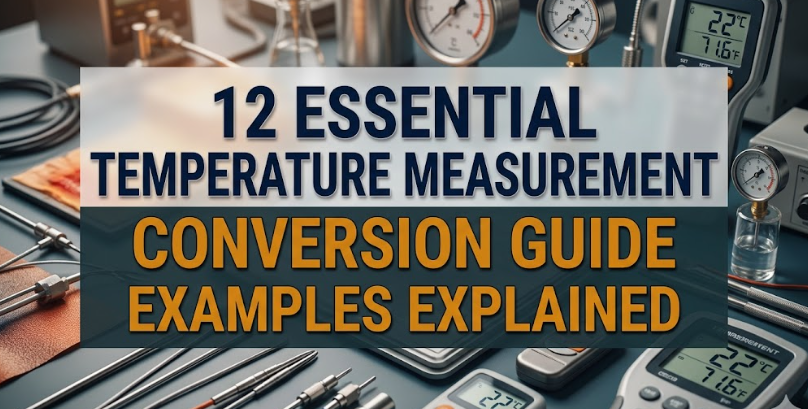

12 Essential Temperature Measurement Conversion Guide Examples Explained
Temperature is one of those everyday concepts we rarely think deeply about—until we need to convert it. Whether you’re cooking, traveling, studying science, or checking weather updates, switching between Celsius, Fahrenheit, and Kelvin becomes surprisingly important. This guide isn’t just about formulas; it’s about understanding how these conversions fit naturally into real-life situations.
Let’s walk through twelve essential examples that make temperature conversion practical, memorable, and genuinely useful.
understanding the three main temperature scales
Before diving into examples, it helps to grasp the basics. Celsius is used in most parts of the world and is based on water freezing at 0° and boiling at 100°. Fahrenheit, commonly used in the United States, sets freezing at 32° and boiling at 212°. Kelvin, used in scientific contexts, starts at absolute zero, the point where molecular motion theoretically stops.
The relationship between them is mathematical but also conceptual—each scale tells a slightly different story about heat.
example 1: converting a pleasant day temperature
Imagine stepping outside and hearing it’s 25°C. That feels comfortable in many regions. But what does that mean in Fahrenheit?
Using the formula:
F = (C × 9/5) + 32
So:
25 × 9/5 = 45
45 + 32 = 77°F
This example matters because weather apps often display different units depending on your region. Knowing that 25°C equals 77°F helps you instantly interpret comfort levels.
real-life insight
If someone says 77°F, think “light clothing, mild sunshine.” It’s a mental shortcut that builds intuition over time.
example 2: freezing point comparison
Water freezes at 0°C. Converting that:
F = (0 × 9/5) + 32 = 32°F
This is one of the most important anchor points. Whenever you see 32°F, you know ice is forming.
practical use
Road conditions, refrigeration, and winter safety all rely on this understanding.
example 3: boiling point translation
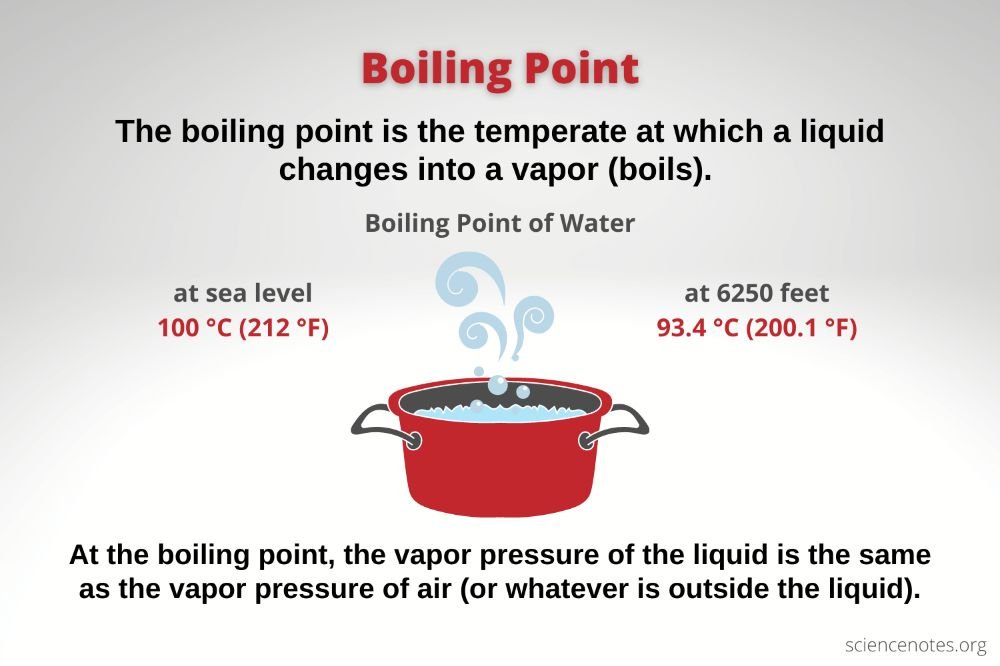
Water boils at 100°C.
F = (100 × 9/5) + 32 = 212°F
This example is essential in cooking and science experiments. If a recipe says boil water at 212°F, you immediately know it corresponds to 100°C.
memory trick
Think: “100 becomes 212”—a doubling plus a little extra.
example 4: body temperature conversion
Normal human body temperature is around 37°C.
F = (37 × 9/5) + 32
= 66.6 + 32
≈ 98.6°F
This number is widely recognized in medicine. If someone mentions 98.6°F, it indicates a healthy baseline.
why it matters
Understanding this helps when reading thermometers or medical advice from different countries.
example 5: converting cold weather extremes
Suppose it’s −10°C outside.
F = (−10 × 9/5) + 32
= −18 + 32
= 14°F
That’s quite cold. This example helps travelers prepare for unfamiliar climates.
practical takeaway
Negative Celsius temperatures don’t always mean negative Fahrenheit—another useful insight.
example 6: oven temperature conversions
Many recipes use Celsius, others Fahrenheit. For example:
180°C → ?°F
F = (180 × 9/5) + 32
= 324 + 32
= 356°F
Most ovens round this to 350°F.
real-life hack
180°C ≈ 350°F is a commonly used kitchen shortcut.
example 7: room temperature understanding
Room temperature is typically around 20°C.
F = (20 × 9/5) + 32
= 36 + 32
= 68°F
This helps when storing items like medicines or food.
practical application
Labels that say “store at room temperature” become clearer across regions.
example 8: converting to kelvin for science
Kelvin is crucial in physics and chemistry.
Formula:
K = C + 273.15
So:
25°C = 298.15 K
why it matters
Kelvin removes negative numbers and is used in scientific calculations involving energy and thermodynamics.
example 9: absolute zero explained
Absolute zero is −273.15°C.
In Kelvin:
K = −273.15 + 273.15 = 0 K
This is the lowest possible temperature.
conceptual insight
At this point, molecular motion theoretically stops. It’s not just a number—it’s a physical limit.
example 10: converting high heat (desert temperatures)
Let’s say it’s 45°C in a desert.
F = (45 × 9/5) + 32
= 81 + 32
= 113°F
This gives a clearer sense of extreme heat for those used to Fahrenheit.
real-life connection
Travelers and weather reporters often rely on this conversion.
example 11: quick mental estimation trick
Instead of exact formulas, try this:
Double the Celsius value and add 30.
Example:
25°C → (25 × 2) + 30 = 80°F (actual is 77°F)
This isn’t exact but works well for quick estimates.
when to use
Casual conversations or quick decisions.
example 12: reversing the conversion
Sometimes you need to go from Fahrenheit to Celsius.
Formula:
C = (F − 32) × 5/9
Example:
68°F → (68 − 32) × 5/9
= 36 × 5/9
= 20°C
why it’s useful
Helps interpret foreign weather forecasts or scientific data.
bringing it all together
Temperature conversion is more than formulas—it’s about building familiarity. Over time, you begin to recognize patterns:
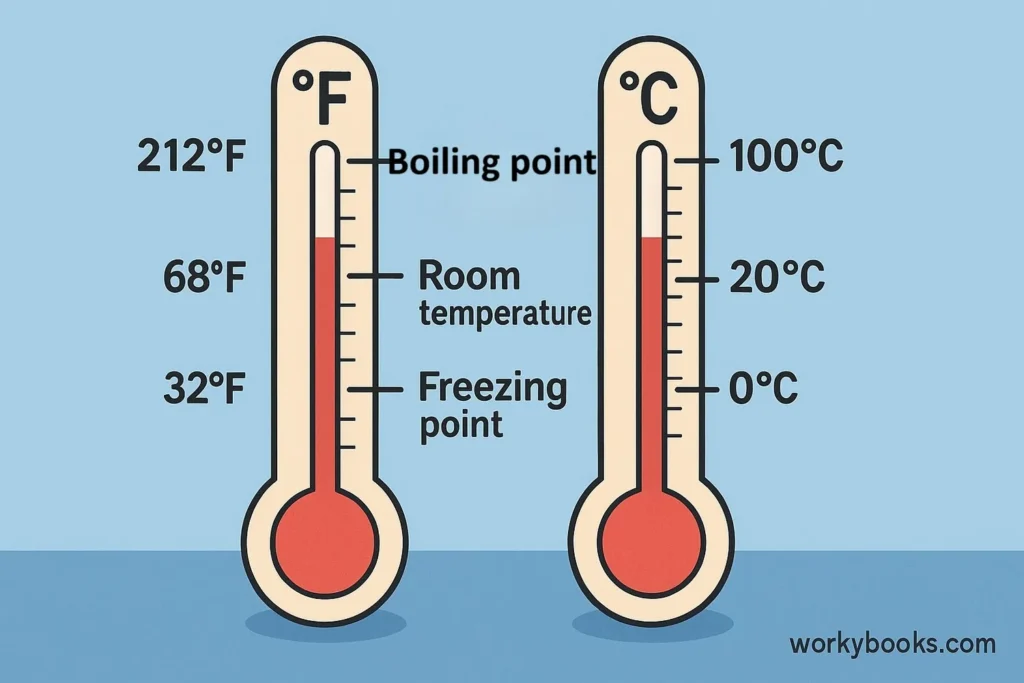
0°C = 32°F (freezing)
20°C = 68°F (room temperature)
37°C = 98.6°F (body temperature)
100°C = 212°F (boiling)
These anchor points act like mental landmarks, making conversions almost automatic.
A deeper understanding also connects temperature to real-world experiences: the warmth of sunlight, the chill of winter, or the precision of a laboratory experiment.
practical tips for daily life
• memorize key reference points instead of every formula
• use approximation tricks for quick thinking
• rely on tools when precision matters
• practice with real-life examples like cooking or weather
Over time, these habits turn a technical skill into second nature.
frequently asked questions
- why are there different temperature scales?
Different scales were developed historically for various purposes. Celsius is based on water behavior, Fahrenheit on human comfort and early scientific measurements, and Kelvin on absolute physical principles. - which temperature scale is most accurate?
All scales are equally accurate; they simply use different reference points. Kelvin is preferred in science because it starts at absolute zero. - how can I quickly estimate conversions without a calculator?
Double the Celsius value and add 30 to estimate Fahrenheit. For reverse, subtract 30 and divide by 2. - why does kelvin not use degrees?
Kelvin is an absolute scale, so it doesn’t use “degrees.” It starts from zero, representing complete absence of thermal energy. - what is the easiest temperature to remember for conversions?
0°C = 32°F and 100°C = 212°F are the most important. From these, you can estimate others easily. - is negative temperature possible in kelvin?
No, Kelvin starts at absolute zero (0 K), so negative values do not exist on this scale.
In the end, mastering temperature conversion isn’t about memorizing equations—it’s about building a sense of temperature across different systems. Once that intuition forms, numbers stop feeling abstract and start telling real, meaningful stories about the world around you.