
















7 Fast Volume Measurement Conversion Guide Fixes for Everyday Use
There’s something quietly frustrating about standing in a kitchen, staring at a recipe, and realizing the measurements don’t match the tools in your drawer. A cup here, a milliliter there, and suddenly what should have been a simple task becomes a guessing game. Over time, I’ve learned that volume conversion isn’t about memorizing endless numbers—it’s about understanding patterns, building habits, and using a few clever fixes that save time and prevent mistakes.
This guide isn’t just a collection of rules. It’s a lived-in, practical approach shaped by everyday situations—cooking late at night, mixing ingredients in a hurry, or trying to scale a recipe without ruining it. The following seven fixes are designed to make volume conversion faster, simpler, and far less stressful.
fix one: anchor yourself to a few core conversions
Instead of trying to remember everything, focus on a handful of core relationships. These act like mental anchors.
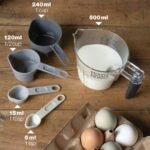
1 liter = 1000 milliliters
1 cup ≈ 240 milliliters
1 tablespoon ≈ 15 milliliters
1 teaspoon ≈ 5 milliliters
That’s it. With just these, you can derive almost everything else.
For example, if you know a cup is about 240 ml, then half a cup becomes 120 ml without needing to look it up. Over time, your brain starts doing these conversions automatically. It’s less about memorization and more about familiarity.
A small habit that helped me: whenever I cooked, I’d quickly estimate the conversion before checking. Even when I was wrong, I learned faster.
fix two: round strategically instead of chasing perfection
Precision matters in some fields, but in everyday life—especially cooking—perfect accuracy is often unnecessary.
If a recipe calls for 237 ml, just use 240 ml.
If it says 14.8 ml, call it 15 ml.
The difference is negligible in most situations, but the time saved is significant. This approach reduces mental load and speeds up decision-making.
I once spent five minutes trying to measure 118 ml exactly. Now I just pour half a cup and move on. The result? No noticeable difference, but a much smoother process.
fix three: convert once, write it down, reuse forever
If you find yourself converting the same measurements repeatedly, stop doing it every time. Convert once, then record it somewhere accessible.
A small notebook, a note on your phone, or even a sticky note on your kitchen wall can become your personal conversion library.
Examples:
- 1/3 cup ≈ 80 ml
- 3/4 cup ≈ 180 ml
- 2 cups ≈ 480 ml
This turns repeated effort into a one-time investment. Over weeks and months, your list grows into something incredibly useful.
I still use a handwritten list I made years ago. It’s not perfect, but it’s fast—and that’s what matters.

fix four: think in ratios, not isolated numbers
One of the biggest breakthroughs in understanding volume conversion is shifting from numbers to relationships.
If you know:
1 cup = 240 ml
Then:
2 cups = 480 ml
4 cups = 960 ml
Half a cup = 120 ml
This ratio-based thinking reduces the need for constant recalculation. You’re no longer solving a new problem each time—you’re scaling a familiar one.
This is especially useful when doubling or halving recipes. Instead of converting each ingredient individually, you adjust everything proportionally.
fix five: use visual estimation as a backup skill
Not every situation allows for precise measuring tools. Sometimes, you’re working with what you have.
A cup is roughly the size of a standard tea mug.
A tablespoon is about the size of a large spoon.
A teaspoon is a small spoon.
While not exact, these visual cues can get you surprisingly close. Over time, your intuition improves.
I remember cooking at a friend’s place with no measuring tools at all. Everything was estimated. The dish turned out fine—not perfect, but completely enjoyable. That experience taught me that flexibility matters more than precision in many everyday contexts.
fix six: avoid mixing measurement systems mid-process
One of the most common sources of confusion is switching between systems halfway through a task.
If you start with metric (ml, liters), stay with metric.
If you start with imperial (cups, tablespoons), stick with that.
Mixing systems forces constant conversion, increasing the chance of error.
A better approach is to convert everything at the beginning. Take a moment, align all measurements to one system, and then proceed smoothly.
This single habit can eliminate a surprising number of mistakes.
fix seven: build a mental “conversion map” instead of memorizing lists
Instead of memorizing isolated facts, build a mental map of how units relate to each other.
Imagine it like this:
- teaspoons connect to tablespoons
- tablespoons connect to cups
- cups connect to liters
Once you see the structure, moving between units becomes intuitive.
For example:
3 teaspoons = 1 tablespoon
16 tablespoons = 1 cup
So:
48 teaspoons = 1 cup
You don’t need to memorize “48 teaspoons = 1 cup.” You derive it from the relationships you already know.
This approach turns conversion into a flexible skill rather than a rigid memory test.

bringing it all together: a real-life scenario
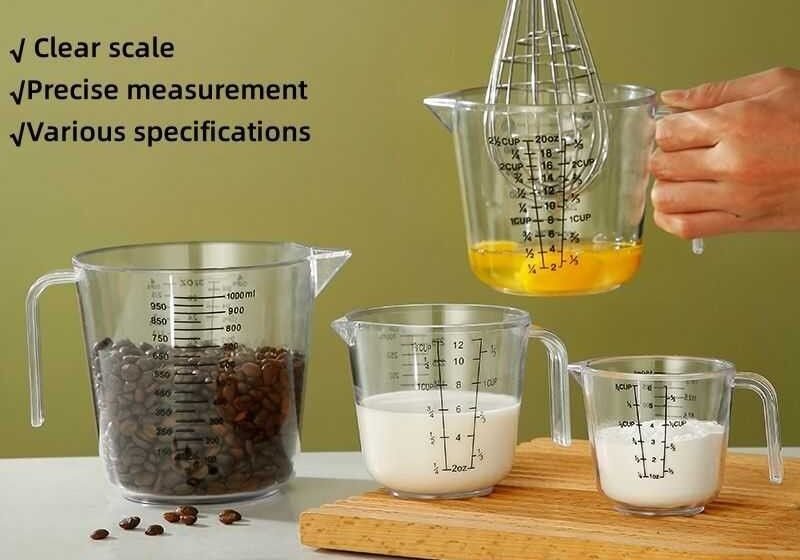
Let’s say you’re following a recipe that uses cups, but you only have a measuring jug marked in milliliters.
The recipe calls for:
1 1/2 cups of milk
Using your anchors:
1 cup ≈ 240 ml
So:
1.5 cups ≈ 360 ml
You round slightly if needed and move on. No stress, no confusion.
If you’ve written this conversion down before, it’s even faster. If not, you derive it quickly using ratios.
This is how the fixes work together—not as separate tricks, but as a system.
the quiet confidence of understanding
There’s a subtle confidence that comes from understanding volume conversion. You stop second-guessing yourself. You stop pausing mid-task to look things up. You move through tasks with a sense of flow.
It’s not about being perfect. It’s about being capable.
And once you reach that point, something interesting happens: you stop thinking about conversions altogether. They become part of how you work, not something extra you have to do.
common pitfalls you’ll naturally avoid
As these fixes become habits, you’ll notice certain mistakes disappearing:
- Over-measuring because of fear of inaccuracy
- Constantly checking conversion charts
- Mixing units and getting inconsistent results
- Wasting time on unnecessary precision
Instead, your process becomes smoother, faster, and more intuitive.
a small daily practice that changes everything
If you want to internalize these fixes, try this:
Each day, pick one random conversion and estimate it mentally before checking.
For example:
“How many milliliters in 2 cups?”
You think:
2 × 240 = 480 ml
Then you verify. This simple exercise strengthens your intuition over time.
It takes less than a minute, but the long-term effect is significant.
frequently asked questions
- why do different sources give slightly different conversion values?
Because some measurements are standardized differently across regions. For example, a US cup is about 240 ml, while other systems may define it slightly differently. For everyday use, small differences don’t usually matter.
- is it okay to round conversions when cooking?
Yes, in most cases. Cooking is flexible, and small variations rarely affect the outcome. Baking may require more precision, but even there, slight rounding is often acceptable.
- what’s the fastest way to convert between cups and milliliters?
Use the anchor: 1 cup ≈ 240 ml. Multiply or divide based on what you need. Over time, this becomes second nature.
- how can i avoid mistakes when converting large quantities?
Work step by step. Convert one unit clearly, then scale it using ratios. Writing intermediate results can also help reduce errors.
- do i need to memorize all conversion formulas?
No. Focus on a few core relationships and build from them. Understanding patterns is far more effective than memorizing long lists.
- what should i do if i don’t have measuring tools?
Use visual estimation and consistency. Even if it’s not perfect, consistent proportions usually lead to acceptable results.
closing thought
Volume conversion doesn’t have to feel like a technical chore. With the right mindset and a few practical fixes, it becomes a quiet skill that supports everything you do—from cooking to everyday problem-solving.
Once you stop chasing exact numbers and start understanding relationships, everything becomes easier. And in the end, that’s what these fixes are really about: making things simpler, faster, and more natural in your daily life.