










Stop Struggling With Length Conversions
You are in the middle of a home-improvement project. The plans tell you to cut a 127-centimeter board. Your tape only reads inches.
What do you do?
Most people panic. They reach for their phone, open a calculator app, look around for a conversion function, type in the measures and wait to make sure they don’t mess it up.
There’s a better way.
What if you could make conversions for measurements in your head? What if the math was so easy you could do it while carrying a measuring tape and a pencil?
And that’s precisely what these 5 smart tricks will show you.
No need for any fancy formulas with all those decimal points. Forget memorizing conversion charts. These length conversion tips are for real people in those everyday situations when your time and money really do count!
They require only simple multiplication, straightforward division or nifty shortcuts your brain can calculate without breaking a sweat. We’re discussing methods that carpenters, tailors, builders or DIY enthusiasts are literally using on their job sites day in and day out.
By the time you are done reading, you will do these conversions more quickly and easily than most people can unlock their phones.
Sound impossible? It’s not. It’s a collection of hacks that have been tried by thousands, if not millions, just like you.
Let’s get started.
Trick 1: The Double It Trick for Inches to Centimeters
It is by far the quickest way to convert inches to centimeters in your head.
How It Works
Instead of having to multiply by 2.54, you have just two straightforward steps:
- Double the inches
- Add half of the original number
That’s it.
Why This Trick Works
When you multiply a number by 2, you double it. When you add half of the original number, you’re effectively multiplying by 2.5, which is close to the actual conversion factor of 2.54.
The difference is small and doesn’t matter for most of what you’ll do on a day-to-day basis.
Real Example
Convert 20 inches to centimeters:
- Double: 20 × 2 = 40
- Half of original: 20 ÷ 2 = 10
- Total: 40 + 10 = 50 cm
That’s almost exactly right! (Actual answer: 50.8 cm)
More Examples
10 inches to centimeters:
- Double: 10 × 2 = 20
- Half: 10 ÷ 2 = 5
- Total: 25 cm (Actual: 25.4 cm)
6 inches to centimeters:
- Double: 6 × 2 = 12
- Half: 6 ÷ 2 = 3
- Total: 15 cm (Actual: 15.24 cm)
Quick Reference Table
| Inches | Quick Trick Result | Exact Result | Difference |
|---|---|---|---|
| 5 | 12.5 cm | 12.7 cm | 0.2 cm |
| 8 | 20 cm | 20.3 cm | 0.3 cm |
| 12 | 30 cm | 30.5 cm | 0.5 cm |
| 20 | 50 cm | 50.8 cm | 0.8 cm |
| 36 | 90 cm | 91.4 cm | 1.4 cm |
When to Use This Trick
Perfect for:
- Furniture shopping
- Buying picture frames
- DIY projects
- Online shopping from international sites
The tiny difference doesn’t matter for such situations.
When to Use Exact Conversions
Skip this trick when:
- Building precision machinery
- Medical measurements
- Scientific experiments
- Engineering calculations
For those situations, use 2.54 as the exact multiplication factor.
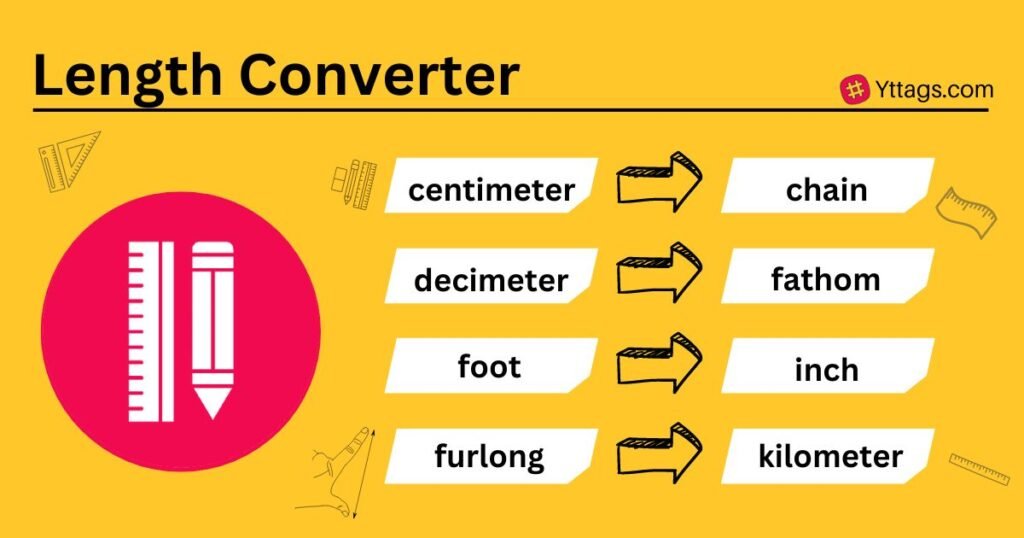
Trick 2: Feet to Meters Using the “Three-Step Rule”
There is a messy factor (0.3048) that everyone hates to work with. This shortcut makes it easy.
The Magic Rule
Remember: 3 feet ≈ 1 meter
That’s your anchor. Everything builds from there.
How to Apply It
- Divide the feet by 3
- You’ve got meters!
Examples That Prove It Works
9 feet to meters: 9 ÷ 3 = 3 m (Actual: 2.74 m — good enough!)
15 feet to meters: 15 ÷ 3 = 5 meters (Actual: 4.57 meters — still very workable)
30 feet to meters: 30 ÷ 3 = 10 meters (Actual: 9.14 meters — an excellent estimate)
Accuracy Comparison
| Feet | Quick Trick | Exact Answer | % Difference |
|---|---|---|---|
| 6 | 2 m | 1.83 m | 9% |
| 12 | 4 m | 3.66 m | 9% |
| 18 | 6 m | 5.49 m | 9% |
| 24 | 8 m | 7.32 m | 9% |
| 30 | 10 m | 9.14 m | 9% |
Notice the pattern? You’re consistently about 9% high. But for rough estimates, that’s just fine!
The Reverse Trick
Going from meters to feet? Just multiply by 3.
5 meters to feet: 5 × 3 = 15 ft (Actual: 16.4 ft)
10 meters to feet: 10 × 3 = 30 ft (Actual: 32.8 ft)
Pro Refinement
Want better accuracy? Use 3.3 when converting from meters to feet.
5 meters: 5 × 3.3 = 16.5 feet (Actual: 16.4 feet) — Pretty close!
Real-World Applications
This trick is ideal for:
- Estimating room sizes
- Comparing property dimensions
- Sports field measurements
- Construction planning
Story: How This Saved a Vacation
My friend was about to book an Airbnb in Europe. In the listing, the bedroom was described as 4 by 3 meters. She didn’t know if that was large enough.
Using the trick:
- 4 meters × 3 = 12 feet
- 3 meters × 3 = 9 feet
A 12-foot by 9-foot bedroom? Perfect size! She booked it immediately.
Trick 3: The Fibonacci Hack for Miles and Kilometers
This one sounds complicated, but is actually the simplest of the lot. You just need to know what Fibonacci numbers are.
What Are Fibonacci Numbers?
It’s a series where each number is the sum of the two previous ones:
1, 1, 2, 3, 5, 8, 13, 21, 34, 55…
The Incredible Coincidence
Here’s the magic: Successive Fibonacci numbers are approximately in a 1.6 ratio to one another. And guess what? Miles convert to kilometers at 1.6 times as well!
This means:
- 5 miles ≈ 8 km
- 8 miles ≈ 13 km
- 13 miles ≈ 21 km
- 21 miles ≈ 34 km
How to Use It
Locate your miles in the Fibonacci series. The next number is your kilometers.
Practical Examples
Running a 5-mile race? Check Fibonacci: 5 → 8. That’s 8 kilometers! (Actual: 8.05 km)
Road trip of 55 miles? Fibonacci: 55 → 89. That’s 89 km! (Actual: 88.5 km)
Conversion Chart Using Fibonacci
| Miles | Fibonacci Says | Exact Kilometers | Difference |
|---|---|---|---|
| 1 | 1.6 km | 1.61 km | 0.01 km |
| 2 | 3 km | 3.22 km | 0.22 km |
| 3 | 5 km | 4.83 km | 0.17 km |
| 5 | 8 km | 8.05 km | 0.05 km |
| 8 | 13 km | 12.87 km | 0.13 km |
| 13 | 21 km | 20.92 km | 0.08 km |
What if Your Number Isn’t in the Sequence?
Easy. Break it into parts.
10 miles to kilometers:
- 10 = 5 + 5
- 5 miles = 8 km
- 8 + 8 = 16 km
(Actual: 16.09 km — perfectly right!)
7 miles to kilometers:
- 7 = 5 + 2
- 5 miles = 8 km
- 2 miles = 3 km
- 8 + 3 = 11 km
(Actual: 11.27 km — good thinking!)
Going Backwards (Kilometers to Miles)
Just reverse the sequence.
21 kilometers to miles: Fibonacci: 21 → 13. That’s 13 miles! (Actual: 13.05 miles)
34 kilometers to miles: Fibonacci: 34 → 21. That’s 21 miles! (Actual: 21.13 miles)
Why This Works So Well
The golden ratio (1.618) is ingrained in the Fibonacci sequence. The constant used to convert miles to kilometers (1.609) is almost the same as the golden ratio. This isn’t magic—it’s beautiful mathematics.
When to Impress Your Friends
Whip out this trick at parties. Quickly convert a marathon (26.2 miles) to kilometers:
- 26 ≈ 21 + 5
- 21 miles = 34 km
- 5 miles = 8 km
- 34 + 8 = 42 km
(Actual: 42.16 km — you nailed it!)
Trick 4: The “Percentage Play” for All Conversions
This trick gets you thinking in percentages, instead of decimals. It can be employed for any conversion among lengths.
The Core Concept
Break conversions down into percentages that are easier to calculate.
Method for Inches to Centimeters
We know 1 inch = 2.54 cm.
But think of it this way:
- 1 inch = 2 cm (base)
- Plus 50% more = 1 cm
- Plus a teensy bit more = 0.54 cm total
Short version: Inches × 2, then add 25% will be close enough.
Example: 8 Inches to Centimeters
- Step 1: 8 × 2 = 16 cm
- Step 2: 25% of 16 = 4 cm
- Step 3: 16 + 4 = 20 cm
(Actual: 20.32 cm — very close!)
Method for Kilometers to Miles
1 km = 0.621 miles
Think of it as:
- Start with kilometers
- Take away 40%
- You’ve got miles
Example: 100 Kilometers to Miles
- Step 1: Start with 100
- Step 2: 40% of 100 = 40
- Step 3: 100 – 40 = 60 miles
(Actual: 62.1 miles — great guess!)
Percentage Conversion Table
| Type of Conversion | Percentage Method | Why It Works |
|---|---|---|
| Inches → cm | × 2, then add 25% | Gets you to 2.5 (close to 2.54) |
| Km → miles | Subtract 40% | Gets you to 0.6 (close to 0.621) |
| Feet → meters | Subtract 70% | Gets you to 0.3 (close to 0.305) |
| Yards → meters | Subtract 10% | Gets you to 0.9 (close to 0.914) |
Advanced Percentage Trick
For extreme precision, use two percentages.
20 inches to centimeters:
- Double: 20 × 2 = 40
- Add 20%: 40 × 0.2 = 8
- Add 5%: 40 × 0.05 = 2
- Total: 40 + 8 + 2 = 50 cm
(Actual: 50.8 cm — amazing accuracy!)
Why Percentages Beat Decimals
Your brain processes a percentage faster than it does a decimal. It’s more natural to think “add 25 percent” rather than “multiply by 1.25.”
This trick uses how your brain works naturally.
Practice Exercise
How many meters are in 15 feet using percentages:
- Start with 15
- Subtract 70%: 15 × 0.7 = 10.5
- Remaining: 15 – 10.5 = 4.5 meters
(Actual: 4.57 meters — you’re practically a calculator now!)
Trick 5: The “Body Part Reference System”
This trick doesn’t require math at all. Instead, you use yourself as your own unit of measurement.
Why This Works
Your body is always with you. If you know the measurements of your own body parts, you can easily estimate sizes anywhere.
Measurements You Should Know
Measure these out once and memorize them:
- Your thumb (at the widest part): ~1 inch (2.5 cm)
- Your hand-span (tip to tip with spread fingers): 7-9 inches (18-23 cm)
- Your foot-length: 10-12 inches (25-30 cm)
- Your arm length (fingertip to shoulder): 24-30 inches (60-75 cm)
- Your height: Know it in both feet and meters!
Personal Measurement Chart
| Body Part | Imperial | Metric |
|---|---|---|
| Thumb width | 1 in | 2.5 cm |
| Palm width | 4 in | 10 cm |
| Hand span | ~8 in | 20 cm |
| Forearm | 12 in | 30 cm |
| Arm length | 24 in | 60 cm |
| Stride | 30 in | 75 cm |
(Note: These are typical measurements—everybody is different!)
How to Use It
Measuring a table: It’s 3 hand-spans wide. That’s about 24 inches or about 60 cm.
Estimating a room: Takes 12 strides to walk across. That’s approximately 30 feet or nine meters.
Testing fabric: The garment is 4 arm-lengths long. That’s about 8 feet or so.
The Conversion Advantage
Once you’ve got your measurements in both systems, you can convert by reference.
Example: Your foot is 11 inches or 28 cm.
A person says, “The shelf is 55 centimeters wide.”
You think: “That’s like 2 of my feet, so about 22 inches.”
(Actual: 21.65 inches — you nailed it!)
Building Your Reference Library
Create mental benchmarks:
- Credit card: 3.5 inches
- Dollar bill: 6 inches (15 cm)
- Average door: 7 feet (2.1 meters)
- Car parking space: 18 ft (5.5 m)
Story: The Furniture Store Win
A woman wanted to buy a couch but wasn’t sure it would fit through her door. She didn’t have a tape measure.
She knew she had a 5-foot arm span. The door opened to something slightly wider than her arm span—call it 6 feet.
The sofa was advertised as being 2.1 meters long. She knew that doors are about 2 meters high, so 2.1 meters was just over 7 feet.
The couch would certainly fit through the 6-foot-wide doorway. She bought it with confidence.
How to Master This Trick
- Measure your body parts today
- Write down the measurements
- Practice estimating things around your home
- Use a tape measure to compare your estimates
- Adjust your mental references
In one week you are going to be incredibly accurate at estimating measurements!

Combining Tricks for Maximum Power
The real magic comes from combining multiple tricks.
Scenario 1: International Recipe
A European recipe requires a 30 cm × 40 cm baking tray. You only have inch measurements.
Use Trick 1 (reverse):
- 30 cm: Think “that’s about 12 inches” (actually 11.8)
- 40 cm: Think “that’s about 16 inches” (actually 15.7)
Your 12 × 16 inch pan is perfect!
Scenario 2: Running Track
You’re working your way up to a 10K race. Your local track is a quarter-mile track. How many laps?
Use Trick 3 (Fibonacci):
- 10K = 10 kilometers
- 10 ≈ 8 + 2 Fibonacci
- 8 km = 5 miles
- 2 km ≈ 1 mile
- Total: about 6 miles
- Track = 1/4 mile per lap
- 6 miles × 4 laps = 24 laps
(Actual: 24.85 laps — excellent!)
Scenario 3: Home Renovation
You need to purchase 20 meters of crown molding. The hardware store sells it by the foot.
Use Trick 2:
20 meters × 3 = 60 feet (approximate)
Better accuracy with adjustment: 20 × 3.3 = 66 feet
(Actual: 65.6 feet — perfect!)
Creating Your Personal System
Pick 2-3 tricks that work for your brain. Master those first. Add others as needed.
Some people love Fibonacci. Others prefer percentages. Pick what makes sense to you.
You don’t have to memorize everything. The goal is to have a few solid shortcuts at the ready when you need them.
For additional measurement conversion resources and tools, check out this comprehensive measurement conversion guide to help you with all types of unit conversions.
Making These Tricks Automatic
Knowing tricks is one thing. Deploying them automatically is another.
Week 1: Daily Practice
Convert everything you see:
- Cereal box dimensions
- TV screen size
- Room measurements
- Your commute distance
Do it out loud. Say the trick you’re using.
Week 2: Speed Drills
Set a timer. Convert 10 measurements as quickly as possible. Beat your time each day.
Week 3: Real-World Application
Use only these tricks. Leave your calculator app alone. Force yourself to use mental math.
Week 4: Teaching Others
Teach these tricks to a friend. Teaching cements learning.
Mistakes Are Learning Opportunities
You’ll mess up. That’s fine. When you do:
- Figure out where it went wrong
- Understand why
- Try again
In fact, mistakes make your brain remember the right way to do things better.
The Compound Effect
Each trick might save you 30 seconds. Do 5 conversions a day = 150 seconds saved per day.
Over one year: 150 seconds × 365 days = 54,750 seconds = Save yourself 15 hours.
But the value saved is not merely time. It’s confidence gained.
Your New Conversion Superpower
Now you’ve learned these 5 genius length conversion tricks:
- Double It Plus Half – inches to centimeters
- Rule of Three – feet to meters
- Fibonacci Hack – miles to kilometers
- Percentage Play – for any conversion
- Body Part Reference – for on-the-go estimates
These aren’t just math shortcuts. They are useful skills that make your daily life smoother.
No longer fumble with your phone while trying to steady a tape measure. Never again will you second-guess your measurements at the hardware store. Never be confused while shopping online with overseas sellers again.
Start with one trick today. Really master it. Then add another next week.
And before you know it, people will be asking you how you make conversions so fast. You’ll smile and think, “I know tricks they don’t.”
That’s the magic of smart measurement conversion. And now it’s yours.
Go convert something!
Frequently Asked Questions
Q: What is the easiest trick to learn first?
A: The Three-Step Rule for feet to meters. Just remember “3 feet = 1 meter,” then divide or multiply by 3. It is the easiest and will work for most projects around your home.
Q: Are these tricks accurate enough for construction?
A: Yes, for rough carpentry like framing and general building. For precision finish work, like cabinetry or anything that needs to be accurate to a hundredth of an inch, use exact conversions. These tricks get you to within 5-10 percent of the actual value.
Q: How long does it take to master these tricks?
A: The vast majority of people are comfortable after a week or two of daily use. Full mastery—not even having to think about it—takes about a month of consistent use.
Q: What if I need more precision than these tricks offer?
A: Use the trick to get close, then refine with precise calculations. For instance, use Fibonacci to estimate miles to kilometers, then multiply by 1.609 if you need precision.
Q: Can children learn these tricks?
A: Absolutely! Children often pick these up more quickly than adults, in part because they’re less intimidated by doing math in their heads. Young students are particularly intrigued by the Fibonacci trick.
Q: Do these work for very small or very large numbers?
A: They’re best for everyday measurements (inches to feet, meters, kilometers). For tiny measurements in millimeters, or large ones in thousands of kilometers, exact formulas are the way to go.
Q: Why doesn’t school teach these tricks?
A: Schools tend to teach exact formulas and theoretical understanding. These shortcuts are often learned on the job or passed down from experienced workers to apprentices. For more information on measurement systems and their history, visit the National Institute of Standards and Technology.
Q: Can I come up with my own conversion tricks?
A: Yes! After you learn the principles, create tricks that fit your way of thinking. The best trick is the one you can remember and use.
Q: What is the most versatile trick on this list?
A: The Body Part Reference System. Your body is with you all the time, so you can always estimate measurements. It’s the only trick you can use when you can’t do math.
Q: Should I still learn the exact conversion formulas?
A: Yes. These tricks are meant to supplement exact knowledge, not replace it. Know both. Use tricks for speed, formulas for accuracy.