





























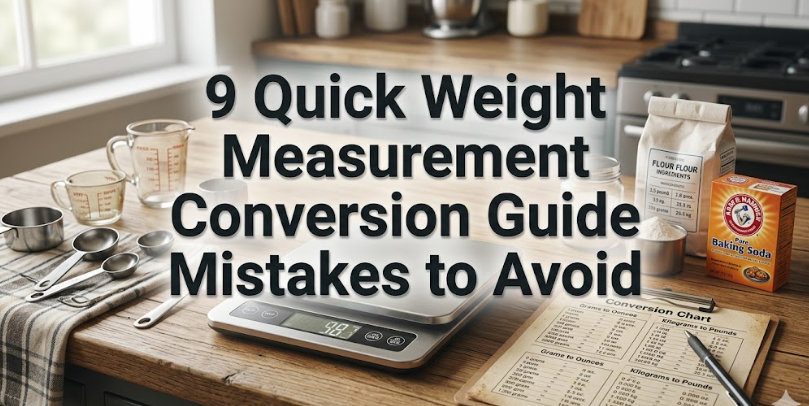

9 Quick Weight Measurement Conversion Guide Mistakes to Avoid
Weight conversion looks simple—until it isn’t. On paper, turning kilograms into pounds or grams into ounces seems like a matter of plugging numbers into a formula. In real life, though, people slip up more often than they realize. A slightly wrong conversion can throw off a recipe, distort a shipping cost, or even lead to serious misunderstandings in health or science contexts.
This guide doesn’t just list mistakes. It walks through the subtle ways errors creep in, why they happen, and how to prevent them without overthinking every calculation. Whether you’re dealing with cooking, fitness tracking, academic work, or everyday curiosity, these are the nine most common pitfalls you’ll want to steer clear of.
mistake 1: confusing mass and weight without realizing it
One of the most overlooked issues is the difference between mass and weight. In everyday language, people treat them as identical—and for most casual situations, that works fine. But technically speaking, mass measures the amount of matter in an object, while weight depends on gravity.
When converting between units like kilograms and pounds, most people are actually working with mass, even though they say “weight.” The confusion becomes problematic in scientific or technical settings where precision matters.
For example, a kilogram is a unit of mass, while a pound can represent both mass and force depending on context. If you’re not careful, you may unknowingly mix systems and end up with inconsistent results.
The fix is simple: know your context. If you’re cooking or tracking body weight, the distinction won’t usually hurt you. But in engineering, physics, or aviation, you need to be precise about what you’re measuring.
mistake 2: relying too heavily on rough estimates
A lot of people memorize shortcuts like “1 kg is about 2.2 lbs” or “1 lb is about 450 grams.” These approximations are useful, especially when you’re doing mental math. The problem arises when estimates become your default rather than a quick check.
Let’s say you’re converting 50 kilograms using a rough estimate of 2 pounds per kilogram. You’ll get 100 pounds, while the accurate value is about 110 pounds. That’s a significant difference, especially in contexts like fitness goals or shipping weights.
Estimates are tools, not answers. They’re best used to sanity-check your calculation, not replace it entirely. If accuracy matters—even moderately—use precise conversion factors or a reliable calculator.
mistake 3: mixing up metric and imperial systems mid-calculation
Switching between metric and imperial units is where many people stumble. The confusion often happens halfway through a calculation. You might start with grams, convert to ounces, then accidentally treat the result as pounds.
This kind of mix-up doesn’t always produce obviously wrong results, which makes it more dangerous. The numbers might still look reasonable, even though they’re completely off.
The safest approach is to stick to one system until the very end. If you need the final answer in another unit, convert once—and only once—after completing the main calculation.
Consistency reduces errors more than memorization ever will.
mistake 4: misunderstanding unit labels and abbreviations
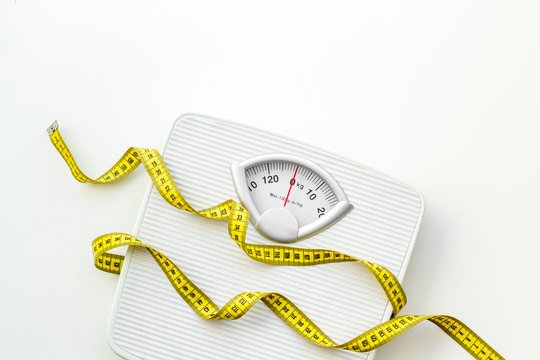
Abbreviations like “lb,” “oz,” “g,” and “kg” seem straightforward, but they can trip people up. For instance, “oz” stands for ounces, but there are both weight ounces and fluid ounces. Using the wrong one can lead to incorrect conversions.
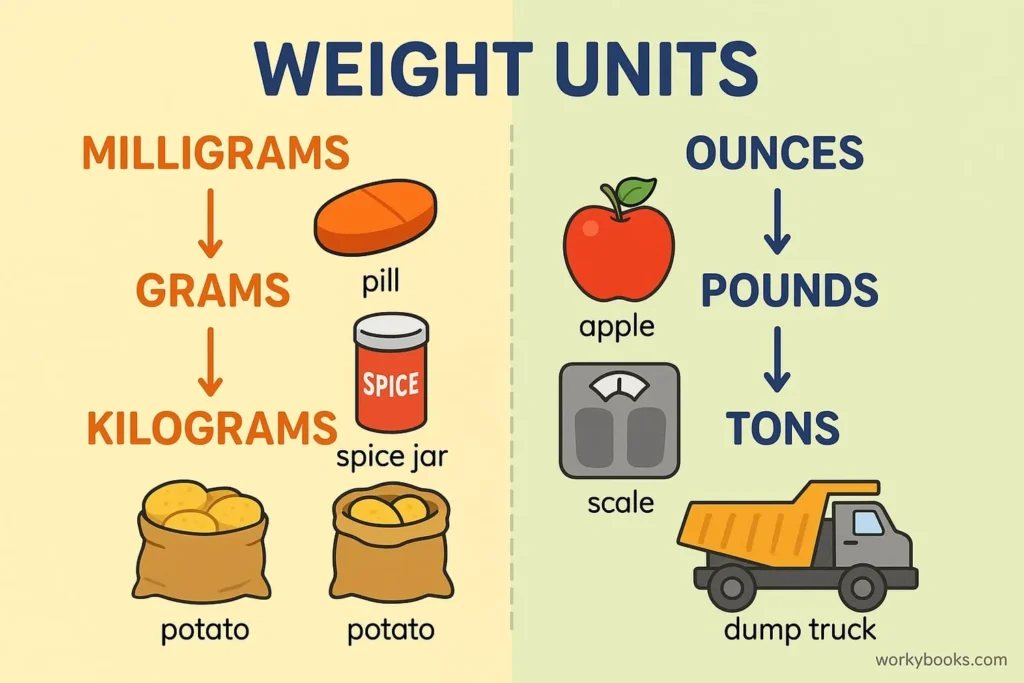
Similarly, “ton” can mean different things depending on the region. A metric ton (tonne) equals 1,000 kilograms, while a U.S. ton is 2,000 pounds, and a U.K. ton is 2,240 pounds.
If you don’t pay attention to these subtle differences, you might end up comparing apples to oranges without realizing it.
Always double-check the unit label before converting. It takes a second, but it can save you from a much bigger mistake.
mistake 5: ignoring decimal placement errors
Decimals are small, but their impact is huge. A misplaced decimal point can turn 2.2 pounds into 22 pounds or 0.22 pounds, drastically changing the result.
These errors often happen when people rush or copy numbers incorrectly. They’re especially common when dealing with very small or very large quantities, like milligrams or metric tons.
One way to catch decimal errors is to ask yourself: does this result make sense? If you convert a small number and get a huge result, or vice versa, it’s worth double-checking.
A quick mental estimate can act as a safeguard against these slips.
mistake 6: using outdated or incorrect conversion factors
Not all conversion factors are created equal—or remembered correctly. Some people rely on memory and end up using slightly off values, like assuming 1 pound equals exactly 0.5 kilograms instead of the more accurate 0.453592 kilograms.
Over time, these small inaccuracies can add up, especially in repeated calculations.
The solution isn’t to memorize more numbers; it’s to rely on trusted references when accuracy matters. Even a small difference can become significant in professional or cumulative contexts.
mistake 7: skipping context in real-world applications
Conversions don’t happen in a vacuum. They’re usually part of a larger task—cooking, shipping, dieting, or studying. Ignoring the context can lead to inappropriate conversions.
For example, converting ingredient weights without considering density can affect a recipe. Converting body weight without accounting for measurement conditions (like time of day or hydration) can skew fitness tracking.
Numbers don’t tell the whole story unless you understand how they’re being used. Always consider the bigger picture before relying on a conversion result.
mistake 8: overtrusting digital tools without verification
Online calculators and apps are incredibly convenient. They save time and reduce mental effort. But they’re not infallible—and neither is the way we use them.
A typo in the input field can produce a completely wrong answer. Selecting the wrong unit from a dropdown menu can go unnoticed.
That’s why it’s important to treat digital tools as assistants, not authorities. Double-check your inputs and, when possible, cross-verify the result with another method.
Even a quick glance at the output can help you spot something that doesn’t feel right.
mistake 9: not building an intuitive sense of scale
Perhaps the most subtle mistake is relying entirely on formulas without developing intuition. If you don’t have a rough sense of what different weights feel like or represent, you’re more likely to accept incorrect results.
For instance, knowing that a kilogram is a little over two pounds gives you a mental anchor. Without that, numbers become abstract and harder to evaluate.
Building intuition doesn’t require effort. It comes from repeated exposure—cooking, weighing items, reading labels, and making conversions regularly.
Over time, you’ll start to notice when something feels off, even before you check the math.
bringing it all together
Weight conversion isn’t just about numbers—it’s about awareness. Most mistakes don’t happen because the math is difficult. They happen because of assumptions, distractions, or small oversights.
By staying mindful of these nine pitfalls, you can make your conversions more reliable without making the process more complicated. A little attention goes a long way.
Instead of memorizing endless formulas, focus on understanding patterns, maintaining consistency, and questioning results that seem unusual. That mindset will serve you better than any shortcut.
frequently asked questions
- what is the easiest way to convert kilograms to pounds?
The simplest method is to multiply kilograms by 2.20462. For quick estimates, you can use 2.2, but for accuracy, stick to the full value or a calculator. - why do my conversion results sometimes feel wrong even when I follow the formula?
This often happens due to input errors, incorrect units, or misplaced decimals. It’s helpful to do a quick mental check to see if the result makes sense. - are online converters always accurate?
Most are accurate, but mistakes can still occur due to user input errors or selecting the wrong units. It’s always good practice to double-check. - what’s the difference between ounces and fluid ounces?
Ounces measure weight, while fluid ounces measure volume. They are not interchangeable, which is why conversions between them can be tricky. - should I memorize conversion factors?
You don’t need to memorize many. Knowing a few key ones—like kg to lb—can help, but it’s more important to understand how to verify your results. - how can I avoid mistakes when converting large quantities?
Work step by step, keep units consistent, and double-check your final result. Using reliable tools and reviewing your inputs can also reduce errors.
If you stay attentive and develop a feel for the numbers, conversions stop being a source of confusion and become something you can handle almost automatically.