





















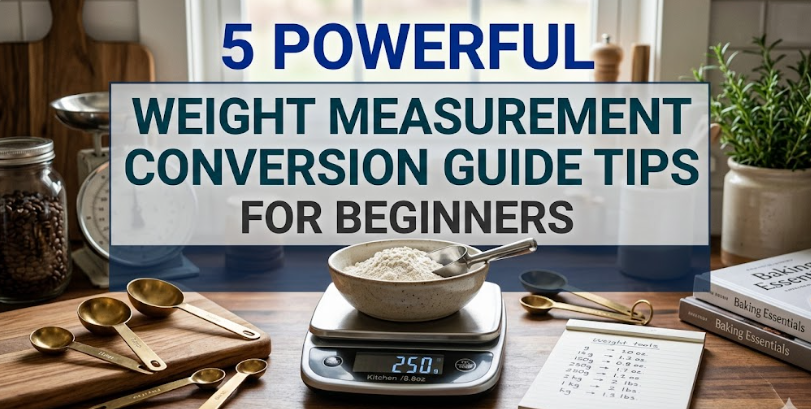

5 Powerful Weight Measurement Conversion Guide Tips for Beginners
Understanding weight measurement conversions is one of those skills that quietly becomes essential in everyday life. Whether you’re following a recipe, tracking your fitness progress, shipping a parcel, or studying science, knowing how to convert between units like kilograms, grams, pounds, and ounces can save you from confusion and costly mistakes.
Yet for many beginners, weight conversion feels unnecessarily complicated. Numbers blur together, formulas seem abstract, and remembering conversion factors can feel like memorizing random facts. But here’s the truth: once you grasp a few core principles and apply the right strategies, weight conversions become almost second nature.
This guide isn’t just a collection of facts. It’s designed to help you think differently about measurement, develop intuition, and build confidence. Let’s walk through five powerful tips that will transform how you approach weight conversion.
Understanding the foundation of weight measurement
Before diving into tips, it’s important to understand what weight measurement actually represents. In everyday use, “weight” often refers to mass — how much matter something contains. Different regions of the world use different systems to measure this.
The metric system, used in most countries, is based on units like grams (g), kilograms (kg), and tonnes. The imperial system, commonly used in places like the United States, includes ounces (oz), pounds (lb), and tons.
What makes the metric system beginner-friendly is its base-10 structure. Each unit is related by multiples of ten:
- 1 kilogram = 1000 grams
- 1 gram = 1000 milligrams
In contrast, the imperial system uses less intuitive relationships:
- 1 pound = 16 ounces
- 1 ton = 2000 pounds (US)
The key takeaway is this: conversions aren’t difficult because of math — they’re confusing because of inconsistent systems. Once you understand how each system works, everything becomes clearer.
Tip 1: Learn anchor conversions instead of memorizing everything
One of the biggest mistakes beginners make is trying to memorize every possible conversion. That approach quickly becomes overwhelming.
Instead, focus on a few “anchor” conversions — core reference points that you can use to calculate everything else.
Here are some essential ones:
- 1 kilogram ≈ 2.2 pounds
- 1 pound ≈ 0.45 kilograms
- 1 ounce ≈ 28 grams
- 1 kilogram = 1000 grams
With just these four anchors, you can handle most real-life conversions.
For example, if you know that 1 kg is about 2.2 pounds, then:
- 2 kg ≈ 4.4 pounds
- 5 kg ≈ 11 pounds
You don’t need to memorize dozens of numbers — just build from a few reliable ones.
This method works because it mirrors how people naturally think. Instead of recalling exact figures, you estimate based on familiar reference points.
Tip 2: Think in steps, not jumps
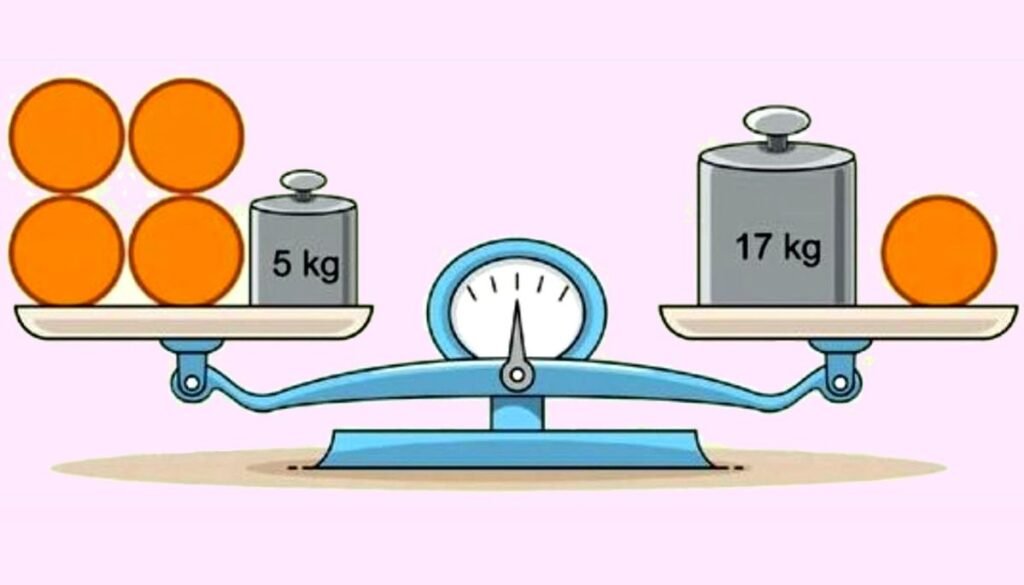
Another powerful strategy is breaking conversions into smaller steps.
Instead of trying to convert directly from one unit to another, move through a familiar unit in between.
For example:
Convert 5000 grams to pounds.
Step 1: Convert grams to kilograms
5000 grams ÷ 1000 = 5 kg
Step 2: Convert kilograms to pounds
5 × 2.2 ≈ 11 pounds
By breaking the problem into two simple steps, you reduce mental strain and improve accuracy.
This approach is especially useful when dealing with unfamiliar conversions. It gives you a structured path instead of forcing you to guess.
Tip 3: Use estimation to stay grounded
Exact numbers are useful, but estimation is what builds confidence.
When you estimate, you’re not just calculating — you’re checking whether your answer makes sense.
For example:
If someone tells you a bag weighs 10 kilograms, you should instinctively know that it’s around 22 pounds. If your calculation gives you 220 pounds, something is clearly off.
Estimation helps you:
- Catch errors quickly
- Develop intuition
- Save time
A good rule is to round numbers slightly for mental math. Instead of using 2.20462, just use 2.2. The difference is small, but the simplicity is valuable.
Over time, your brain becomes faster at recognizing patterns, and conversions start to feel automatic.
Tip 4: Understand real-world context
Numbers alone can feel abstract. But when you connect them to real-world objects, they become meaningful.
Here are some relatable references:
- A small apple weighs about 150–200 grams
- A textbook might weigh around 1 kilogram
- A newborn baby often weighs about 3–4 kilograms (6–9 pounds)
- A bag of flour is commonly 1 kg or 2.2 pounds
When you associate units with real items, conversions stop being just numbers. They become experiences.
For example, if you know a 1 kg bag of rice feels like a certain weight, you can mentally compare other objects to it. This builds a kind of “weight intuition” that no formula can replace.
Tip 5: Practice with purpose, not repetition
Practice is essential, but how you practice matters more than how often.
Instead of repeating the same type of problem, challenge yourself with real-life scenarios:
- Convert ingredients while cooking
- Estimate luggage weight before travel
- Compare product weights while shopping
This kind of practice is more engaging and more effective. It forces you to think, adapt, and apply your knowledge in different contexts.
You can also create mini-challenges:
- How many grams are in 3.5 kg?
- What is 8 pounds in kilograms?
- If a recipe calls for 16 ounces, how many grams is that?
The goal is not perfection — it’s familiarity.
Common mistakes beginners should avoid
Even with the right strategies, beginners often fall into a few traps.
One common mistake is mixing units. For example, adding grams and kilograms without converting them to the same unit first.
Another is relying too heavily on exact numbers without understanding the logic behind them. This leads to confusion when faced with unfamiliar problems.
Lastly, many people skip estimation, which makes it harder to catch errors.
Avoiding these mistakes will make your learning process smoother and more efficient.
Building long-term confidence
Confidence in weight conversion doesn’t come from memorizing formulas. It comes from repeated exposure, practical use, and a clear understanding of relationships between units.
Start small. Use anchor conversions. Break problems into steps. Estimate often. Connect numbers to real life.
Over time, what once felt complicated will become intuitive.
Why this skill matters more than you think
Weight conversion isn’t just a school topic. It’s a life skill.
In cooking, it ensures your recipes turn out right.
In fitness, it helps you track progress accurately.
In travel, it prevents baggage surprises.
In business, it ensures correct pricing and shipping.
It’s a quiet but powerful skill that supports many aspects of daily life.
FAQs
- What is the easiest way to convert kilograms to pounds?
The simplest way is to multiply kilograms by 2.2. For quick estimates, this method is accurate enough for most situations. - How many grams are in one pound?
One pound is approximately 454 grams. For rough calculations, you can round it to 450 grams. - Why are there different measurement systems?
Different systems developed historically in different regions. The metric system is standardized and widely used globally, while the imperial system remains common in a few countries. - Is it necessary to memorize all conversion factors?
No. It’s better to learn a few key anchor conversions and build from them rather than memorizing everything. - How can I improve my speed in conversions?
Practice regularly using real-life examples, rely on estimation, and break conversions into smaller steps. - Are digital tools better than manual calculation?
Digital tools are helpful for accuracy, but understanding the logic behind conversions is important for flexibility and confidence.
Mastering weight measurement conversions is less about math and more about mindset. Once you shift from memorization to understanding, everything becomes simpler. With these five powerful tips, you’re not just learning conversions — you’re building a skill that will stay with you for life.