





5 Personal Volume Measurement Conversion Guide Stories That Helped Me
I didn’t set out to learn volume conversions in any serious way. Like most people, I assumed I’d get by with rough guesses, a few memorized numbers, and the occasional online calculator. But life has a strange way of forcing precision into your habits. Over time, through small mistakes and quiet realizations, I found myself learning volume measurement conversions not as abstract math, but as lived experience.
This isn’t just a guide. It’s a collection of moments where numbers stopped being numbers and became consequences, lessons, and eventually, instincts.
story one: the day my tea tasted like regret
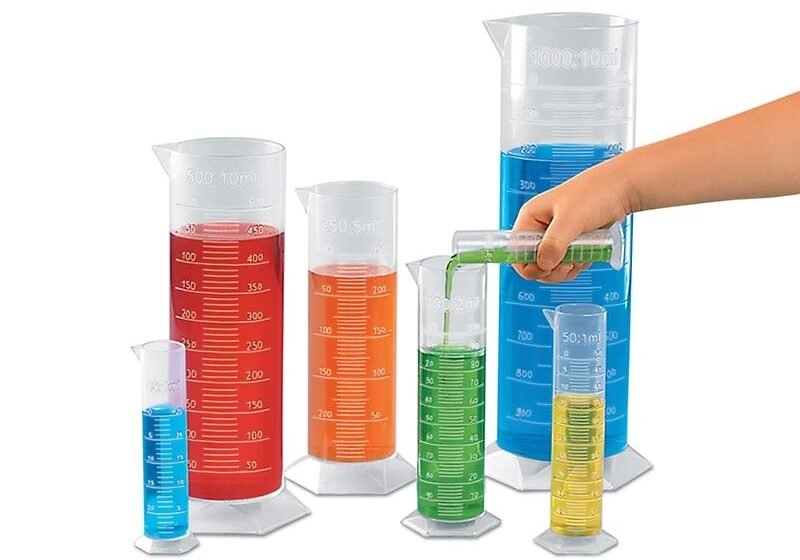
It started in a small kitchen, early in the morning, when I decided to follow a recipe I found online. It called for 250 milliliters of water. Simple enough, I thought. I grabbed a cup and filled it halfway, assuming that would be “close enough.”
What I didn’t realize was that my cup wasn’t a standard measuring cup. It was closer to 300 milliliters when full. Half of that gave me roughly 150 milliliters, not 250.
The tea turned out bitter, concentrated, and strangely unpleasant.
At first, I blamed the tea leaves. Then the brand. Then the water. Eventually, I looked at the numbers again.
That was the moment I understood something fundamental: volume is not intuitive. Our eyes are not calibrated instruments.
What I learned from that morning stayed with me:
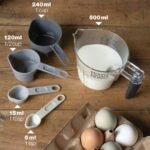
- 1 cup (US) ≈ 240 milliliters
- 1 liter = 1000 milliliters
- Guessing leads to cumulative error
After that, I started paying attention. Not obsessively, but intentionally. I began using proper measuring tools. I noticed how small differences changed outcomes.
That tea didn’t just taste bad—it introduced me to accuracy.
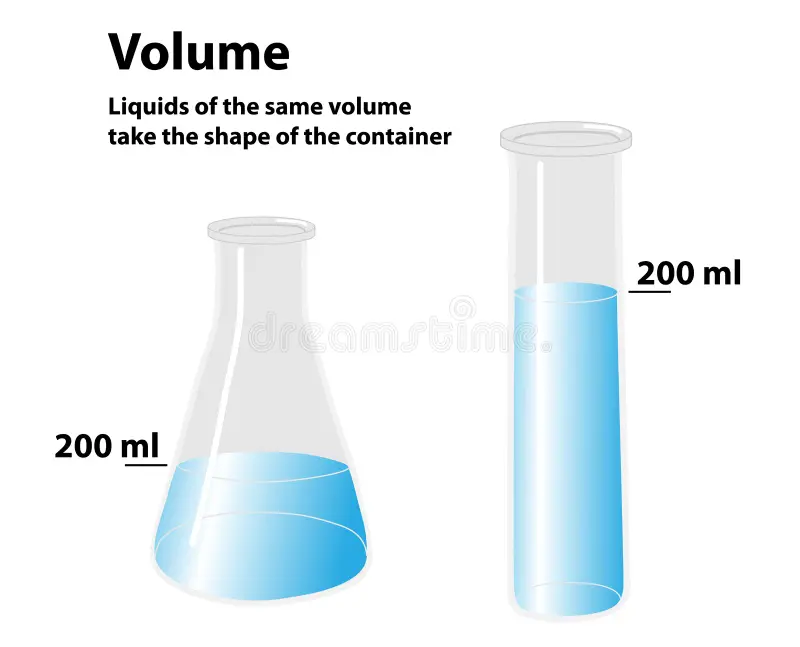
story two: baking disaster and the myth of “almost right”
Baking has no mercy for approximation. Cooking forgives; baking exposes.
One evening, I tried to bake a simple cake. The recipe required 1.5 cups of milk. I didn’t have a measuring cup, so I improvised: one full cup plus “a little more.”
That “little more” turned out to be closer to half a cup extra.
The batter became too thin. The cake didn’t rise properly. The texture was dense and disappointing.
That failure taught me something deeper than just measurement—it taught me about proportional relationships.
Volume conversions are not just about switching units; they’re about maintaining balance.
Here’s what I started to internalize:
- 1 cup = 16 tablespoons
- 1 tablespoon = 15 milliliters (approx.)
- 1.5 cups = 360 milliliters
Understanding these relationships meant I could reconstruct measurements even without tools.
I also began writing small notes in my kitchen:
“Precision isn’t perfection. It’s consistency.”
story three: the fuel confusion on a road trip
This lesson didn’t happen in a kitchen—it happened on a road trip with a friend who had just imported a car.
The fuel efficiency was listed in miles per gallon (mpg), but fuel stations displayed liters. We needed to estimate how far we could travel.
At first, we guessed. Bad idea.
We nearly ran out of fuel in a remote area because we misjudged the conversion.
Later, sitting at a roadside café, we worked it out properly:
- 1 gallon (US) ≈ 3.785 liters
- If the car gets 30 mpg, that’s about 12.75 km per liter
That conversion changed everything. Suddenly, the numbers made sense. We could plan stops, calculate distances, and avoid stress.
That day, I realized volume conversion isn’t just academic—it can affect real-world decisions in meaningful ways.
From then on, I kept a small list saved on my phone:
- liters ↔ gallons
- milliliters ↔ ounces
- cubic meters ↔ liters
It became less about memorizing and more about recognizing patterns.
story four: the aquarium mistake that taught me scale
I once decided to set up a small aquarium. Nothing fancy—just a simple glass tank for a few fish.
The tank was labeled as “20 gallons.” I wanted to understand its capacity in liters, so I could treat the water properly.
Instead of calculating, I estimated.
That was my mistake.
I added water conditioner based on a rough guess of 60 liters. But 20 gallons is actually about 75.7 liters.
That difference affected the water chemistry. The fish didn’t react well.
Thankfully, I caught the issue early and corrected it. But the experience stayed with me.
Volume at larger scales behaves differently in our minds. We tend to underestimate.
Here’s what I took away:
- 1 cubic meter = 1000 liters
- Small percentage errors become large absolute differences at scale
- Always convert before applying treatments or ratios
That aquarium became more than a hobby—it became a reminder that precision protects living systems.
story five: the construction mix that finally made everything click
The final lesson came during a small home improvement project. I was helping mix cement for a repair job.
The instructions were clear:
“Mix 1 part cement, 2 parts sand, and 3 parts gravel by volume.”
Simple ratios, right?
But we didn’t have matching containers. One person used a bucket, another used a smaller container. The ratios became inconsistent.
The mixture turned out uneven—some batches too weak, others too thick.
That’s when everything clicked.
Volume conversion isn’t just about units—it’s about consistency of reference.
We corrected our approach:
- Choose one container as the base unit
- Keep all ratios relative to that container
- Convert only if necessary, but stay consistent
That experience tied together everything I had learned before. Accuracy, proportion, scale, and consistency—they all intersect in volume measurement.
practical reflections from these stories
Looking back, these moments shaped how I approach measurement in everyday life. I no longer see conversions as a chore. They’re a tool for clarity.
Here are a few habits I developed:
- Always identify the unit before estimating
- Convert early, not after mistakes happen
- Use reference points (like 1 liter = 1000 mL)
- Keep a few key conversions memorized
- Double-check when dealing with large volumes
And perhaps most importantly:
Don’t trust intuition alone when precision matters.
a small working table I keep handy
Instead of memorizing everything, I rely on a compact mental table:
- 1 liter = 1000 mL
- 1 cup ≈ 240 mL
- 1 gallon (US) ≈ 3.785 L
- 1 cubic meter = 1000 L
- 1 fluid ounce (US) ≈ 29.57 mL
These anchors help me build conversions quickly without needing to look things up every time.
why these stories matter more than formulas
Formulas are important, but they don’t stick unless they’re tied to experience.
Each mistake I made carried a small cost—bad taste, wasted ingredients, inconvenience, or risk. But those costs made the lessons memorable.
If you’re learning volume conversions, don’t just read tables. Use them. Test them. Even make small mistakes—they’ll teach you faster than perfect calculations ever could.
The goal isn’t to become flawless. It’s to become aware.
frequently asked questions
- why do volume conversions feel confusing at first?
Because different systems (metric and imperial) use different base units. Without familiar reference points, it’s hard to visualize the scale. - what is the easiest way to remember conversions?
Start with a few anchor values like 1 liter = 1000 mL or 1 gallon ≈ 3.785 liters. Build other conversions around them. - is it necessary to memorize all conversion factors?
No. Memorize a few key ones and derive the rest when needed. Understanding relationships is more useful than memorization. - how can I avoid mistakes in cooking or baking?
Use proper measuring tools, stick to one unit system, and convert everything before starting. - what’s the biggest mistake people make with volume conversions?
Mixing units without realizing it—for example, combining cups and milliliters without converting. - are digital tools better than manual conversion?
They’re faster and often more accurate, but understanding the basics ensures you can catch errors and make quick estimates when needed.
closing thought
If there’s one thing these experiences taught me, it’s this: volume is invisible, but its effects are not. Whether it’s a cup of tea, a tank of fuel, or a mix of materials, the difference between “close enough” and “accurate” can be surprisingly meaningful.
And once you start noticing those differences, you don’t go back.