















11 Ultimate Volume Measurement Conversion Guide Tips for Accuracy
If you’ve ever stood in a kitchen staring at a recipe that calls for milliliters while your measuring cup shows ounces, you already know that volume conversion isn’t just about math—it’s about confidence. Whether you’re cooking, working in a lab, handling industrial liquids, or simply trying to follow instructions correctly, small inaccuracies in volume conversions can lead to noticeable errors.
This guide doesn’t just give you formulas. It walks you through real-world thinking, habits, and practical systems that help you get conversions right every time. Think of it as a blend of technique, intuition, and a bit of lived experience.
- Understand the “why” behind units before memorizing them
Most people start by memorizing that 1 liter equals 1000 milliliters. That works—until you forget. Instead, it’s more powerful to understand that the metric system is built on base 10. Everything scales neatly. That means:
1 liter = 1000 mL
1 mL = 1 cubic centimeter
Once you internalize this structure, you stop memorizing and start reasoning. If someone asks you what 2.5 liters is in milliliters, you don’t need a chart—you just multiply by 1000.
Imperial units, however, don’t follow this logic. That’s why people often struggle with cups, pints, quarts, and gallons. The key here isn’t memorization alone—it’s grouping.
For example:
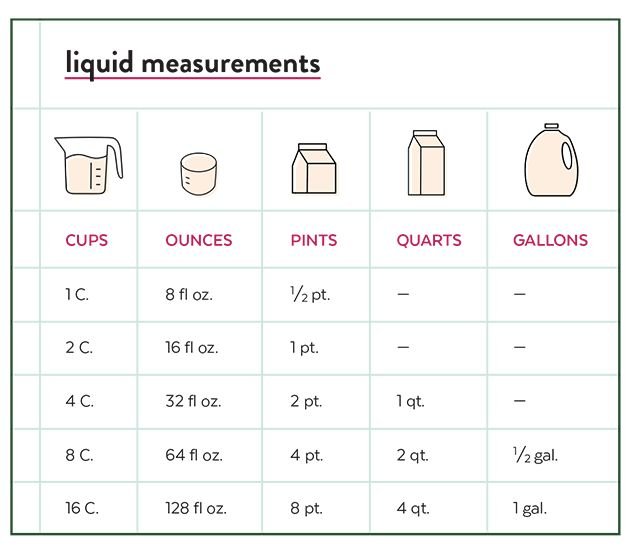
- 1 cup = 8 fluid ounces
- 1 pint = 2 cups
- 1 quart = 2 pints
- 1 gallon = 4 quarts
Visualizing these as a ladder helps your brain retain them better than isolated facts.
- Always identify the system first (metric vs imperial)
One of the most common mistakes is mixing systems without realizing it. A “cup” in the US is not always the same as a “cup” in another country.
Before converting anything, ask:
- Is this metric (liters, milliliters)?
- Is this US customary (cups, fluid ounces)?
- Is this imperial (UK measurements)?
That one question can prevent major errors. For example, a US gallon is about 3.785 liters, while an imperial gallon is about 4.546 liters. That difference is not small—it can completely change outcomes in cooking or industrial mixing.
- Build a mental anchor for common conversions
Instead of trying to remember everything, anchor a few key conversions and derive the rest.
Some useful anchors:
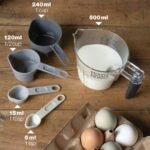
- 1 teaspoon ≈ 5 mL
- 1 tablespoon ≈ 15 mL
- 1 cup ≈ 240 mL
- 1 liter ≈ 4.2 cups
Once these are in your head, you can estimate quickly. For example, if a recipe needs 500 mL, you know it’s just over 2 cups.
Accuracy improves when your brain has reference points rather than isolated numbers.
- Use dimensional thinking instead of blind formulas
A powerful but underused technique is dimensional analysis. It sounds complex, but it’s simple:
Write the units in a fraction so unwanted units cancel out.
Example:
Convert 500 mL to liters.
500 mL × (1 L / 1000 mL) = 0.5 L
The “mL” cancels, leaving liters. This approach reduces mistakes because you’re visually tracking units.
This method becomes especially valuable when dealing with multiple steps, like converting gallons to cubic meters.
- Pay attention to context (liquids vs dry volume)
Volume isn’t always used the same way. In cooking, “1 cup of flour” is not the same as “1 cup of water” in weight, even though the volume is identical.
So when converting:
- Liquid conversions are usually straightforward
- Dry ingredients may require density awareness
For precise work, especially baking, you should sometimes convert volume to weight instead.
- Beware of rounding errors
Rounding seems harmless, but repeated rounding can compound errors.
For example:
If you convert 1 gallon to liters (3.785 L) and round it to 3.8 L, then multiply multiple times, the difference grows.
Best practice:
- Keep at least 2–3 decimal places during calculations
- Round only at the final step
This is especially important in scientific or industrial contexts where precision matters.
- Learn the “big picture” relationships
Instead of memorizing everything, understand how units relate globally.
Think of it like this:
- Small units (mL, teaspoons) are used for precision
- Medium units (cups, liters) are used for everyday tasks
- Large units (gallons, cubic meters) are used for bulk
This mental map helps you quickly choose the right unit and conversion path.
- Practice estimation before exact calculation
Before calculating, make a quick estimate. This acts as a sanity check.
Example:
If 1 liter is about 4 cups, then 2 liters should be around 8 cups. If your calculation gives 20 cups, you know something went wrong.
Estimation is not about replacing accuracy—it’s about protecting it.
- Use visual tools and real-world references
Your brain remembers visuals better than numbers.
Try this:
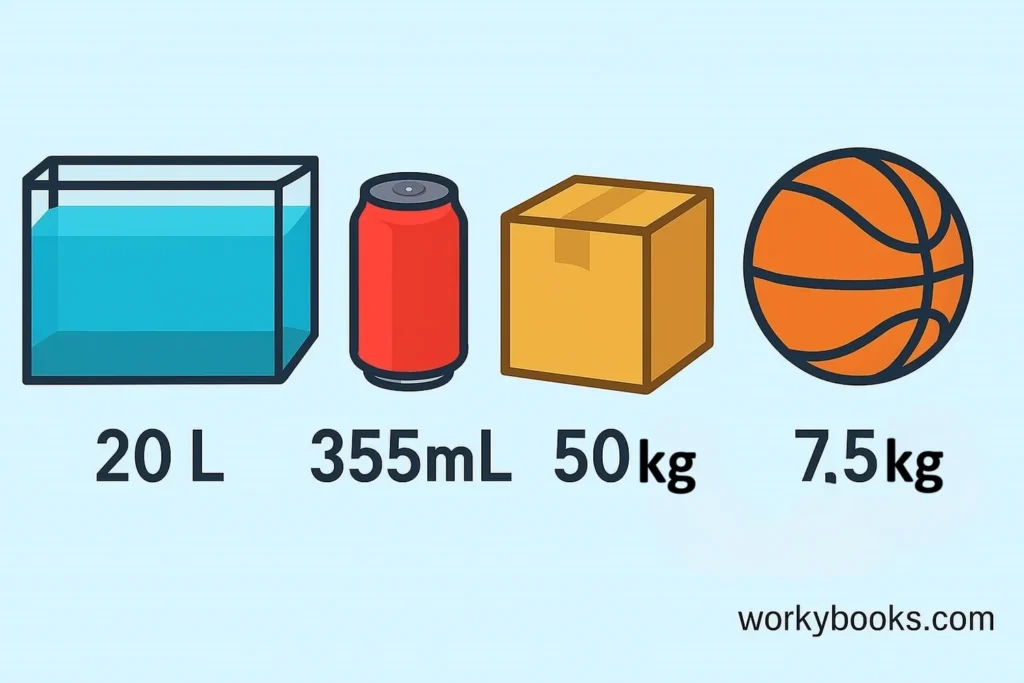
- Picture a standard water bottle (500 mL)
- Think of a large soda bottle (2 liters)
- Imagine a tablespoon in your kitchen
When you associate numbers with real objects, conversions become intuitive.
- Double-check unit labels carefully
Sometimes errors don’t come from math—they come from misreading.
Common issues:
- Confusing “fl oz” (fluid ounces) with “oz” (weight)
- Mixing “mL” and “L”
- Missing small details like “US” vs “UK”
Always read the unit fully before converting. A single overlooked label can invalidate your entire calculation.
- Use tools wisely—but don’t depend on them blindly
Digital converters are incredibly helpful, as you can see above. They save time and reduce manual calculation errors.
But here’s the catch: tools are only as good as your input.
If you select the wrong unit or misread a value, the result will still be wrong—just faster.
That’s why combining tools with understanding is the ultimate strategy.
Practical exercises to build accuracy
Try these simple drills:
- Convert 250 mL to cups (estimate first, then calculate)
- Convert 3 gallons to liters
- Convert 2 tablespoons to milliliters
Do them mentally first. Then verify. This builds both intuition and precision.
Common mistakes people make (and how to avoid them)
- Mixing systems without noticing
- Forgetting conversion factors
- Rounding too early
- Ignoring context (liquid vs dry)
- Trusting tools without checking inputs
Avoiding these is often more important than learning new formulas.
A short reflection on accuracy
Accuracy in volume conversion isn’t about being perfect—it’s about being consistent. The more you practice, the more your brain starts recognizing patterns. Eventually, conversions stop feeling like calculations and start feeling like second nature.
That’s the point where you stop checking every step—and still get the right answer.
FAQs
- What is the easiest way to remember volume conversions?
Focus on a few key anchor points like 1 cup ≈ 240 mL and build from there. Understanding relationships is easier than memorizing everything. - Why do US and UK volume measurements differ?
They developed independently over time. For example, a US gallon is smaller than an imperial gallon, which can lead to confusion if not specified. - Is 1 mL always equal to 1 gram?
Only for water (approximately). Other substances have different densities, so volume and weight won’t match exactly. - When should I convert volume to weight?
In baking or scientific contexts where precision matters. Weight is often more accurate than volume for dry ingredients. - How can I avoid mistakes when converting quickly?
Estimate first, then calculate. This helps you catch obvious errors before they matter. - Are digital converters reliable?
Yes, but only if used correctly. Always double-check your inputs and understand the units you’re working with.