






















12 Powerful Volume Measurement Conversion Guide Examples Made Simple
Volume is one of those everyday concepts that quietly shapes our lives. Whether you are pouring water into a glass, measuring milk for tea, or calculating fuel capacity, you are constantly dealing with volume. Yet, when different units come into play—liters, milliliters, gallons, cups, cubic meters—it can feel confusing, even frustrating.
This guide is designed to simplify that confusion. Instead of overwhelming you with formulas alone, it walks you through practical, real-life examples. By the end, you won’t just “know” conversions—you’ll understand them in a way that sticks.
Understanding the foundation of volume measurement
Before diving into examples, it helps to understand what volume really means. In simple terms, volume is the amount of space something occupies. Liquids, gases, and even solids can all be measured in volume.
There are two major systems used worldwide:
- Metric system (liters, milliliters, cubic meters)
- Imperial/US system (gallons, quarts, pints, cups, ounces)
The metric system is widely used globally because of its simplicity—it’s based on powers of 10. The imperial system, though still common in some countries, relies on less intuitive relationships.
Example 1: liters to milliliters made simple
Let’s start with the most common conversion.
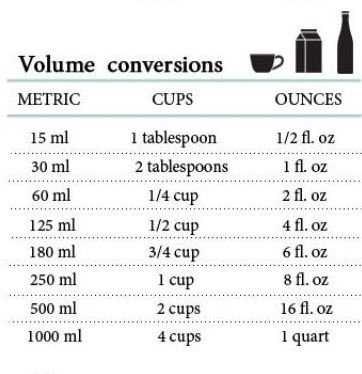
1 liter = 1000 milliliters
Imagine you have a 1-liter bottle of water. If you pour it into smaller cups, each holding 250 mL, you’ll get exactly 4 cups.
Quick trick: multiply liters by 1000
2 liters = 2000 mL
0.5 liters = 500 mL
This is one of the easiest conversions because it follows a simple decimal rule.
Example 2: milliliters to liters without confusion
Now reverse it.
1000 mL = 1 liter
If you have 750 mL of juice, divide by 1000:
750 ÷ 1000 = 0.75 liters
Real-life insight: Most beverage bottles (like soft drinks) are labeled in liters, but smaller medicine doses are in milliliters. Knowing this helps avoid mistakes.
Example 3: liters to cubic meters explained visually
This conversion is useful in science, construction, and water storage.
1 cubic meter = 1000 liters
Think of a large water tank. If it holds 1 cubic meter of water, it actually contains 1000 liters.
Quick conversion:
500 liters = 0.5 cubic meters
2000 liters = 2 cubic meters
Helpful memory tip: cubic meters are just “big liters.”
Example 4: cubic centimeters and milliliters connection
This is one of the most overlooked yet powerful relationships:
1 cubic centimeter (cm³) = 1 milliliter (mL)
That means a small cube measuring 1 cm on each side holds exactly 1 mL of liquid.
Practical use: This is why syringes and medical doses often use mL—it directly relates to physical space.
Example 5: US cups to milliliters in daily cooking
Cooking often mixes measurement systems.
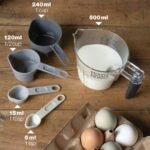
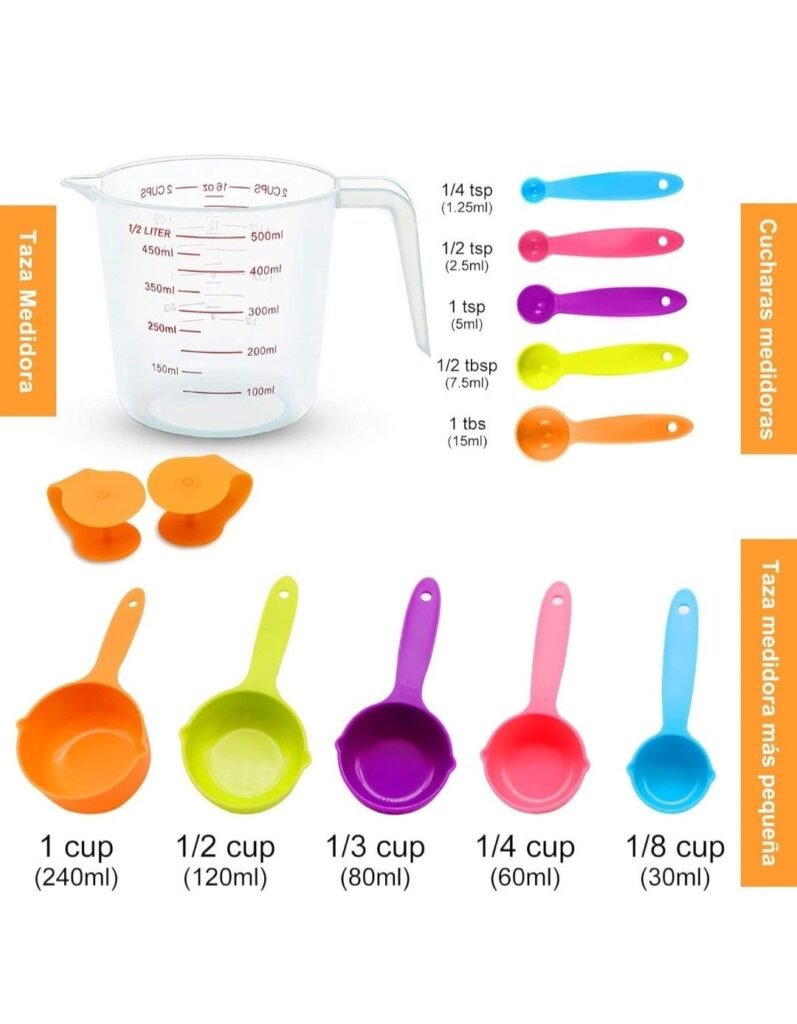
1 US cup ≈ 240 mL
If a recipe calls for 2 cups of milk:
2 × 240 = 480 mL
Real-life trick: A standard glass in many homes holds about 250 mL, which is very close to 1 cup.
Example 6: tablespoons and teaspoons breakdown
These smaller units are common in recipes.
1 tablespoon = 15 mL
1 teaspoon = 5 mL
So:
1 tablespoon = 3 teaspoons
If a recipe needs 30 mL:
That equals 2 tablespoons
This is extremely useful when you don’t have proper measuring tools.
Example 7: gallons to liters for fuel and storage
In some places, fuel is measured in gallons, while others use liters.
1 US gallon ≈ 3.785 liters
If a car uses 10 gallons:
10 × 3.785 = 37.85 liters
Quick estimate trick: multiply gallons by 4 for a rough answer.
Example 8: liters to gallons for reverse understanding
Now reverse it.
1 liter ≈ 0.264 gallons
If you have 20 liters:
20 × 0.264 ≈ 5.28 gallons
This is helpful when comparing fuel prices or container sizes internationally.
Example 9: cubic meters to cubic feet in construction
This conversion is often used in building and engineering.
1 cubic meter ≈ 35.3 cubic feet
If a room volume is 2 cubic meters:
2 × 35.3 = 70.6 cubic feet
This helps when working with materials like sand, cement, or air space calculations.
Example 10: fluid ounces to milliliters for precision
Fluid ounces are common in beverages and cosmetics.
1 US fluid ounce ≈ 29.57 mL
If a bottle contains 8 oz:
8 × 29.57 ≈ 236.56 mL
That’s almost exactly 1 cup.
Example 11: pints and quarts relationship simplified
Understanding these relationships reduces the need for constant conversion.
1 quart = 2 pints
1 pint = 2 cups
So:
1 quart = 4 cups
If you need 2 quarts:
2 × 4 = 8 cups
This chain conversion method saves time.
Example 12: mixing metric and imperial in real life
Let’s say a recipe says:
“Add 500 mL of water and 1 cup of milk.”
Convert everything to one system.
1 cup ≈ 240 mL
Total liquid = 500 + 240 = 740 mL
This unified approach prevents mistakes and improves accuracy.
Practical strategies to master volume conversions
Understanding examples is only part of the process. Here are strategies that make conversions feel natural:
Use mental anchors
Remember key values like:
- 1 L = 1000 mL
- 1 cup ≈ 240 mL
- 1 gallon ≈ 3.8 L
Break large numbers into smaller parts
Instead of converting 3750 mL directly:
Think 3000 + 750
= 3 L + 0.75 L
= 3.75 L
Estimate first, calculate later
Estimation helps catch errors. If your exact answer is far from your estimate, something is wrong.
Stick to one system when possible
Mixing systems increases confusion. Convert everything into either metric or imperial before solving.
Why these conversions matter in everyday life
Volume conversions are not just academic exercises. They show up everywhere:
Cooking: Accurate measurements affect taste and texture
Medicine: Correct dosage can be critical
Travel: Fuel and liquid limits vary by region
Construction: Material calculations depend on volume
Science: Experiments require precision
When you understand conversions, you gain confidence in all these areas.
A short reflection on learning through examples
Many people struggle with volume conversions because they memorize formulas without context. Examples bring meaning. They connect numbers to real experiences—pouring water, filling containers, measuring ingredients.
Once you start seeing conversions as part of daily life rather than abstract math, everything becomes easier.
Frequently Asked Questions (FAQs)
- What is the easiest way to remember volume conversions?
Focus on a few key anchor values like 1 liter = 1000 mL and 1 cup ≈ 240 mL. Build other conversions around these. - Why does the metric system feel easier than the imperial system?
Because the metric system is based on powers of 10, making conversions straightforward compared to irregular imperial relationships. - Is 1 mL always equal to 1 cubic centimeter?
Yes, exactly. This is a universal equivalence used in science and medicine. - How can I avoid mistakes when converting units?
Always write down units clearly, convert everything into one system, and estimate your answer before finalizing. - Why are there different types of gallons (US and Imperial)?
They come from historical measurement systems. The US gallon is smaller than the Imperial gallon, which can cause confusion. - Do I need to memorize all conversions?
No. Memorize a few key ones and understand relationships. With practice, the rest becomes intuitive.
Closing thoughts
Volume conversion is less about memorizing numbers and more about building familiarity. When you connect measurements to real-life situations—cooking, pouring, storing—you begin to “feel” the numbers rather than calculate them every time.
With these 12 examples, you now have a toolkit that turns confusion into clarity.