















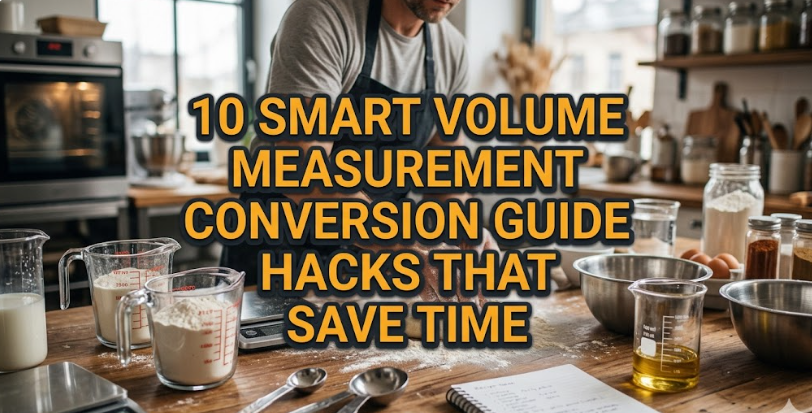

10 Smart Volume Measurement Conversion Guide Hacks That Save Time
If you’ve ever stood in a kitchen staring at a recipe that calls for cups while your measuring jug shows milliliters, you already know the quiet frustration of volume conversion. It’s not difficult—but it is repetitive, and repetition is where time quietly slips away. Over the years, through cooking mishaps, lab notes, and even DIY projects, I’ve learned that the difference between struggling and flowing often comes down to a few clever shortcuts.
This isn’t just a list of conversions. It’s a collection of habits, patterns, and mental tricks that make volume conversion feel almost automatic.
hack 1: think in anchors, not formulas
Most people try to remember formulas. That’s where they get stuck. Instead, anchor your memory around a few key conversions that act like “home base.”
For example:
- 1 liter ≈ 1000 milliliters
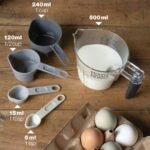
- 1 cup ≈ 240 milliliters
- 1 tablespoon ≈ 15 milliliters
Once you internalize these anchors, everything else becomes a quick adjustment. Instead of calculating from scratch, you’re simply scaling up or down from something familiar. It’s like knowing landmarks in a city—you don’t need a map every time.
Try this: if you remember that 1 cup is roughly 240 ml, then half a cup becomes 120 ml instantly. No thinking required.
hack 2: round first, refine later
Precision is important—but not always immediately. When you’re converting quickly, start with a rounded estimate.
Say you need to convert 750 ml into cups. Instead of doing exact math:
- 1 cup ≈ 250 ml (rounded for speed)
- 750 ÷ 250 = 3 cups
Later, if needed, you can refine:
- actual value ≈ 3.125 cups
This two-step thinking saves time because your brain handles rough numbers faster than precise ones.
hack 3: use doubling and halving
Multiplication tables slow people down. But doubling and halving? That’s instinctive.
Example:
- 1 cup = 240 ml
- 2 cups = 480 ml
- 4 cups = 960 ml
Need 3 cups? Just combine:
- 2 cups (480 ml) + 1 cup (240 ml) = 720 ml
This method works especially well when scaling recipes. Instead of calculating everything separately, you build from known pieces.
hack 4: memorize conversion “clusters”
Instead of memorizing isolated facts, group them into clusters.
A simple kitchen cluster might look like:
- 1 cup = 16 tablespoons
- 1 tablespoon = 3 teaspoons
- 1 cup = 48 teaspoons
Now you don’t need to memorize each relationship independently. You just move within the cluster.
It’s like knowing a family tree—once you understand the connections, everything else becomes easier to recall.
hack 5: visualize containers
This might sound unusual, but it works surprisingly well. Instead of thinking in numbers, think in objects.
Imagine:
- a standard water bottle ≈ 500 ml
- a mug ≈ 250 ml
- a teaspoon ≈ a small sip
When you picture volume physically, your brain bypasses abstract math and jumps straight to intuition. This is especially helpful when you don’t have measuring tools nearby.
hack 6: convert to the smallest unit first
When dealing with tricky conversions, go small before going big.
For example, converting cups to teaspoons:
- 1 cup = 48 teaspoons
Instead of jumping between units, convert everything into teaspoons first. Then rebuild into the desired unit if needed.
This method reduces confusion because you’re working in one consistent unit at a time.
hack 7: keep a “mental cheat sheet”
There are some conversions that come up again and again. These deserve permanent space in your memory.
Examples:
- 1 liter = 4 cups (approximate)
- 1 gallon (US) = 16 cups
- 1 cup = 8 fluid ounces
If you rehearse these occasionally—even casually—they become automatic. Over time, you stop “remembering” and start “knowing.”
hack 8: use proportional thinking
Instead of exact numbers, think in proportions.
If:
- 1 cup = 240 ml
Then:
- ½ cup = 120 ml
- ¼ cup = 60 ml
- ¾ cup = 180 ml
You’re not calculating—you’re scaling. This is faster because your brain handles fractions more naturally than division.
hack 9: avoid unnecessary conversions
One of the biggest time-wasters is converting when you don’t need to.
If a recipe uses cups, stick with cups throughout. Don’t convert to milliliters unless absolutely necessary.
Switching units mid-process increases cognitive load and introduces errors. Consistency is a hidden efficiency tool.
hack 10: practice in real situations
This might be the most important hack of all. Conversion skills don’t improve through memorization alone—they improve through use.
Cook without measuring apps occasionally. Estimate, adjust, and observe results. You’ll develop a feel for volume that no chart can teach.
Over time, you’ll notice something interesting: you stop thinking about conversion entirely. It becomes part of your intuition.
a short reflection on time and simplicity
What makes these hacks powerful isn’t just speed—it’s reduced mental friction. Every time you avoid a complicated calculation, you free up attention for something more important.
In cooking, that might mean focusing on taste. In science, it might mean focusing on accuracy. In daily life, it simply means less frustration.
Conversion, at its core, is not about numbers. It’s about relationships. Once you understand how units relate to each other, the math fades into the background.
practical mini-exercise
Try this without writing anything down:
You need 500 ml.
How many cups is that?
Using anchors:
- 1 cup ≈ 240 ml
- 2 cups ≈ 480 ml
So the answer is just over 2 cups.
That’s it. No calculator. No stress.
frequently asked questions
- what is the fastest way to convert volume units mentally?
The fastest way is to use anchor values like 1 cup ≈ 240 ml and then scale up or down. Avoid formulas and rely on familiar reference points. - is it okay to use approximate conversions?
Yes, especially in cooking. Small differences rarely affect results. For scientific work, refine your estimate after the initial calculation. - how can I remember conversions easily?
Group them into clusters and practice them in real-life situations. Repetition through use is more effective than memorization alone. - why do recipes use different measurement systems?
Different regions have different standards. The US commonly uses cups and ounces, while most other countries use metric units like liters and milliliters. - what is the most important conversion to memorize?
A strong starting point is 1 cup ≈ 240 ml. From there, many other conversions become easier to derive. - how can I avoid mistakes when converting?
Stick to one unit system when possible, double-check your anchor values, and use proportional thinking instead of complex formulas.
In the end, mastering volume conversion isn’t about becoming a human calculator. It’s about building a small toolkit of mental shortcuts that quietly save time, reduce effort, and make everyday tasks smoother.