


































5 Personal Temperature Measurement Conversion Guide Lessons I Learned
I didn’t set out to “learn temperature conversion.” Like most people, I stumbled into it—burnt food, misread weather forecasts, and one unforgettable science experiment that went completely sideways. Over time, these small mistakes quietly built a kind of practical understanding that no textbook ever quite delivered. What follows isn’t just a guide—it’s a collection of lived lessons, the kind you pick up slowly, sometimes reluctantly, and only appreciate much later.
lesson one: formulas are simple, but context is everything
At first, I thought temperature conversion was purely mathematical. You memorize a formula, plug in a number, and you’re done. For example:
Celsius to Fahrenheit: (°C × 9/5) + 32
Fahrenheit to Celsius: (°F − 32) × 5/9
It felt mechanical. Predictable. Safe.
But then came cooking.
A recipe I found online called for baking at 180°C. I absentmindedly set my oven to 180°F instead. The result wasn’t just undercooked—it was barely warmed. That’s when it hit me: numbers don’t exist in isolation. They live in context.
180°C is a standard baking temperature.
180°F is closer to keeping food warm.
Same number, completely different meaning.
That experience changed how I approached conversion. I stopped seeing it as a math exercise and started seeing it as interpretation. Every number carries a story. If you ignore the context, you miss the meaning.
Now, whenever I convert temperatures, I ask myself a simple question: “What does this feel like in real life?” That small pause has saved me more times than I can count.
lesson two: approximation is often more useful than precision
There was a time when I insisted on getting exact values. I’d calculate everything down to decimal points, convinced that accuracy meant correctness.
But real life doesn’t always need precision. It needs usefulness.
For example, a quick mental shortcut I learned:
To convert Celsius to Fahrenheit roughly, double the Celsius value and add 30.
It’s not perfect, but it’s fast.
20°C → (20 × 2) + 30 = 70°F (actual: 68°F)
30°C → (30 × 2) + 30 = 90°F (actual: 86°F)
Close enough for daily decisions—what to wear, whether to carry a jacket, or how hot it feels outside.
The lesson here wasn’t about abandoning accuracy. It was about choosing the right level of accuracy for the situation. If you’re doing scientific work, precision matters. But if you’re checking the weather, approximation is often better—it’s quicker, and it keeps your mind free.
lesson three: different systems reflect different histories
I used to think it was strange that multiple temperature scales existed at all. Why not just agree on one?
Then I started digging into their origins.
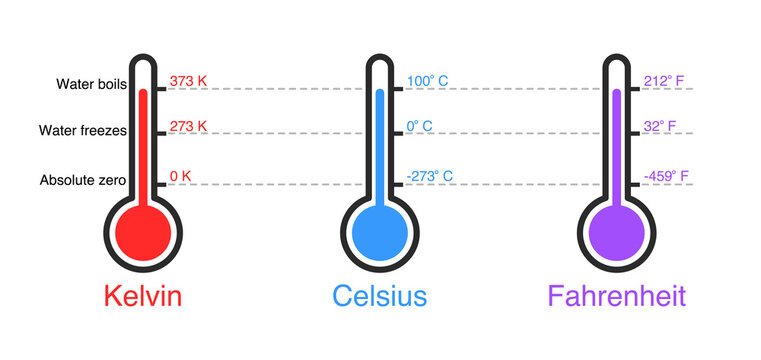
Celsius is tied to water—freezing at 0, boiling at 100. Clean, logical, intuitive.
Fahrenheit, on the other hand, is more… human. It was originally based on a mix of reference points, including body temperature and environmental conditions common in everyday life at the time.
Kelvin goes even deeper, rooted in scientific principles, starting at absolute zero—the theoretical point where all molecular motion stops.
What I learned from this wasn’t just historical trivia. It changed how I approached conversion.
Each scale serves a purpose:
Celsius is practical for everyday use in most parts of the world.
Fahrenheit offers finer granularity in weather reporting.
Kelvin is essential in scientific contexts.
Understanding why a system exists makes it easier to work with it. Instead of fighting the differences, I started appreciating them.
lesson four: mistakes teach faster than correct answers
One winter morning, I checked the weather and saw 5 degrees. Without thinking, I assumed it was mild. I stepped outside lightly dressed—and immediately regretted it.
It was 5°C, not 5°F.
That mistake stuck with me more than any correct conversion ever did.
There’s something powerful about getting it wrong. It creates a kind of emotional memory. You don’t just remember the number—you remember the feeling.
Since then, I’ve stopped fearing mistakes in learning. In fact, I lean into them. When I get a conversion wrong, I take a moment to understand why. Was it a formula error? A context misunderstanding? A careless assumption?
Each mistake becomes a checkpoint, a marker that sharpens my awareness.
lesson five: tools are helpful, but understanding is freedom
There are countless tools available today that can convert temperatures instantly. You type in a number, and the answer appears. It’s convenient—almost effortless.
But I’ve noticed something: relying entirely on tools can make you passive.
When you understand the logic behind conversion, you gain flexibility. You can estimate, verify, and adapt without needing external help.
For example, knowing that:
0°C = 32°F
10°C = 50°F
20°C = 68°F
30°C = 86°F
These anchor points act like mental landmarks. Even without a calculator, you can navigate between them.
Tools are great, but they shouldn’t replace understanding. They should complement it.
practical reflections from everyday life
Temperature conversion isn’t just academic—it shows up in unexpected places.
Cooking
Recipes from different countries often use different scales. A small misunderstanding can ruin a dish. Over time, I’ve learned to double-check and even memorize common cooking temperatures in both units.
Travel
Moving between regions means adapting quickly. Weather reports, air conditioning settings, even swimming pool temperatures—all require a bit of mental conversion.
Health
Body temperature is another area where clarity matters. Knowing the difference between 37°C and 100°F can prevent unnecessary panic—or complacency.
Science and education
In labs and classrooms, precision becomes critical. This is where the exact formulas and careful calculations come back into focus.
A small exercise that changed my perspective
At one point, I started keeping a small notebook. Every day, I’d write down the temperature in Celsius and try to estimate it in Fahrenheit before checking.
At first, I was wildly off.
But gradually, patterns emerged. Numbers started to feel familiar. Conversion stopped being a task and became almost intuitive.
It’s a simple exercise, but it builds something deeper than memorization—it builds instinct.
why temperature feels different across scales
One subtle lesson I learned is that numbers don’t just represent temperature—they shape perception.
For example:
25°C feels comfortably warm.
77°F feels… oddly specific.
The scale influences how we interpret the experience. Celsius feels structured, while Fahrenheit feels more granular.
This isn’t just about numbers—it’s about psychology. The scale you grow up with becomes your “native language” of temperature.
switching between scales: a mindset shift
Switching between Celsius and Fahrenheit isn’t just about applying a formula—it’s about shifting perspective.
Instead of translating word-for-word, think of it like switching languages. You don’t just convert—you adapt.
Over time, I’ve learned to “think” in both scales, depending on the situation. It’s not perfect, but it’s fluid.
And that fluidity is what makes conversion feel natural rather than forced.
closing thoughts
If there’s one thing I’ve learned, it’s this: temperature conversion isn’t just about numbers. It’s about awareness, context, and experience.
The formulas are easy. The real learning happens in the moments where things go wrong, where assumptions fail, and where you’re forced to think a little deeper.
And once you reach that point, conversion stops being something you do—and becomes something you understand.
frequently asked questions
- What is the easiest way to convert Celsius to Fahrenheit quickly?
A simple approximation is to double the Celsius value and add 30. It’s not exact but works well for everyday use. - Why do different countries use different temperature scales?
It mostly comes down to historical adoption. Some regions standardized Celsius, while others continued using Fahrenheit due to early industrial and cultural preferences. - When should I use Kelvin instead of Celsius or Fahrenheit?
Kelvin is primarily used in scientific contexts, especially in physics and chemistry, because it starts at absolute zero and avoids negative values. - Is it necessary to memorize conversion formulas?
Not strictly. Understanding key reference points and practicing estimation can often be more practical than memorizing formulas. - Why does Fahrenheit seem more detailed than Celsius?
Fahrenheit has smaller degree increments, which makes it feel more precise for everyday temperature differences, especially in weather reporting. - Can I rely entirely on online converters?
You can, but having a basic understanding helps you verify results and make quick mental estimates when needed.