




































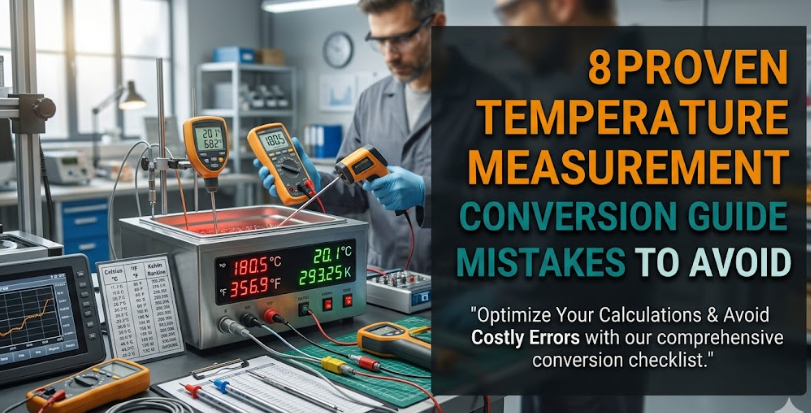

8 Proven Temperature Measurement Conversion Guide Mistakes to Avoid
Temperature conversion seems simple on the surface. A quick formula, a calculator, or even a mental shortcut—and you’re done. Yet in real-life situations, small mistakes in converting temperatures can lead to incorrect cooking results, faulty scientific data, or even industrial mishaps. The issue isn’t just about numbers; it’s about understanding the logic behind those numbers.
This guide explores eight common mistakes people make when converting temperature and, more importantly, how to avoid them. Along the way, you’ll find relatable examples, practical insights, and small exercises to help you internalize the concepts rather than memorize them.
- confusing the conversion formulas
One of the most frequent errors is mixing up formulas for Celsius and Fahrenheit. Many beginners remember that there is a multiplication and an addition involved, but they often reverse the steps.
For example, converting Celsius to Fahrenheit requires:
Multiply by 9/5, then add 32.
A common mistake is adding 32 first and then multiplying, which leads to completely wrong results.
Try this quick comparison:
Correct method:
25°C → (25 × 9/5) + 32 = 77°F
Incorrect method:
(25 + 32) × 9/5 = 102.6°F
That’s a significant difference. The mistake comes from misunderstanding the structure of the formula rather than forgetting it.
A simple fix is to remember this phrase:
“Multiply, then shift.”
Where “shift” refers to adding 32.
- ignoring the offset in fahrenheit conversions
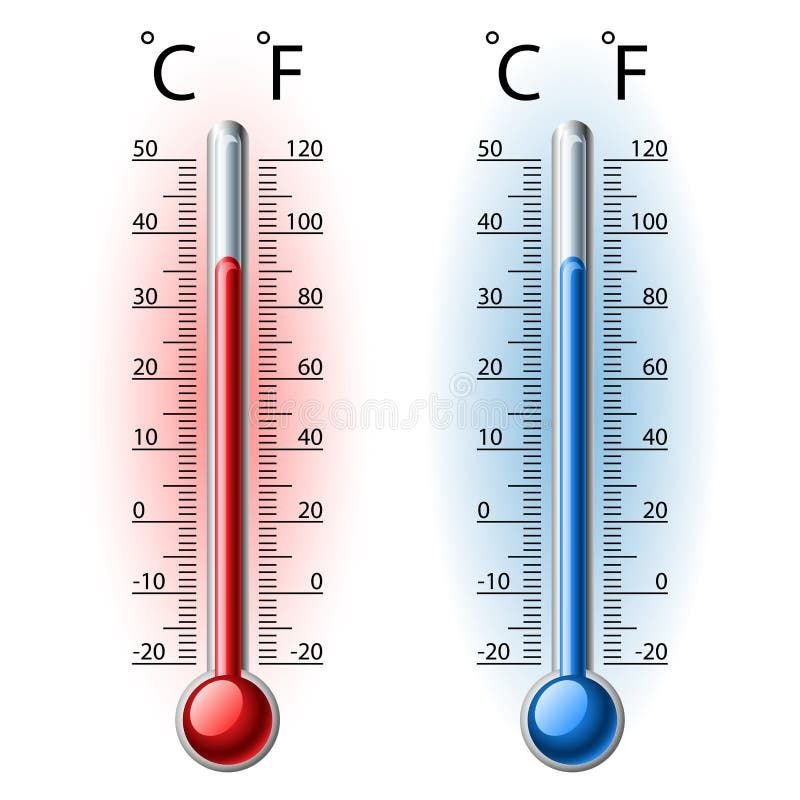
Celsius and Kelvin scales start at logical zero points. Fahrenheit, however, includes an offset. This means 0°F does not represent zero thermal energy.
Many learners assume conversions are purely proportional, like length or weight. They multiply values without considering the constant offset.
Example mistake:
Converting 10°C by just multiplying:
10 × 9/5 = 18°F (incorrect)
Correct:
(10 × 9/5) + 32 = 50°F
The missing 32 is not optional—it’s essential. Forgetting it is like leaving out a key ingredient in a recipe.
- treating kelvin like celsius
Kelvin is often misunderstood because it looks similar to Celsius. The size of one degree is the same, but the starting point is very different.
Celsius starts at the freezing point of water.
Kelvin starts at absolute zero.
A common mistake is applying Celsius formulas directly to Kelvin.
Correct relationship:
K = °C + 273.15
Mistake example:
25°C = 25K (incorrect)
Correct:
25°C = 298.15K
This error can be especially dangerous in scientific calculations where precision matters.
A helpful mindset:
Think of Kelvin as “Celsius shifted upward by 273.15.”
- rounding too early
Rounding numbers during intermediate steps can introduce cumulative errors. While rounding seems harmless, it can distort results—especially in sensitive calculations.
Example:
Convert 37°C to Fahrenheit:
Exact:
(37 × 9/5) + 32 = 98.6°F
If you round 9/5 to 2:
(37 × 2) + 32 = 106°F (incorrect)
That’s a large deviation caused by premature rounding.
Best practice:
Only round your final answer, not the steps in between.
- relying blindly on memory tricks
Shortcuts like “double and add 30” for converting Celsius to Fahrenheit can be useful—but only for rough estimates.
Example:
20°C × 2 + 30 = 70°F (actual: 68°F)
This is acceptable for casual use but not for precise applications like medicine or engineering.
Mistake:
Using approximation methods in situations that require accuracy.
Solution:
Use shortcuts only when approximate values are acceptable, and always double-check when precision matters.
- mixing up unit symbols
This might seem trivial, but mixing up symbols like °C, °F, and K can cause confusion or misinterpretation.
For instance:
Writing 300°C instead of 300K implies a completely different temperature.
Also, Kelvin does not use the degree symbol.
Incorrect:
300°K
Correct:
300 K
This small detail matters in formal writing, scientific reports, and exams.
- forgetting context in real-world applications
Temperature conversions are not just math problems—they often exist within a context.
Consider cooking:
An oven set to 180°C is not interchangeable with 180°F.
If you forget to convert properly, your dish may be undercooked or burned.
Mini scenario:
A recipe says bake at 350°F.
You mistakenly set your oven to 350°C.
Result:
Your food burns quickly.
Understanding the context helps you recognize when a number “feels wrong.”
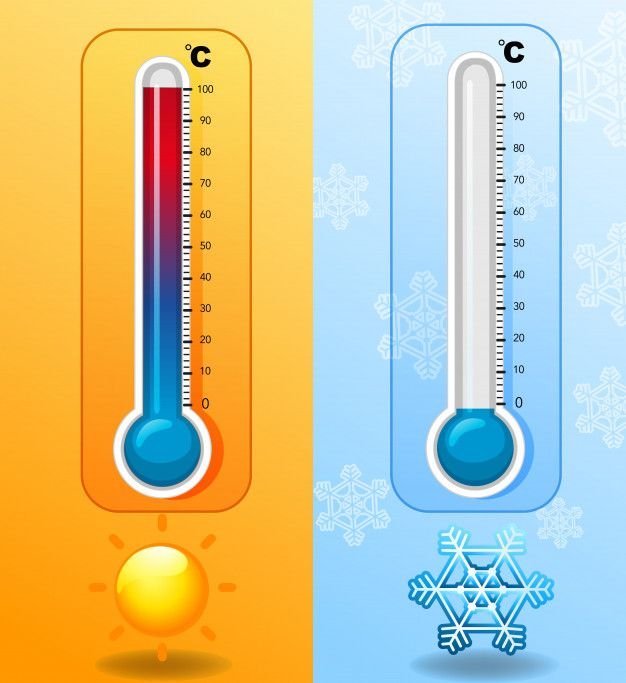
- not verifying results
The final and perhaps most overlooked mistake is not checking whether the answer makes sense.
A quick sanity check can prevent major errors.
For example:
Room temperature is around 20–25°C.
If your conversion gives 120°F, something is clearly off.
Ask yourself:
Does this result align with real-world expectations?
If not, revisit your steps.
practical mini exercises
To reinforce learning, try these:
Exercise 1:
Convert 0°C to Fahrenheit.
Exercise 2:
Convert 100°F to Celsius.
Exercise 3:
Convert 50°C to Kelvin.
Answers:
- 32°F
- (100 − 32) × 5/9 = 37.8°C
- 323.15 K
Try solving them without a calculator first, then verify.
real-life reflection
Temperature conversion is more than academic. It appears in weather forecasts, healthcare, cooking, engineering, and travel.
Think about switching between countries where temperature scales differ. A misunderstanding could affect clothing choices, health decisions, or even safety in extreme weather.
The goal is not just to memorize formulas but to develop intuition.
When you see a number, you should be able to estimate whether it makes sense before even calculating.
frequently asked questions
- why do we add 32 in fahrenheit conversion
The Fahrenheit scale is offset relative to Celsius. Adding 32 adjusts for the difference in zero points between the two scales. - is kelvin always higher than celsius
Yes. Kelvin values are always 273.15 units higher than Celsius for the same temperature. - can i use shortcuts for quick conversions
Yes, but only for rough estimates. For accurate results, always use the full formula. - why doesn’t kelvin use the degree symbol
Kelvin is an absolute scale, not relative like Celsius or Fahrenheit. Therefore, it is written as K, not °K. - what is the easiest way to avoid mistakes
Understand the logic behind formulas, avoid early rounding, and always double-check your results. - do professionals still make conversion mistakes
Yes. Even experienced individuals can make errors, especially under time pressure. That’s why verification is always important.
closing thoughts
Mistakes in temperature conversion are not a sign of incompetence—they are a sign of misunderstanding small but critical details. By recognizing these eight common pitfalls, you build not only accuracy but confidence.
Instead of memorizing formulas mechanically, focus on understanding relationships. Once you do, conversions become less about calculation and more about intuition.