





























10 Smart Temperature Measurement Conversion Guide Tricks You Need
Temperature conversion sounds simple until you’re in the middle of cooking, solving a science problem, traveling, or working with technical data—and suddenly everything feels confusing. Celsius, Fahrenheit, Kelvin… numbers jump, formulas blur, and mistakes creep in quietly. But the truth is, you don’t need to memorize endless formulas or rely on guesswork. With the right tricks, temperature conversion becomes almost second nature.
This guide isn’t just about formulas. It’s about understanding patterns, building intuition, and using practical shortcuts that actually work in real-life situations. Think of it as a toolkit you can carry anywhere—whether you’re in a kitchen, a classroom, or checking the weather abroad.
Let’s walk through ten smart tricks that will change how you think about temperature conversion.
- Understand the story behind each scale
Before jumping into formulas, it helps to know why these temperature scales exist. When you understand their origins, conversions start to feel logical instead of mechanical.
Celsius is based on water. Zero is the freezing point, and 100 is the boiling point (at standard pressure). It’s neat, simple, and widely used around the world.
Fahrenheit, on the other hand, was designed with a different reference system. Water freezes at 32 and boils at 212. That makes the interval 180 degrees instead of 100.
Kelvin is used in science and starts from absolute zero—the point where molecular motion theoretically stops.
Once you see that each scale has its own “anchor points,” conversion becomes less about memorizing and more about mapping relationships.
Quick anchor reference:
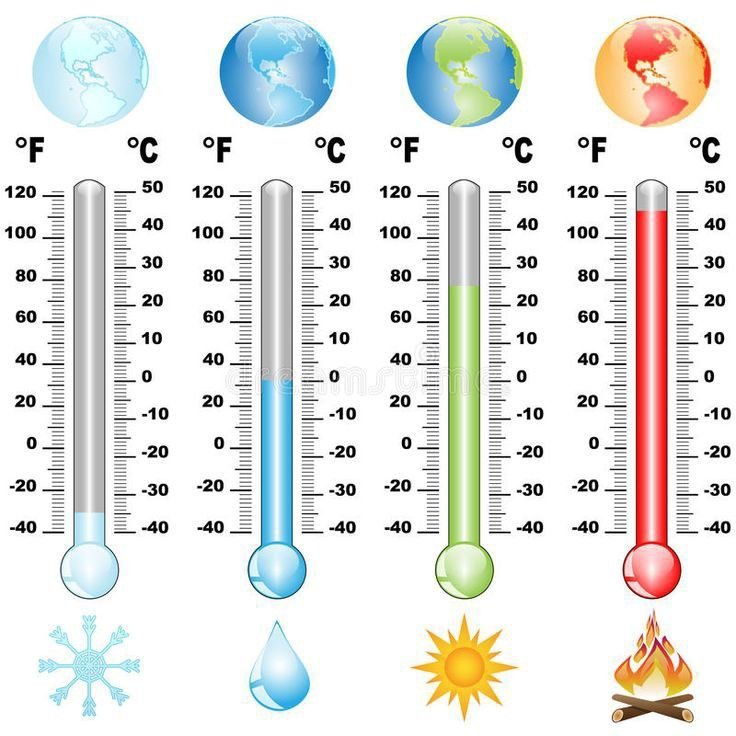
- Water freezes: 0°C = 32°F
- Water boils: 100°C = 212°F
- Absolute zero: −273.15°C = 0 K
These three anchors alone can help you estimate almost any conversion.
- Use the “double and add 30” shortcut for quick estimates
One of the most practical tricks for converting Celsius to Fahrenheit quickly is this:
Double the Celsius value and add 30.
It’s not perfectly accurate, but it’s close enough for everyday use.
Example:
25°C
Double → 50
Add 30 → 80°F
Actual value is 77°F, so the estimate is just 3 degrees off.
This trick works best between 0°C and 30°C, which conveniently covers most weather conditions.
Why it works:
The exact formula is F = (C × 9/5) + 32
The shortcut replaces 9/5 (1.8) with 2 and 32 with 30—making mental math easier.
- Reverse shortcut: subtract 30 and halve
To go from Fahrenheit to Celsius quickly:
Subtract 30, then divide by 2.
Example:
86°F
Subtract 30 → 56
Divide by 2 → 28°C
Actual value is 30°C, so again, close enough.
This is especially helpful when checking weather forecasts or adjusting oven temperatures without a calculator.
- Memorize a few “golden temperatures”
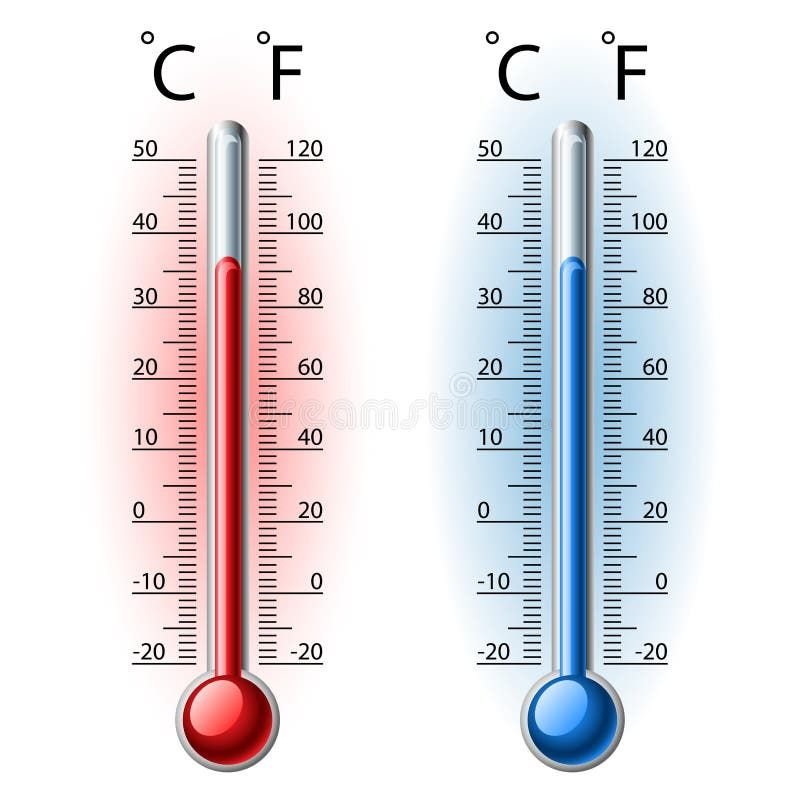
Instead of memorizing formulas, memorize key temperature pairs. These act like landmarks on a map.
Here are some extremely useful ones:
- 0°C = 32°F (freezing point)
- 10°C = 50°F (cool day)
- 20°C = 68°F (room temperature)
- 25°C = 77°F (comfortable warm day)
- 30°C = 86°F (hot day)
- 37°C = 98.6°F (body temperature)
- 100°C = 212°F (boiling water)
Once you know these, you can interpolate (estimate between them) easily.
For example:
If 20°C = 68°F and 30°C = 86°F, then 25°C is roughly halfway → about 77°F.
- Think in ranges, not exact numbers
In real life, you rarely need perfect precision. Thinking in ranges can save time and reduce stress.
For instance:
- 15–20°C → cool to mild (60–68°F)
- 20–25°C → comfortable (68–77°F)
- 25–30°C → warm (77–86°F)
Instead of converting every number exactly, ask yourself: what does this temperature feel like?
This approach is especially useful for:
- Travel
- Weather interpretation
- Clothing decisions
- Use Kelvin conversions as simple shifts
Kelvin is surprisingly easy once you understand one key idea:
Kelvin = Celsius + 273.15
That’s it.
No multiplication, no fractions—just addition.
Example:
25°C → 25 + 273.15 = 298.15 K
For rough work, you can just add 273.
This makes Kelvin the simplest scale to convert once you’re working from Celsius.
- Break complex numbers into parts
When dealing with awkward numbers, break them down.
Example:
Convert 37°C to Fahrenheit.
Instead of calculating everything at once:
- 30°C ≈ 86°F
- 7°C ≈ 13°F (using rough doubling method)
Add them:
86 + 13 = 99°F (close to actual 98.6°F)
This chunking method makes mental math much easier.
- Use visual memory and patterns
Temperature conversion becomes easier when you visualize patterns instead of numbers.
Notice:
- Every increase of 5°C ≈ increase of 9°F
- Every increase of 10°C ≈ increase of 18°F
So if you know:
20°C = 68°F
Then:
25°C → 68 + 9 = 77°F
30°C → 68 + 18 = 86°F
This pattern-based thinking removes the need for formulas entirely.
- Practice with real-life scenarios
The fastest way to master temperature conversion is to use it in everyday life.
Try this:
- When checking weather, convert it mentally
- When cooking, translate oven temperatures
- When reading science content, switch between scales
Example:
An oven recipe says 180°C
You know 200°C ≈ 392°F
So 180°C is slightly lower → about 356°F
This kind of reasoning builds intuition faster than memorization.
- Combine tools with intuition
Even with all these tricks, tools still help—especially when precision matters. But the goal is not to depend entirely on them.
Use tools to:
- Verify your estimates
- Learn patterns
- Build confidence
Over time, you’ll notice something interesting: you stop needing the tool as much.
That’s when you know you’ve mastered the skill.
Putting it all together: a practical example
Let’s say you’re traveling and see this:
Weather forecast: 28°C
Without a calculator:
- Double → 56
- Add 30 → 86°F (slightly high)
- Adjust down → about 82°F
Now combine with experience:
That’s a warm day—short sleeves weather.
You didn’t just convert a number—you understood it.
Common mistakes to avoid
Even smart people make these errors:
- Forgetting the +32 in the formula
- Mixing up multiplication and division
- Assuming linear equivalence (they’re not perfectly aligned)
- Overthinking simple conversions
The tricks in this guide are designed to prevent these mistakes naturally.
Why these tricks actually work
They work because they:
- Reduce cognitive load
- Use patterns instead of formulas
- Align with real-world needs
- Build intuitive understanding
Instead of memorizing abstract math, you’re learning a language—one that becomes fluent with practice.
A simple practice routine
If you want to master temperature conversion quickly, try this daily:
Day 1–3:
Memorize the golden temperatures
Day 4–6:
Practice the shortcut methods
Day 7–10:
Apply conversions in real life (weather, cooking, etc.)
Within 10 days, you’ll notice a huge difference.
FAQs
- What is the easiest way to convert Celsius to Fahrenheit quickly?
The easiest way is to double the Celsius value and add 30. It’s not exact but very close for everyday use. - Why does Fahrenheit start at 32 for freezing water?
Fahrenheit was designed using a different reference system than Celsius, based on historical temperature points rather than water’s freezing point alone. - Is Kelvin used in daily life?
Not usually. Kelvin is mainly used in scientific contexts, especially physics and chemistry. - How accurate are shortcut methods?
They are typically within a few degrees of the exact value, which is sufficient for most practical situations like weather or cooking. - Do I need to memorize formulas?
Not necessarily. Understanding patterns and using shortcuts can often replace the need for memorization. - What’s the fastest way to improve at conversions?
Practice regularly in real-life situations—like checking the weather or cooking—so the process becomes automatic.
Temperature conversion doesn’t have to be complicated. With the right mindset and a few smart tricks, it becomes a skill you barely notice you’re using. And once it clicks, it stays with you—quietly useful, always reliable.