

















10 Smart Length Measurement Conversion Guide Tricks for Beginners
Understanding length measurement conversions is one of those skills that quietly shapes everyday life. Whether you are measuring fabric for clothing, estimating the distance between two places, or working on school assignments, the ability to convert units confidently can save time and prevent mistakes. Yet for beginners, the topic often feels confusing because of the mix of systems, numbers, and unfamiliar abbreviations.
This guide is not just about memorizing formulas. It is about learning smart, practical tricks that make conversions feel natural. Think of it as learning a new language—once you understand the patterns, everything starts to make sense.
Below are ten carefully explained tricks, each designed to simplify length conversions and help you build confidence step by step.
trick 1: understand the two main systems first
Before jumping into calculations, it helps to know that most length measurements come from two main systems: the metric system and the imperial system.
The metric system is used in most parts of the world and includes units like millimeters (mm), centimeters (cm), meters (m), and kilometers (km). It is based on multiples of 10, which makes it easier to convert between units.
The imperial system, used in countries like the United States, includes inches, feet, yards, and miles. This system does not follow a simple base-10 pattern, which is why it feels more complicated.
A beginner mistake is trying to convert without knowing which system the units belong to. Always identify the system first. This alone can eliminate confusion and make the next steps clearer.
trick 2: memorize the metric ladder
The metric system becomes incredibly simple once you visualize it as a ladder:
millimeter → centimeter → meter → kilometer
Each step up means multiplying by 10. Each step down means dividing by 10.
For example:
- 1 meter = 100 centimeters
- 1 kilometer = 1000 meters
A useful trick is to imagine moving the decimal point:
- Moving left = bigger units
- Moving right = smaller units
So if you convert 2.5 meters to centimeters, you move two steps down (m → cm), giving 250 cm.
This trick removes the need for complicated multiplication and turns conversions into quick mental shifts.
trick 3: use “100 rule” for cm and m
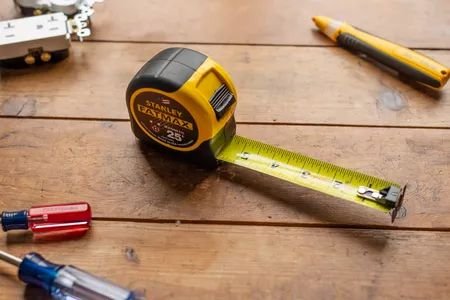
One of the most common conversions beginners face is between centimeters and meters.
Remember this simple rule:
- 1 meter = 100 centimeters
So:
- To convert meters to centimeters → multiply by 100
- To convert centimeters to meters → divide by 100
Example:
- 3 meters = 300 cm
- 450 cm = 4.5 meters
This rule appears so often that mastering it early gives you a strong foundation.
trick 4: learn key imperial relationships
The imperial system may not be as neat, but a few key relationships go a long way:
- 1 foot = 12 inches
- 1 yard = 3 feet
- 1 mile = 1760 yards
Instead of memorizing everything at once, focus on these core values. Once you know them, you can build other conversions.
For example:
If you know 1 yard = 3 feet and 1 foot = 12 inches, then:
1 yard = 36 inches
This method builds understanding instead of relying on memorization alone.
trick 5: break big conversions into smaller steps
Trying to convert directly between very different units can be overwhelming. A smarter approach is to break the conversion into smaller steps.
Example:
Convert miles to inches.
Instead of doing it in one go, break it down:
miles → yards → feet → inches
This step-by-step approach reduces errors and makes the process easier to follow.
Even professionals use this method when dealing with complex conversions.
trick 6: use approximation for quick thinking
Sometimes you do not need an exact answer. Approximation can be very useful, especially in real-life situations.
For example:
- 1 inch ≈ 2.5 cm
- 1 meter ≈ 3.3 feet
If you need a quick estimate, these rounded values are good enough.
Example:
If something is 10 inches long, you can quickly estimate:
10 × 2.5 = 25 cm
This trick is especially helpful in exams or when you do not have a calculator.
trick 7: remember common real-life references
Associating measurements with real-life objects makes them easier to remember.
For example:
- A door is about 2 meters tall
- A pencil is about 15 cm long
- A football field is about 100 meters
When you connect numbers to familiar objects, conversions become more intuitive.
Instead of thinking “100 cm equals 1 meter,” you start thinking “about the height of a small table.”
trick 8: write units clearly to avoid mistakes
Many beginners make errors not because they do not understand the math, but because they mix up units.
Always write units at every step:
- 5 m × 100 = 500 cm
If you skip units, it becomes easy to lose track of what you are doing.
Clear writing also helps you catch mistakes early. If something looks wrong, it usually is.
trick 9: use conversion chains
A powerful technique is to use conversion chains (also called factor-label method).
Example:
Convert 2 meters to millimeters.
2 m × (100 cm / 1 m) × (10 mm / 1 cm) = 2000 mm
This method ensures that units cancel out properly, leaving you with the correct result.
It may look complex at first, but with practice, it becomes one of the most reliable techniques.
trick 10: practice with patterns, not random problems
The biggest mistake beginners make is practicing randomly without understanding patterns.
Instead, group similar conversions together:
- Practice all meter-to-centimeter conversions
- Then centimeter-to-millimeter
- Then mix them
This builds pattern recognition, which is far more powerful than memorizing answers.
Over time, you will start recognizing conversions instantly without needing to calculate each step.
bringing it all together
Length measurement conversions are not just about numbers. They are about understanding relationships between units and using smart strategies to simplify the process.
At first, it may feel like there are too many rules. But once you start applying these tricks, you will notice that everything connects. The metric system becomes predictable, and even the imperial system starts to make sense.
The key is consistency. Practice a little every day, use real-life examples, and do not rush the learning process.
Eventually, conversions will feel less like a task and more like second nature.
mini practice section
Try solving these using the tricks above:
- Convert 5 meters to centimeters
- Convert 120 cm to meters
- Convert 2 yards to inches
- Estimate 20 inches in centimeters
- Convert 1.5 km to meters
Take your time and check your answers using the ideas discussed.
frequently asked questions
- why is the metric system easier than the imperial system?
The metric system is based on multiples of 10, which makes conversions straightforward. You only need to move the decimal point instead of dealing with irregular numbers like 12 or 1760. - what is the fastest way to convert between units?
The fastest method is using the metric ladder or simple multiplication rules like the “100 rule.” For more complex conversions, breaking them into smaller steps works best. - do i need to memorize all conversion values?
No, you only need to remember a few key relationships. From those, you can derive most other conversions. - how can i avoid mistakes in conversions?
Always write units clearly, double-check your steps, and use logical thinking. If the result looks unrealistic, review your calculation. - is estimation acceptable in measurements?
Yes, estimation is very useful in everyday life. However, for scientific or technical work, precise conversions are required. - how long does it take to master length conversions?
With regular practice, most beginners become comfortable within a few days to a couple of weeks. Mastery comes with consistent use over time.
By applying these smart tricks and practicing regularly, you will not only understand length conversions—you will start using them confidently in real life.