






10 Easy Temperature Measurement Tricks for Perfect Results
Temperature measurement sounds simple—place a thermometer, wait a moment, read the number. But in reality, getting an accurate reading can be surprisingly tricky. A few degrees off can mean the difference between a perfectly cooked roast and a dry one, a stable laboratory reaction and a failed experiment, or a safe environment and a risky one.
Whether you’re cooking, caring for someone who’s ill, running industrial equipment, managing a greenhouse, or conducting experiments, understanding the subtleties of temperature measurement makes a measurable difference. This guide dives deep into ten practical, easy-to-apply tricks that dramatically improve accuracy. Along the way, you’ll find tables, comparison charts, and actionable tips designed to make your results consistently reliable.
Why Accurate Temperature Measurement Matters
Before jumping into the tricks, it’s worth understanding why precision is so important.
Temperature affects:
- Chemical reaction rates
- Food safety and texture
- Equipment performance
- Human health diagnostics
- Energy efficiency
- Environmental control
Even small inaccuracies—2–3°C or 3–5°F—can lead to:
- Undercooked meat or overbaked pastries
- False fever readings
- Spoiled refrigerated goods
- Inefficient heating or cooling
- Faulty industrial processes
Let’s fix that.
Trick 1: Choose the Right Thermometer for the Job
Not all thermometers are created equal. Using the wrong type guarantees imperfect results.
Common Thermometer Types and Uses
| Thermometer Type | Best For | Accuracy Range | Response Time | Notes |
|---|---|---|---|---|
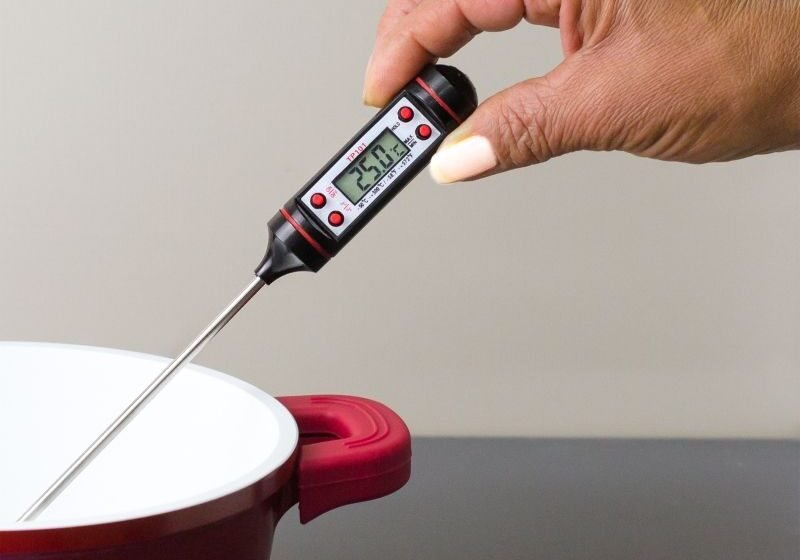
| Digital Probe | Cooking, liquids, meats | ±0.5°C | Fast | Highly versatile |
| Infrared (IR) | Surface readings, HVAC | ±1–2°C | Instant | Measures surface only |
| Mercury/Alcohol Glass | Laboratory, ambient air | ±0.1–0.5°C | Slow | Fragile |
| Thermocouple | Industrial, extreme heat | ±0.5–2°C | Very fast | Wide temperature range |
| Thermistor | Medical, appliances | ±0.1–0.3°C | Fast | Very precise within narrow range |
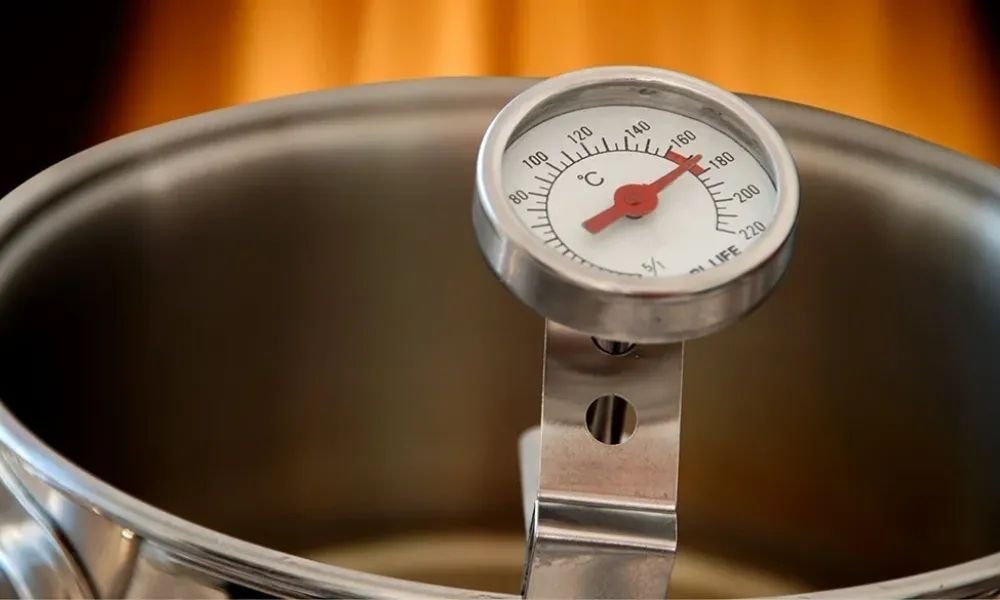
| Bimetal Dial | Ovens, grills | ±2–3°C | Moderate | Durable but less precise |
Quick Rule:
- Surface? Use infrared.
- Internal? Use a probe.
- Air? Use ambient digital or alcohol glass.
- Extreme heat? Use thermocouple.
Choosing properly eliminates 80% of common errors.
Trick 2: Calibrate Regularly (Ice and Boiling Method)
Calibration drift happens over time. Even good thermometers lose accuracy.
Ice Water Calibration Method
- Fill a glass with crushed ice.
- Add just enough water to fill gaps.
- Insert probe without touching sides.
- Wait 30 seconds.
- It should read 0°C (32°F).
Boiling Water Method
- Bring distilled water to rolling boil.
- Insert probe.
- It should read 100°C (212°F) at sea level.
⚠ Adjust for altitude:
| Altitude (meters) | Boiling Point (°C) |
|---|---|
| 0 | 100 |
| 300 | 99 |
| 600 | 98 |
| 900 | 97 |
| 1200 | 96 |
If readings are off, recalibrate or replace.
Calibration once every 1–3 months prevents creeping inaccuracy.
Trick 3: Allow Time for Stabilization
One of the biggest mistakes? Reading too soon.
Temperature readings need time to stabilize. Even fast digital probes require a few seconds.
Approximate Stabilization Time
| Thermometer Type | Liquids | Solid Foods | Air |
|---|---|---|---|
| Digital Probe | 5–10 s | 10–20 s | 30 s |
| Infrared | Instant | Instant | Not ideal |
| Glass Thermometer | 30–60 s | 60 s | 2–3 min |
If you move the probe around, you restart stabilization. Insert, hold steady, wait.
Trick 4: Measure in the Correct Location
Location affects temperature dramatically.
Cooking Example:
- Meat surface may be 20°C hotter than center.
- Thick cuts require center measurement.
- Avoid bone contact.
Room Example:
- Ceiling can be 5°C warmer than floor.
- Near windows gives skewed results.
- Avoid vents and direct sunlight.
Liquid Example:
- Stir first to distribute heat evenly.
- Measure mid-depth.
Placement Impact Chart
| Scenario | Wrong Placement Effect | Difference Possible |
|---|---|---|
| Oven Door Area | Cooler reading | -10°C |
| Meat Near Bone | Higher reading | +5°C |
| Sunlit Window | Warmer air reading | +3–8°C |
| Surface of Soup | Cooler than center | -2–4°C |
Correct placement = reliable reading.
Trick 5: Stir or Circulate Before Measuring Liquids
Liquids develop thermal gradients.
For example:
- Soup simmering: bottom hotter.
- Water heating: convection pockets form.
Best Practice:
- Remove from heat briefly.
- Stir gently.
- Insert thermometer mid-depth.
- Avoid touching container walls.
This prevents 3–5°C errors.
Trick 6: Avoid Thermal Shock to Sensors
Sudden extreme temperature change damages sensors or skews readings.
Example:
- Moving probe from freezer directly into boiling water.
Better approach:
- Let thermometer reach room temperature.
- Then measure high heat.
Why?
Rapid expansion stresses internal components, especially thermistors and glass.
Consistent accuracy depends on gentle transitions.
Trick 7: Keep Sensors Clean
Residue affects readings.
- Grease insulates probes.
- Sugar caramelizes and traps heat.
- Mineral deposits insulate surfaces.
Cleaning Guide
| Thermometer Type | Cleaning Method |
|---|---|
| Digital Probe | Alcohol wipe, warm soapy cloth |
| Infrared Lens | Soft microfiber cloth |
| Glass | Mild detergent, rinse thoroughly |
| Thermocouple | Manufacturer-approved solvent |
Never submerge digital display units.
Trick 8: Shield from Environmental Interference
Environmental factors distort readings:
- Wind
- Sunlight
- Steam
- Humidity
- Drafts
Outdoor Measurement Tip:
Shield probe with hand or cover.
Infrared Tip:
Avoid steam; it scatters IR beams.
Air Measurement Tip:
Wait 15 minutes after entering room before reading.
Trick 9: Understand Emissivity for Infrared Thermometers
Infrared thermometers measure radiation, not actual temperature directly.
Shiny metals reflect IR poorly.
Emissivity Table
| Surface Type | Emissivity |
|---|---|
| Matte black paint | 0.95 |
| Water | 0.96 |
| Human skin | 0.98 |
| Stainless steel | 0.10–0.60 |
| Aluminum foil | 0.03 |
Low emissivity = inaccurate reading.
Solution:
- Apply matte tape to shiny surface.
- Measure taped area.
Trick 10: Use Multiple Readings and Average Them
Single measurements can mislead.
Best Practice:
- Take 3 readings.
- Wait between readings.
- Calculate average.
Example
| Reading # | Temperature (°C) |
|---|---|
| 1 | 74.2 |
| 2 | 74.6 |
| 3 | 74.4 |
| Average | 74.4°C |
This reduces random error by up to 50%.
Bonus: Common Temperature Mistakes
| Mistake | Why It’s a Problem |
|---|---|
| Measuring frozen food surface | Core still cold |
| Using same probe for raw & cooked | Cross-contamination |
| Ignoring altitude | Boiling point error |
| Measuring too close to heat source | Skewed reading |
| Dropping thermometer | Internal damage |
Practical Temperature Accuracy Flow Chart
Start
  ↓
Choose Correct Thermometer
  ↓
Calibrate?
  ↓ Yes
Stir or Position Properly
  ↓
Insert and Hold Steady
  ↓
Wait for Stabilization
  ↓
Take Multiple Readings
  ↓
Average Results
  ↓
Clean & Store Properly
  ↓
Accurate Result Achieved
Temperature Accuracy Comparison Chart
| Factor Affecting Accuracy | Low Impact | Medium Impact | High Impact |
|---|---|---|---|
| Calibration Frequency | ✓ | ✓✓ | |
| Placement Location | ✓ | ✓✓✓ | |
| Sensor Cleanliness | ✓ | ✓✓ | |
| Environmental Conditions | ✓✓ | ✓✓✓ | |
| Equipment Quality | ✓ | ✓✓ | ✓✓✓ |
Real-World Applications
In Cooking
- Perfect steak requires 54–57°C internal.
- Bread baking depends on oven accuracy.
- Candy stages rely on 1–2°C precision.
In Healthcare
- Fever threshold: 38°C.
- 0.5°C difference may alter diagnosis.
In Industry
- Chemical reactions double rate roughly every 10°C increase.
- Equipment safety limits depend on thermal thresholds.
In Home Energy
- Incorrect thermostat readings increase bills.
- 1°C difference can affect comfort significantly.
Quick Accuracy Checklist
- ✔ Use correct thermometer
- ✔ Calibrate monthly
- ✔ Place correctly
- ✔ Stir liquids
- ✔ Avoid drafts
- ✔ Wait for stabilization
- ✔ Take multiple readings
- ✔ Keep sensors clean
Final Thoughts
Temperature measurement isn’t just about numbers—it’s about consistency, safety, and performance. The difference between “close enough” and precise can change outcomes in subtle but powerful ways.
These ten tricks aren’t complicated. They’re practical habits. And once they become routine, your readings will become more reliable, repeatable, and trustworthy.
Precision isn’t luck—it’s method.
Frequently Asked Questions (FAQs)
1. How often should I calibrate my thermometer?
For home use, once every 1–3 months is sufficient. In professional kitchens or laboratories, weekly or even daily calibration may be required.
2. Why does my infrared thermometer give different readings each time?
Possible causes include shiny surfaces, steam interference, incorrect emissivity settings, or measuring from different distances. Try measuring a matte surface or applying tape.
3. Can I rely on my oven’s built-in thermometer?
Not always. Many ovens are off by 5–15°C. Using a separate calibrated oven thermometer improves accuracy.
4. Is digital always better than analog?
Generally yes for speed and convenience, but high-quality glass laboratory thermometers can be extremely precise.
5. Why do I get different temperatures in different parts of the same room?
Air stratification. Warm air rises, cold air sinks. Drafts and sunlight also create microclimates.
6. What is the biggest cause of inaccurate temperature readings?
Improper placement is the most common reason, followed closely by lack of calibration.