






Volume Conversions: More Important Than You Think
How many times have you stared down a recipe that specifies milliliters and realized you only own measuring cups — with the ones relevant here measured out in ounces? Or attempted to determine how many water bottles make a gallon of water?
Volume conversions pop up everywhere. From cooking and baking to science class, car maintenance and even mixing paint for your bedroom makeover. Most people Google “how many cups in a liter” every single time.
But what if you could do these conversions in your head? What if mere keystrokes could supplant all those endless Google searches?
From this guide, learn about 5 secret shortcuts to super fast volume conversions. These are not the dull methods you learned in your textbook. These are everyday hacks that get stuck in your head and actually work during a time of need. For a comprehensive collection of measurement conversion guides, explore additional resources that can simplify your everyday calculations.
Shortcut #1: The “Four Cups Rule” for Liters to Quarts
The Basic Trick
Here’s a conversion that trips just about everyone: liters to quarts and cups. The secret? This simple phrase is a handy one to memorize: “Four cups make a quart, four quarts make a gallon.”
But here is a real shortcut: One liter is almost exactly four cups (it is actually 4.23 cups, but four will do for everyday use).
How to Use It
So if you have 2 liters of soda and are converting to cups for a party:
2 liters × 4 cups = 8 cups
Need to go backward? Divide by four:
12 cups ÷ 4 = 3 liters
The Hidden Connection
This workaround does the job because, as everyone knows, liters and quarts are virtually interchangeable. One liter equals 1.06 quarts. That’s so close that for cooking, crafts or casual measurements, you can treat them as the same thing.
Quick Reference Table:
| Liters | Cups (approx.) | Quarts (exact) |
|---|---|---|
| 0.5 | 2 | 0.53 |
| 1 | 4 | 1.06 |
| 2 | 8 | 2.11 |
| 3 | 12 | 3.17 |
| 4 | 16 | 4.23 |
When to Use This Shortcut
This works great for:
- Cooking recipes from international websites
- Mixing drinks for parties
- Science class homework
- Reading nutrition labels
Shortcut #2: The “Palm Trick” for Fluid Ounces and Milliliters
The Secret Formula
The amount of fluid ounces to milliliters is something that most are perplexed by, and it has a lot to do with how arbitrary the numbers seem. Here’s the trick: To convert fluid ounces to milliliters, multiply by 30.
There are approximately 29.57 milliliters for every fluid ounce. But 30 is far easier to remember — and calculate.
Real-World Examples
The recipe requires 6 ounces of milk:
6 oz × 30 = 180 ml
You must drink 64 ounces of water in a day:
64 oz × 30 = 1,920 ml (nearly 2 liters!)
The Reverse Calculation
Going from milliliters to ounces? Just divide by 30:
150 ml ÷ 30 = 5 oz
The Visual Memory Aid
Okay, the reason why it’s called the “palm trick” is if you hold your palm up and out and spread your fingers. The water capacity of an adult palm is estimated to be 30-35 ml. So basically, every fluid ounce is equivalent to one palmful. This visual reference makes the number stick.
Conversion Chart:
| Fluid Ounces | Milliliters (approx.) |
|---|---|
| 1 | 30 |
| 2 | 60 |
| 4 | 120 |
| 8 | 240 |
| 16 | 480 |
| 32 | 960 |
Best Uses for This Shortcut
Perfect for:
- Medicine dosing
- Skincare product measurements
- Cocktail mixing
- Baby formula preparation
- Coffee brewing
Shortcut #3: The “Double-Double” (for Tablespoons and Cups)
Understanding the Pattern
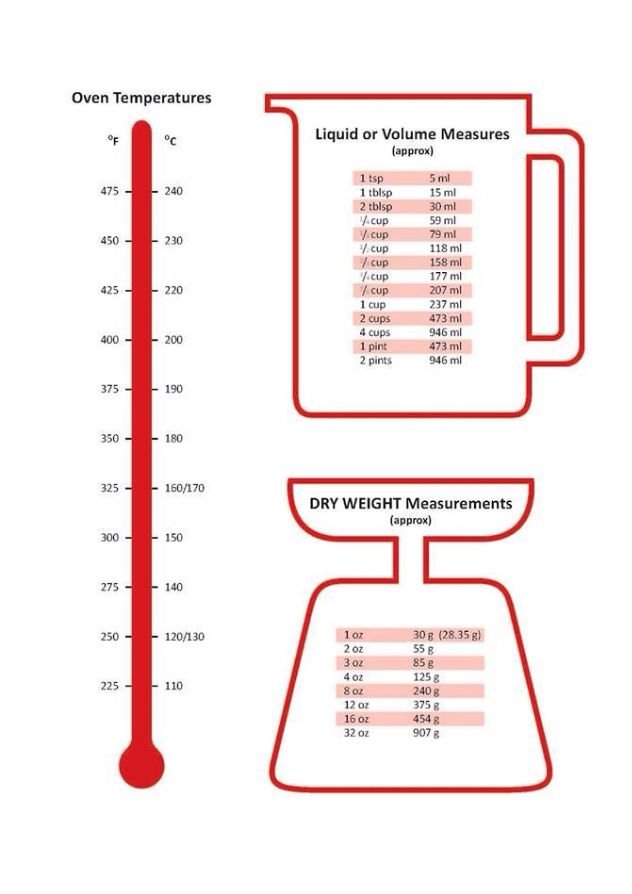
Cooking conversions can be frustrating because recipes toggle between tablespoons, cups and teaspoons. Here’s a pattern that blows all others away.
The Double-Double Rule:
- 2 tablespoons = 1 ounce
- 2 ounces = 4 tablespoons
- 4 tablespoons = ¼ cup
- Double that: 8 tablespoons = ½ cup
- Double again: 16 tablespoons = 1 cup
Why This Works
Random numbers are something your brain is just not that good at remembering, but patterns are. Double up, and you have a chain you can never forget. Begin with 2 tablespoons, then keep doubling to get to any measurement you want.
Practical Application
Does the recipe call for ⅓ cup but you only have tablespoons? Here’s the quick math:
- ½ cup = 8 tablespoons
- ⅓ cup is just over half of ½ cup
- So ⅓ cup = ~5 tablespoons (or more precisely, 5.333)
The Complete Kitchen Table
| Tablespoons | Cups | Ounces |
|---|---|---|
| 3 | 3/16 | 1.5 |
| 4 | 1/4 | 2 |
| 8 | 1/2 | 4 |
| 12 | 3/4 | 6 |
| 16 | 1 | 8 |
Bonus: The Teaspoon Connection
Want to go smaller? Keep in mind: 3 teaspoons = 1 tablespoon. With the help of the double-double method, you can now convert from teaspoons to cups in a jiffy.
When You’ll Use This
This shortcut shines when:
- Following baking recipes
- Scaling recipes up or down
- Measuring spices
- Working with liquid ingredients
- Adjusting portion sizes
Shortcut #4: The “Gallon Pyramid” for Big Volume Conversions
Visualize the Pyramid
Think of a pyramid, with a gallon at the top. This visual trick will help remind you how all the pieces align.
The Pyramid Structure:
       1 Gallon
          |
      4 Quarts
        /   \
     8 Pints
      /   \
   16 Cups
The Memory Trick
Here’s the sentence that makes it stick: “Great Queens Pour Carefully” (Gallons, Quarts, Pints, Cups).
Multiply by 2 when going down one level:
- 1 gallon = 2 half-gallons
- 1 gallon = 4 quarts
- 1 gallon = 8 pints
- 1 gallon = 16 cups
Real-Life Calculations
Your car requires 2.5 gallons of windshield wiper fluid, but all the store offers is quart bottles:
2.5 gallons × 4 quarts = 10 quarts
You buy milk by the gallon but need it to fill 12-ounce bottles:
- 1 gallon = 128 ounces
- 128 ÷ 12 = about 10 bottles
The Complete Gallon Breakdown
| Unit | Equals 1 Gallon |
|---|---|
| Gallon | 1 |
| Quart | 0.25 |
| Pint | 0.125 |
| Cup | 0.0625 |
Smart Applications
Use this pyramid when:
- Buying paint or cleaning supplies
- Planning water consumption for camping
- Mixing large batches of anything
- Calculating fuel efficiency
- Preparing beverages for events
Shortcut #5: The “Percent Jump” to Convert Metrics
The Secret Pattern
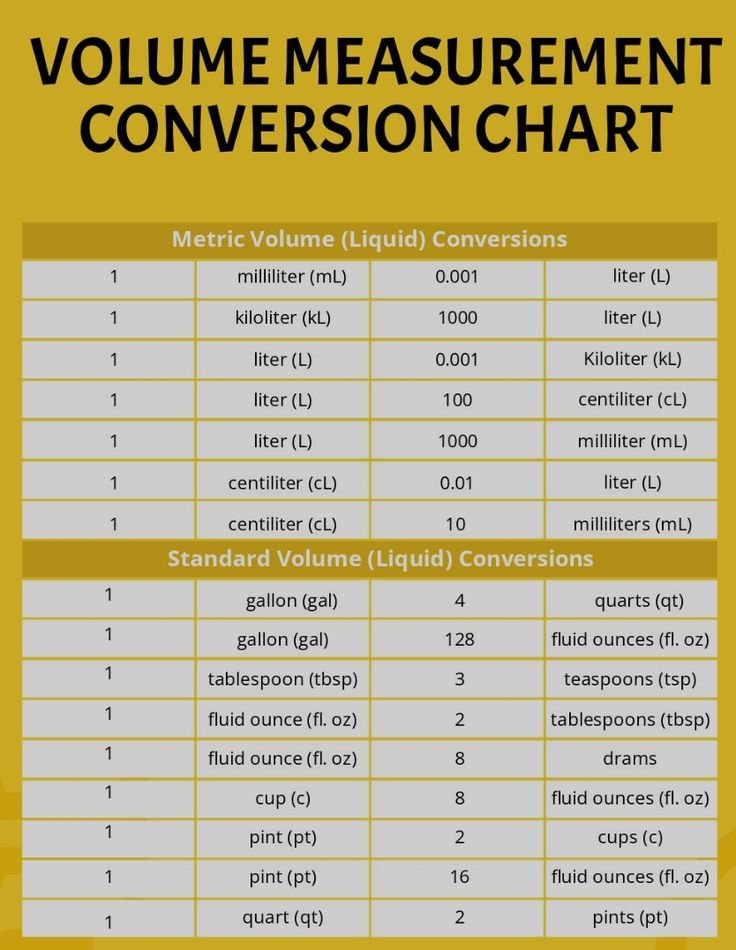
Metric conversions seem difficult because people have to memorize numbers that are not intuitive. Here’s the shortcut: Everything shifts by tens, hundreds or thousands.
The Key Measurements:
- 1 liter = 1,000 milliliters
- 1 deciliter = 100 milliliters
- 1 centiliter = 10 milliliters
The Mental Trick
Think of metric measurements like money:
1 dollar = 100 pennies (1 liter = 1,000 milliliters)
Shifting the decimal point is equivalent to exchanging dollars for cents.
Quick Conversion Examples
Convert 3.5 liters to milliliters:
Move decimal three places right
3.5 L = 3,500 ml
Convert 750 milliliters to liters:
Move decimal three places left
750 ml = 0.75 L
The Visual Ladder
Kiloliters (kL)
     ↓ ×1000
  Liters (L)
     ↓ ×1000
Milliliters (mL)
Practical Conversion Table
| Metric Unit | Abbreviation | Equals (in mL) |
|---|---|---|
| Kiloliter | kL | 1,000,000 |
| Hectoliter | hL | 100,000 |
| Dekaliter | daL | 10,000 |
| Liter | L | 1,000 |
| Deciliter | dL | 100 |
| Centiliter | cL | 10 |
| Milliliter | mL | 1 |
Where This Helps
Perfect for:
- International cooking
- Science experiments
- Medical measurements
- Engine oil capacity
- Beverage industry standards
Combining Shortcuts for Complex Conversions
The Power of Stacking
The real trick is when you string these shortcuts together. Want to know how many milliliters in gallons? Combine the pyramid with the percentage leap.
Example Calculation:
Convert 2 gallons to milliliters
- Step 1: 2 × 4 = 8 quarts
- Step 2: 8 quarts ≈ 8 liters (convert using the liter-quart trick)
- Step 3: 8 liters × 1,000 = 8,000 ml
Creating Your Own Shortcuts
And after you’ve picked up these five shortcuts, you will see patterns everywhere. You might discover that:
- Most wine bottles are 750 ml (the same as exactly 3 cups)
- A two-liter bottle of soda is half a gallon
- Your water bottle could be precisely 500 ml (about 2 cups)
Practice Makes Permanent
The more you use shortcuts the faster they come. Begin with simple day-to-day applications, so you can get a feel for them. You’ll soon be able to leave your phone behind for those basic conversions.
Common Mistakes to Avoid
Precision vs. Practicality
These shortcuts work great for day-to-day use. But when precise accuracy counts (as in chemistry class or professional baking), use exact conversions or a calculator.
Mixing Systems
Never combine metric/imperial in the middle of doing math. First convert everything to one system, then do your math.
Rounding Errors
When you round the numbers due to shortcuts, errors start piling up. For one-off conversions, these tips are awesome. For multiple-step recipes or rigorously scientific work, err on the side of caution.
Frequently Asked Questions
How accurate are these shortcuts?
These shortcuts are 95-99% accurate for everyday use. They’re awesome for cooking, shopping, and general measurements. For scientific or medical accuracy, you can use the specific conversion factors. For more information on standardized measurements, the National Institute of Standards and Technology provides comprehensive guidelines.
Can I use these shortcuts for cooking and baking?
Absolutely! These shortcuts are good enough for most recipes. Baking is less precise than you think. The one caveat is professional pastry work, where accuracy in measurements is more critical.
How can I easily memorize all of these shortcuts?
Practice with real situations. Put them to work when preparing dinner, mixing drinks or shopping. If the brain doesn’t need a tool, it doesn’t remember that tool. Choose one shortcut and practice it for a week before adding another.
Do these shortcuts work in other countries?
The metric shortcuts work worldwide. Imperial measurements (cups, gallons, ounces) are the primary measurement in the United States. Almost everywhere else in the world uses metric.
What is the first shortcut I should learn?
Begin with the “Four Cups Rule” if you cook regularly. Begin with the “Palm Trick” if you are working with small quantities. Choose the one that suits your lifestyle best.
Are there any apps which do these conversions?
Yes, many apps do conversions. But it’s faster than pulling your phone out to learn these shortcuts. Besides, the logic itself will help you catch mistakes and estimate quickly.
Making These Shortcuts Stick
The 7-Day Challenge
Here’s how to learn the hacks in these shortcuts in a single week:
- Day 1-2: Work on the Four Cups guideline. Convert every liquid you see.
- Days 3-4: Try the Palm Trick with bottles and containers in your house.
- Day 5: Cook, and learn the Double-Double Method.
- Day 6: Check out the Gallon Pyramid and take a quiz.
- Day 7: Percentage Jump Mastery and all Shortcuts Combined.
Create Memory Anchors
Connect these shortcuts to what you already know:
- Your coffee mug is about 2 cups (500 ml)
- A water bottle is typically 16-20 oz (500-600 ml)
- A soup can is about 1.5 cups (up to the rim)
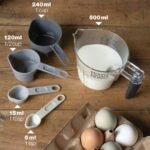
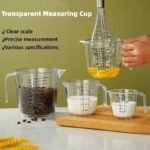
- A measuring cup for both systems is displayed side by side
The Bottom Line
Volume conversion doesn’t need to be complicated. These five shortcuts make a perplexing math problem easier to turn into simple mental tricks.
Remember the Core Shortcuts:
- Four cups equal one liter
- Ounce × 30 = milliliters
- Double your way from tablespoons to cups
- Use the gallon pyramid
- Move decimals for metric conversions
Start using these today. Choose a recipe, a project or one measurement challenge. Go for the shortcut over your phone.
Before you know it, these will be second nature. It won’t be long before you’re the person others turn to for help converting measurements.
These aren’t just math tricks. They’re life skills that save you time, reduce stress and make you feel more confident in your kitchen or classroom or wherever.
The best part? You now hold knowledge that the majority of adults never acquire. Put it to good use, pass it around and enjoy feeling awesome when performing those conversions in your head while everyone else is still looking for their phones.