
































Temperature Conversions in Your Everyday Life
Temperature conversions pop up everywhere in daily life.
You’re holding a cookbook you borrowed from friends in the UK, and they tell you your oven can be set to bake at 180°C. You only have degrees Fahrenheit on your stove. You’re reading an international news story about a heatwave in Europe, where the temperature sometimes reaches 40 degrees Celsius. What does that feel like? You’re learning science and the textbook is in Kelvin. What does 300K even mean?
Different countries have different temperature scales. The United States holds onto Fahrenheit. Celsius is used by most of the world. Kelvin is what scientists use for precision calculations.
This is always disorienting while you are cooking, traveling the world, listening to weather forecasts, doing scientific stuff, or entering into conversations with people anywhere else.
Nearly everybody panics at the sight of a temperature scale they do not recognize. They take out their phones, look up conversion calculators or guess wildly, which often results in overdone dinners and misplaced weather predictions.
This guide provides you 9 fast ways to convert temperatures without the worry. Each one contains simplified formulas, easy mental shortcuts and real-world examples that allow you to use them right away.
No scientific jargon. No confusing equations. Just simple techniques that work in seconds.
Let’s master temperature conversions together.
Method #1: The Classic Celsius to Fahrenheit Conversion Formula
This is the temperature conversion you need most regularly. Americans go overseas, read recipes from elsewhere and keep up with international news that is in Celsius.
The Exact Formula
°F = (°C × 9/5) + 32
Or, put another way: °F = (°C × 1.8) + 32
Step-by-Step Process
Let’s convert 25°C to Fahrenheit:
- Multiply 25 by 9/5 (or simply 1.8): 25 × 1.8 = 45
- Add 32: 45 + 32 = 77°F
Quick Reference Table
| Celsius | Fahrenheit | What It Feels Like |
|---|---|---|
| -40 | -40 | Extremely cold (same on both scales) |
| -20 | -4 | Freezing winter day |
| 0 | 32 | Water freezes |
| 10 | 50 | Cool spring day |
| 20 | 68 | Room temperature |
| 25 | 77 | Pleasant warm day |
| 30 | 86 | Hot summer day |
| 37 | 98.6 | Normal body temperature |
| 100 | 212 | Water boils |
Real-World Example
You’re making a recipe that began life in France, and the instructions tell you to preheat your oven to 200°C.
200 × 1.8 = 360 360 + 32 = 392°F
Preheat your oven to about 400°F.
Method #2: Doing a Quick Fahrenheit to Celsius Calculation
If you ever need to do the reverse, use this formula to convert from Fahrenheit back to Celsius.
The Exact Formula
°C = (°F – 32) × 5/9
Or, much simpler: °C = (°F – 32) ÷ 1.8
How to Calculate It
Converting 95°F to Celsius:
- Subtract 32: 95 – 32 = 63
- Multiply by 5/9 (or divide by 1.8): 63 ÷ 1.8 = 35°C
Common Temperature Conversions
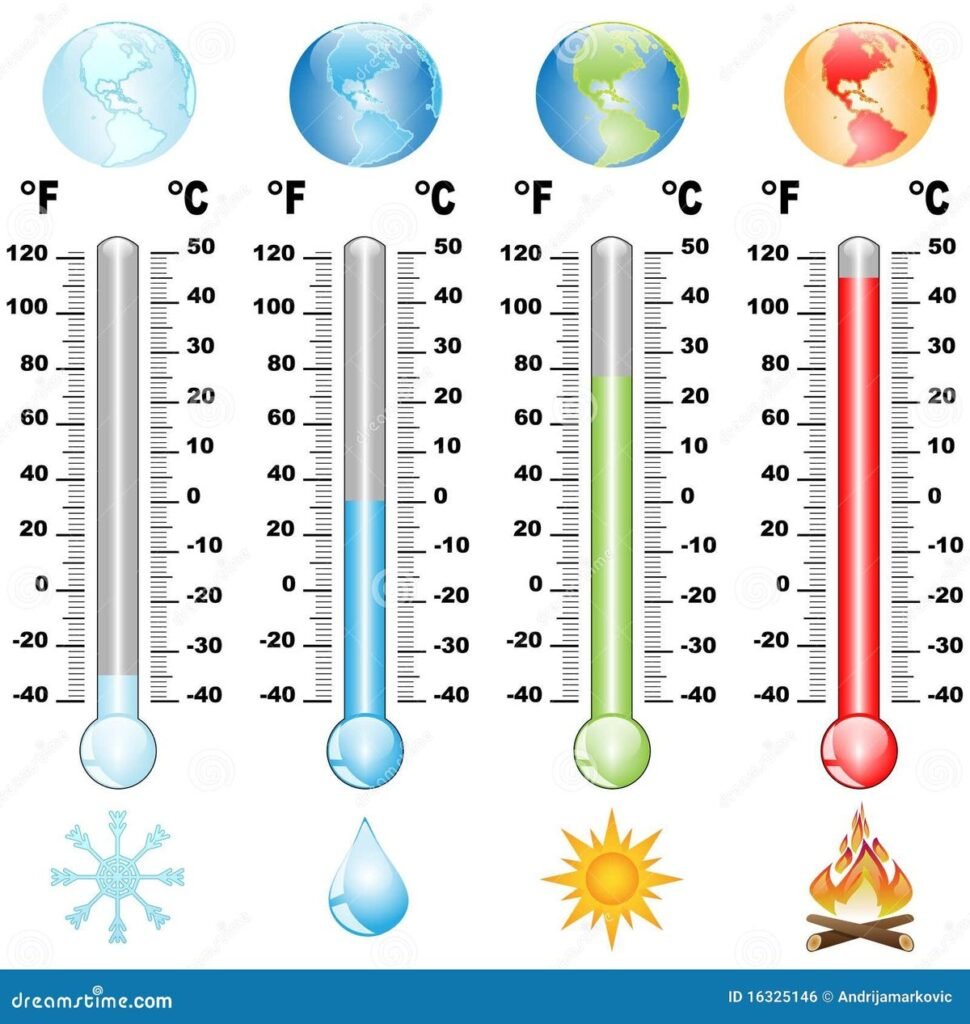
| Fahrenheit | Celsius | Typical Situation |
|---|---|---|
| 32 | 0 | Freezing point |
| 50 | 10 | Cool jacket weather |
| 68 | 20 | Comfortable indoors |
| 77 | 25 | Nice beach weather |
| 86 | 30 | Hot summer day |
| 98.6 | 37 | Human body temp |
| 104 | 40 | Dangerous fever |
| 212 | 100 | Boiling water |
Practical Scenario
The weather forecast calls for 15 degrees during your European vacation. Time to pack a jacket?
(15°C × 1.8) + 32 = 59°F
Yes, definitely bring a jacket!
Method #3: The Easier Shortcut to Double for Quick Estimates
With just an approximation in mind, this mental math trick is perfect.
The Simple Rule
Double the Celsius temperature and add 30
This will give you a ballpark Fahrenheit estimate for everyday use.
How It Works
For 20°C:
- Double it: 20 × 2 = 40
- Add 30: 40 + 30 = 70°F
The real answer is 68°F, so you’re only off by two degrees!
When to Use This Method
Perfect for:
- Quick weather checks
- Casual cooking (not precision baking)
- Estimating comfort levels
- Travel planning
Not ideal for:
- Scientific work
- Medical temperatures
- Precision baking
- Official measurements
Accuracy Chart
| Celsius | Shortcut Result | Actual °F | Difference |
|---|---|---|---|
| 0 | 30 | 32 | -2 |
| 10 | 50 | 50 | 0 |
| 20 | 70 | 68 | +2 |
| 30 | 90 | 86 | +4 |
| 40 | 110 | 104 | +6 |
This shortcut becomes less accurate at extreme temperatures, but is otherwise perfect for everyday weather and cooking.
Method #4: The Backwards Shortcut (Fahrenheit to Celsius)
Mental math also makes going backward a cinch.
The Quick Formula
Subtract 30 from Fahrenheit then divide by 2
This is close to Celsius for quick decisions.
Example Calculation
For 80°F:
- Subtract 30: 80 – 30 = 50
- Divide by 2: 50 ÷ 2 = 25°C
The correct answer is 26.7°C, near enough to choose shorts or sweaters!
When This Trick Shines
Use this shortcut for:
- Understanding foreign weather reports
- Quick mental conversions while traveling
- Reading international news
- Casual conversations
Comparison Table
| Fahrenheit | Shortcut Result | Actual °C | Close Enough? |
|---|---|---|---|
| 50 | 10 | 10 | Perfect! |
| 68 | 19 | 20 | Very close |
| 86 | 28 | 30 | Close enough |
| 100 | 35 | 37.8 | Reasonable |
For more specific conversion tools and calculators, visit this comprehensive measurement conversion guide that covers all types of unit conversions.
Method #5: Memorizing Important Temperature Anchors
Your brain thinks better in terms of reference points. Learn these temperatures, and judge everything else based on them.
Essential Anchor Points
Celsius to Fahrenheit:
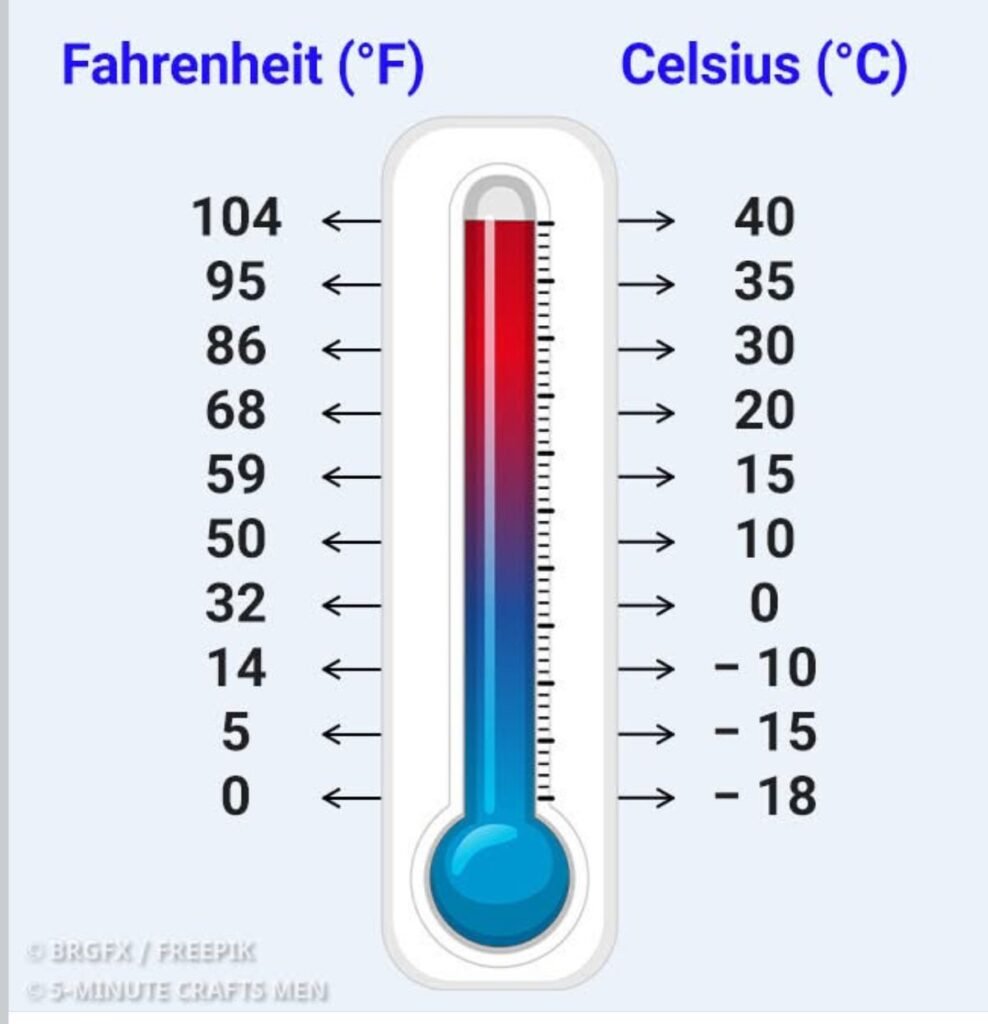
- 0°C = 32°F (freezing)
- 10°C = 50°F (cool)
- 20°C = 68°F (room temp)
- 30°C = 86°F (hot)
- 40°C = 104°F (very hot)
How to Use Anchors
For instance, say you read 23°C in a weather app.
You know:
- 20°C = 68°F
- 30°C = 86°F
23°C lies between these two, closer to 20°C = approx. 73°F (Actual: 73.4°F)
Cooking Temperature Anchors
| Description | Celsius | Fahrenheit |
|---|---|---|
| Low oven | 150°C | 300°F |
| Moderate oven | 180°C | 350°F |
| Hot oven | 200°C | 400°F |
| Very hot oven | 230°C | 450°F |
| Broil | 260°C | 500°F |
Travel Weather Anchors
Commit these to memory for quick decisions:
- Below 10°C (50°F): Dress warm
- 10-20°C (50-68°F): Jacket weather
- 20-25°C (68-77°F): Perfect weather
- 25-30°C (77-86°F): Light summer clothes
- Above 30°C (86°F): Drink plenty of fluids and find shade
Method #6: Changing Kelvin for Science Majors
Kelvin is used by scientists for their absolute temperature measurements. It is, in fact, the easiest conversion of all.
The Incredibly Easy Formula
K = °C + 273.15
For most things, simply add 273.
Why Kelvin Exists
Kelvin begins at absolute zero, the coldest temperature possible when all molecular motion stops. That’s 0K, or -273.15°C or -459.67°F.
Celsius to Kelvin Examples
| Celsius | Kelvin | What’s Happening |
|---|---|---|
| -273.15 | 0 | Absolute zero |
| -200 | 73 | Liquid nitrogen |
| 0 | 273 | Water freezes |
| 25 | 298 | Room temp |
| 100 | 373 | Water boils |
| 5500 | 5773 | Sun’s surface |
Quick Conversion
Your room temperature is 20°C. What’s that in Kelvin?
20 + 273 = 293K
Done in one second!
Kelvin to Celsius
It is just as easy to go in the other direction:
°C = K – 273.15
If your laboratory device reads 310K:
310 – 273 = 37°C (about body temperature)
Method #7: Direct Conversion from Fahrenheit to Kelvin
Occasionally, you have to bypass Celsius and move straight from Fahrenheit to Kelvin.
The Complete Formula
K = (°F – 32) × 5/9 + 273.15
Breaking It Down
This combines two conversions:
- Convert °F to °C
- Convert °C to K
Step-by-Step Example
Convert 77°F to Kelvin:
- Subtract 32: 77 – 32 = 45
- Multiply by 5/9: 45 × 5/9 = 25
- Add 273: 25 + 273 = 298K
Scientific Reference Table
| Fahrenheit | Kelvin | Laboratory Condition |
|---|---|---|
| -459.67 | 0 | Absolute zero |
| 32 | 273 | Ice point |
| 98.6 | 310 | Body temperature |
| 212 | 373 | Steam point |
| 450 | 505 | Baking temperature |
Method #8: How to Use the 16-Degree Rule
Here’s an obscure hack that actually works surprisingly well for moderate temperatures.
The Secret Pattern
For each 10 degrees Celsius, add 18 degrees Fahrenheit.
This is how you scale conversions in your head.
How It Works
Starting from 0°C = 32°F:
- 10°C: Add 18 → 50°F
- 20°C: Add another 18 → 68°F
- 30°C: Add another 18 → 86°F
The Mental Math Advantage
If you know that 20°C = 68°F, and you’re looking for 22°C:
For each additional 1°C, add about 1.8°F (we round to 2 for speed).
22°C is 2 degrees above 20°C. 68 + (2 × 2) = 72°F
Actual Answer: 71.6°F. You were really close!
Method #9: The Smartphone and Digital Tool Method
Technology has made conversions instantaneous, but you need to know which tools are best.
Voice Assistant Commands
Simply say:
- “Hey Siri, how much is 25 Celsius in Fahrenheit?”
- “OK Google, what is 80 Fahrenheit in Celsius?”
- “Alexa, convert 300 Kelvin to Celsius”
Best Free Apps
For iOS:
- Unit Converter Pro: Supports all temperature scales
- Convert Units: Clean interface, runs without internet
For Android:
- Unit Converter: No ads, works offline
- Calculator Plus: Built-in conversions included
Both Platforms:
- Google app: Type conversions directly in search
- WolframAlpha: Handles complex scientific conversions
Browser Extensions
Add these to your browser for quick conversions:
- Auto Temperature Converter
- Quick Unit Converter
- Universal Converter
When to Use Digital Tools
Perfect for:
- Exact precision needed
- Unfamiliar temperature scales
- Multiple conversions quickly
- Verifying your mental math
For accurate conversion references and measurement standards, visit the National Institute of Standards and Technology website for official measurement information.
Where These Methods Actually Come in Handy (in Real Life)
Let’s look at these conversion methods in action.
Situation 1: International Cooking
You’re making a French dessert. The recipe says bake at 175°C.
Use Method #3 (Doubling Shortcut):
- Double it: 175 × 2 = 350
- Add 30: 350 + 30 = 380°F
Preheat that oven to 375-380°F. Excellent!
Situation 2: Travel Planning
It’s your hotel in Madrid calling, and it says the AC is set for 22°C. Will that be comfortable?
Use Method #5 (Anchor Points): You know 20°C = 68°F. Add 4°F for the additional 2°C. 22°C ≈ 72°F. That’s comfortable room temperature!
Situation 3: Science Class
Your chemistry homework wants you to convert 350K into Celsius and Fahrenheit.
Use Method #6: 350 – 273 = 77°C
Then Method #1: (77 × 1.8) + 32 = 170.6°F
Situation 4: Health Monitoring
Your European thermometer reads 38.5°C. Do you have a fever?
Use Method #2: (38.5 – 32) × 1.8… oops, that’s the wrong way around!
Actually: (38.5 × 1.8) + 32 = 101.3°F
That’s a fever (normal body temperature is 98.6°F).
Common Temperature Conversion Mistakes
Even basic conversions can turn out wrong. Avoid these errors.
Mistake 1: Confusing the Formulas
The most frequent wrong calculation here is using the Celsius-to-Fahrenheit formula when you want to convert Fahrenheit-to-Celsius (or vice versa).
Always remember:
- TO Fahrenheit: multiply then add 32
- TO Celsius: subtract 32 then multiply
Mistake 2: Forgetting to Add or Subtract 32
The 32-degree difference between Celsius and Fahrenheit trips everyone up all the time.
0°C is NOT 0°F. Water freezes at 0°C which is 32°F.
Mistake 3: Taking Shortcuts with Precision Work
Math shortcuts are awesome for quick calculations but do not use them for:
- Medical temperatures
- Scientific experiments
- Precision baking
- Official documentation
Mistake 4: Confusing Negative Temperatures
When you’re dealing with negative numbers, be especially cautious with your arithmetic.
Converting -10°C to Fahrenheit: (-10 × 1.8) + 32 = -18 + 32 = 14°F
NOT: (-10 × 1.8) – 32 (don’t make that mistake!)
Temperature Conversion Tips for Different Scenarios
Master these situation-specific strategies.
For Cooking and Baking
General Cooking: Shortcuts work fine. If you are off by 5 or 10 degrees, you’re not going to ruin your soup or roasted vegetables.
Precision Baking: Use exact formulas. For bread, pastries and cakes, precise temperatures are crucial.
Oven Differences: European ovens may be Celsius. Always check!
For Weather and Travel
Daily Forecasts: Anchor points and shortcuts work perfectly.
Extreme Weather: For dangerous heat or cold warnings, use exact conversions.
Packing Clothes: Know these ranges:
- Below 10°C (50°F): Heavy jacket
- 10-20°C (50-68°F): Light jacket
- Above 25°C (77°F): Summer clothes
For Science and Medicine
Lab Work: Use exact formulas or Kelvin.
Body Temperature: Use precise conversions. A degree matters with fevers.
Chemical Reactions: Some need Kelvin for calculations.
Frequently Asked Questions
What’s the quickest and easiest way to convert Celsius to Fahrenheit in my head?
Use the doubling shortcut: double the Celsius temperature and add 30. For 25°C, this would be (25 × 2) + 30 = 80°F. It is not precise — the exact value is 77°F — but close enough for everyday decisions.
Why does -40 represent the same temperature in Celsius as it does in Fahrenheit?
-40°C and -40°F are equivalent temperatures; that’s the point where the two scales intersect. It’s the only place where they’re equal. Do the conversion: (-40 × 1.8) + 32 = -40.
Is it necessary to learn Kelvin?
Only if you’re studying science. Kelvin is needed for chemistry, physics and engineering because it begins at absolute zero. For everyday use, stick with Celsius and Fahrenheit.
How do I decide which formula to use?
Consider what you are converting TO. Converting TO Fahrenheit? You have to add 32 at the end. Converting TO Celsius? Subtract 32 at the beginning. The 32 always connects Fahrenheit.
How accurate are online converters for cooking?
Yes, they’re perfectly accurate. Yet learning shortcuts can come in handy when you’re already in the kitchen with messy hands and don’t feel like reaching for your phone.
What’s the most widely used temperature scale in the world?
Celsius (also called Centigrade). Besides the United States, only Liberia and Myanmar primarily use Fahrenheit. Kelvin is the unit of measurement that scientists all over the world use for research.
Your Temperature Conversion Action Plan
Here’s a practice plan that will make these techniques second nature.
Week 1: Master the Basics
Focus on Methods #1 and #2 (the exact formulas). Convert five temperatures a day. Use weather reports, recipes or make up random numbers.
Week 2: Learn the Shortcuts
Practice Methods #3 and #4 (mental math shortcuts). Translate temperatures in your head whenever you see them — on TV, in books or online.
Week 3: Memorize Anchors
Commit Method #5 anchor points to memory. Create flashcards or sticky notes for key temperatures until they’re automatic.
Week 4: Apply in Real Life
Actually use these conversions. Follow international recipes. Check weather in foreign cities. Convert temperatures you encounter naturally.
Ongoing: Stay Sharp
Keep practicing even after you’ve learned. The more you convert, the quicker and more precise you become.
No longer will you find yourself baffled and intimidated by temperature conversions. With these nine tricks up your sleeve, you’ll be able to convert between any temperature scales thrown your way.
You can now cook recipes from any country. Understand weather forecasts worldwide. Complete science homework confidently. Travel internationally without confusion.
Different temperature scales just seem too hard for some people to deal with, so they avoid international recipes and information. These nine techniques break that barrier down completely.
Whether it’s precise formulas, mental shortcuts, anchor points or digital tools, you’ve got strategies galore for any scenario. Choose the techniques that best suit you and practice them frequently.
Start today. Next time, when you are faced with an unfamiliar temperature, you will convert it in seconds and confidently move on. Temperature scales are all just numbers — and now you understand exactly how to convert between them.