




























Why Everyone Should Know How to Convert Between Celsius and Fahrenheit Today
Imagine this: You are making a delectable recipe using a British cooking show as your guide, and the oven temperature reads 200°C yet you can only read Fahrenheit. Or you’re about to make a trip to Europe and you see that the weather will be 25°C, so should you pack shorts or jackets?
It’s no longer just science book trivia that is locked up in terms of temperature conversions. They’re real-world skills that you require to cook international recipes, read weather reports from other countries, keep up with a science experiment or simply gossip with friends overseas about how hot — or cold — it is there.
The challenge? Three temperature scales are in use, and all work on different methods of heat transfer. The US one is the Fahrenheit version. Celsius reigns over much of the world. Kelvin is all over the scientific literature.
Being able to convert to these scales is mind blowing. You are a fearless cook of recipes from any country. You’ll understand global weather patterns. You’ll do your science homework, no sweat.
This ultimate guide shares ten formulas that are sure to help you convert temperatures with ease. These formulas will be your friends as a student, home cook, traveler or curious learner.
Three Simple Temperature Scales Explained
So before we throw a bunch of conversion formulas at you, let’s take a closer look at what sets each temperature scale apart.
Fahrenheit (°F)
This scale, developed by Daniel Gabriel Fahrenheit in 1724, has water freezing at 32°F and boiling at 212°F. The United States of America, Bahamas, Cayman Islands and Liberia are the few countries using mainly Fahrenheit.
Celsius (°C)
Anders Celsius invented it in 1742, with a neatly logical system: water freezes at 0°C and boils at 100°C. For everyday temperature-taking duty, most of the world uses Celsius.
Kelvin (K)
It’s named after Lord Kelvin, and this scale began at absolute zero (-273.15°C), the point where atoms quit moving around altogether. Scientists rely on Kelvin for their research, physics and chemistry. Note: Kelvin does not get the degree sign (°).
Knowing these backgrounds, the conversion formulas make perfect sense instead of appearing to be random number magic!
Formula 1: The Standard Fahrenheit to Celsius Calculation
This basic equation works perfectly for converting Fahrenheit to Celsius temperatures.
The Formula: °C = (°F – 32) × 5/9
Let’s break this down step-by-step.
Converting 68°F to Celsius:
- Begin with the temperature in Fahrenheit: 68
- Subtract 32: 68 – 32 = 36
- Multiply by 5: 36 × 5 = 180
- Divide by 9: 180 ÷ 9 = 20°C
So 68°F is exactly equal to 20°C, which is a very comfortable room temperature.
Why This Formula Works
The Fahrenheit and Celsius scales have different units at the outset (32°F vs 0°C to freezing) and increments. Subtracting 32 is necessary because of the different zero points. The multiplication by 5/9 is there to compensate for the different size of degrees.
This formula is used by cookbooks, weather apps, science textbooks and conversion calculators worldwide. Master it, and you can consider one of the most prevalent temperature conversions in the world your own.
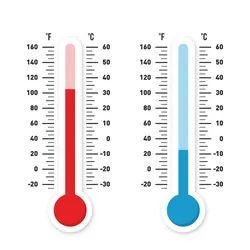
Formula 2: The Reverse of the Journey – Celsius to Fahrenheit
To convert from Celsius to Fahrenheit, reverse the mathematical operations.
The Formula: °F = (°C × 9/5) + 32
This equation multiplies first, then adds, which is the inverse of the order needed to transform Fahrenheit to Celsius.
Converting 25°C to Fahrenheit:
- Start with Celsius temperature: 25
- Multiply by 9: 25 × 9 = 225
- Divide by 5: 225 ÷ 5 = 45
- Add 32: 45 + 32 = 77°F
Now 25°C is equal to 77°F, a nice warm day ideal for doing anything outside.
Real-World Application
30°C being forecast for tomorrow in Europe. And you’d like to convert it to Fahrenheit:
- 30 × 9 = 270
- 270 ÷ 5 = 54
- 54 + 32 = 86°F
Bring warm-weather clothing, because 86 degrees is summer heat!
Formula 3: Mental Math Trick for Converting Fahrenheit to Celsius
Precise math needs a calculator, but for a quick estimate, this rule is splendid.
The Shortcut Formula: °C ≈ (°F – 30) ÷ 2
Incredible speed does not come without at least wee amounts of lost accuracy in this most simplified form.
Testing the Shortcut
Converting 70°F:
- 70 – 30 = 40
- 40 ÷ 2 = 20°C
The explicit answer using the exact formula is 21.1°C. You’re only off by 1.1 degrees, which usually doesn’t matter very much in everyday life.
When to Use This
- Checking weather forecasts quickly
- Making a best guess at cooking temps
- Converting during conversations
- Examples where “close enough” is everything
This trick isn’t so much an epic hack on its own as a piece of magic to impress friends and save time when precision isn’t paramount.
Formula 4: An Approximation of Celsius to Fahrenheit Conversion
The same shortcut works for converting Celsius to Fahrenheit in your head as well.
The Quick And Easy Way: °F ≈ (°C × 2) + 30
Multiply the Celsius temperature by 2 and then add 30 for a rough estimate.
Quick Conversion Example
Your friend in Paris says it’s 15°C outside:
- 15 × 2 = 30
- 30 + 30 = 60°F
The precise answer is 59 degrees, so you’re close with the bare minimal application of mental effort.
Practical Scenarios
The recipe calls for baking at 180°C:
- 180 × 2 = 360
- 360 + 30 = 390°F
The exact conversion is 356°F, but 390°F will help guide you to the right ballpark quickly.
In exchange for perfect accuracy, these estimation formulas charge a reasonable fee in terms of speed. They’re your secret weapons when you need to convert something quickly from one temperature to another, any time, anywhere.
Formula 5: Celsius to Kelvin – The Easiest Transformation Ever
The formula for converting between Celsius and Kelvin is the easiest formula you will ever memorize.
The Formula: K = °C + 273.15
That’s it. Just in case you need to convert a Celsius temperature? Add 273.15.
Converting 25°C to Kelvin:
25 + 273.15 = 298.15 K
Room temperature in scientific definition is approximately 298 Kelvin.
Why It’s So Simple
Celsius and Kelvin share the same size of degrees. The only thing that differs is where zero begins. For Celsius, zero is at the freezing point of water; for Kelvin, zero is absolute zero. At that offset, the two points are exactly 273.15 degrees apart.
Common Kelvin Temperatures
| Celsius | Kelvin | What It Represents |
|---|---|---|
| -273.15°C | 0 K | Absolute zero |
| 0°C | 273.15 K | Water freezes |
| 25°C | 298.15 K | Room temperature |
| 100°C | 373.15 K | Water boils |
Scientists adore Kelvin because it banishes negative numbers and makes thermodynamic calculations easier.
Formula 6: Kelvin to Celsius – Just Subtract
The reverse conversion from Kelvin to Celsius is just as simple.
The Formula: °C = K – 273.15
Subtract 273.15 from any temperature in Kelvin.
Converting 300 K to Celsius:
300 – 273.15 = 26.85°C
It’s just a bit warmer than normal room temperature.
Scientific Application
A chemistry experiment reaches 373 K:
373 – 273.15 = 99.85°C
The mixture is nearly boiling.
Simplified Version
For rough approximations, many people simply subtract 273 instead of 273.15. The 0.15-degree divergence seldom makes a difference in practical calculations.
The shortcut method to convert 250 K: 250 – 273 = -23°C (precise conversion: -23.15°C)
For more specific measurements in all units of measure including temperature, visit Measurement Conversion Guide Online for comprehensive conversion resources and tips.
Formula 7: The Straightforward Fahrenheit to Kelvin Route
Sometimes you need to go straight from Fahrenheit to Kelvin without passing through Celsius.
The Formula: K = (°F – 32) × 5/9 + 273.15
This equation is a compound of the Fahrenheit to Celsius conversion and the step from Celsius to Kelvin.
Converting 77°F to Kelvin:
- Subtract 32: 77 – 32 = 45
- Multiply by 5: 45 × 5 = 225
- Divide by 9: 225 ÷ 9 = 25
- Add 273.15: 25 + 273.15 = 298.15 K
A nice room temperature of 77°F is equal to 298.15 Kelvin.
Alternative Approach
You can also turn Fahrenheit into Celsius and then add 273.15. Both methods reach identical results.
This formula allows you to save a step when converting between scientific data recorded in Fahrenheit.
Formula 8: Direct Conversion of Kelvin to Fahrenheit
The inverse conversion from Kelvin to Fahrenheit also has a one-step formula.
The Formula: °F = (K – 273.15) × 9/5 + 32
Converting 300 K to Fahrenheit:
- Subtract 273.15: 300 – 273.15 = 26.85
- Multiply by 9: 26.85 × 9 = 241.65
- Divide by 5: 241.65 ÷ 5 = 48.33
- Add 32: 48.33 + 32 = 80.33°F
So 300 Kelvin is equivalent to approximately 80 degrees Fahrenheit.
Laboratory Scenario
The temperature of a material is 350 K. Converting it to Fahrenheit:
- 350 – 273.15 = 76.85
- 76.85 × 9 = 691.65
- 691.65 ÷ 5 = 138.33
- 138.33 + 32 = 170.33°F
The compound is hot enough to burn right through skin.
These direct formulas are useful for working with scientific instruments which provide readout in Kelvin, but the results are needed in Fahrenheit.
Formula 9: Temperature Difference Conversion
Temperature differences are converted using different formulas than absolute temperatures.
For Fahrenheit-Celsius Differences:
Celsius difference = Fahrenheit difference × 5/9
Fahrenheit difference = Celsius difference × 9/5
Example Scenario
The temperature rose from 68°F to 86°F, an 18°F increase. What’s the change in Celsius?
18 × 5/9 = 10°C
Why This Matters
A recipe calls for lowering the temperature of the oven by 25°F. Your oven reads in Celsius:
- 25 × 5/9 = 13.89°C
- Reduce by approximately 14°C
Important Note
You do not add or subtract the offset values (32 and 273.15) when you compare two temperatures. You’re comparing changes in temperature, not absolute positions on a scale.
It’s a point that confuses many students, so remember: an absolute temperature must take into consideration offsets, while differences do not.
Formula 10: The Full Conversion Table Approach
Sometimes formulas feel overwhelming. And with conversion tables, you instantly have the answer without the need to do any figuring.
Common Temperature Conversion Table
| Fahrenheit | Celsius | Kelvin |
|---|---|---|
| -40°F | -40°C | 233.15 K |
| 0°F | -17.8°C | 255.37 K |
| 32°F | 0°C | 273.15 K |
| 50°F | 10°C | 283.15 K |
| 68°F | 20°C | 293.15 K |
| 77°F | 25°C | 298.15 K |
| 86°F | 30°C | 303.15 K |
| 98.6°F | 37°C | 310.15 K |
| 100°F | 37.8°C | 310.93 K |
| 212°F | 100°C | 373.15 K |
Cooking Temperature Conversion Chart
| Fahrenheit | Celsius | Cooking Use |
|---|---|---|
| 250°F | 121°C | Slow Roasting |
| 300°F | 149°C | Slow Baking |
| 350°F | 177°C | Moderate Baking |
| 375°F | 191°C | Standard Baking |
| 400°F | 204°C | Hot Baking |
| 425°F | 218°C | Quick Roasting |
| 450°F | 232°C | Very Hot Oven |
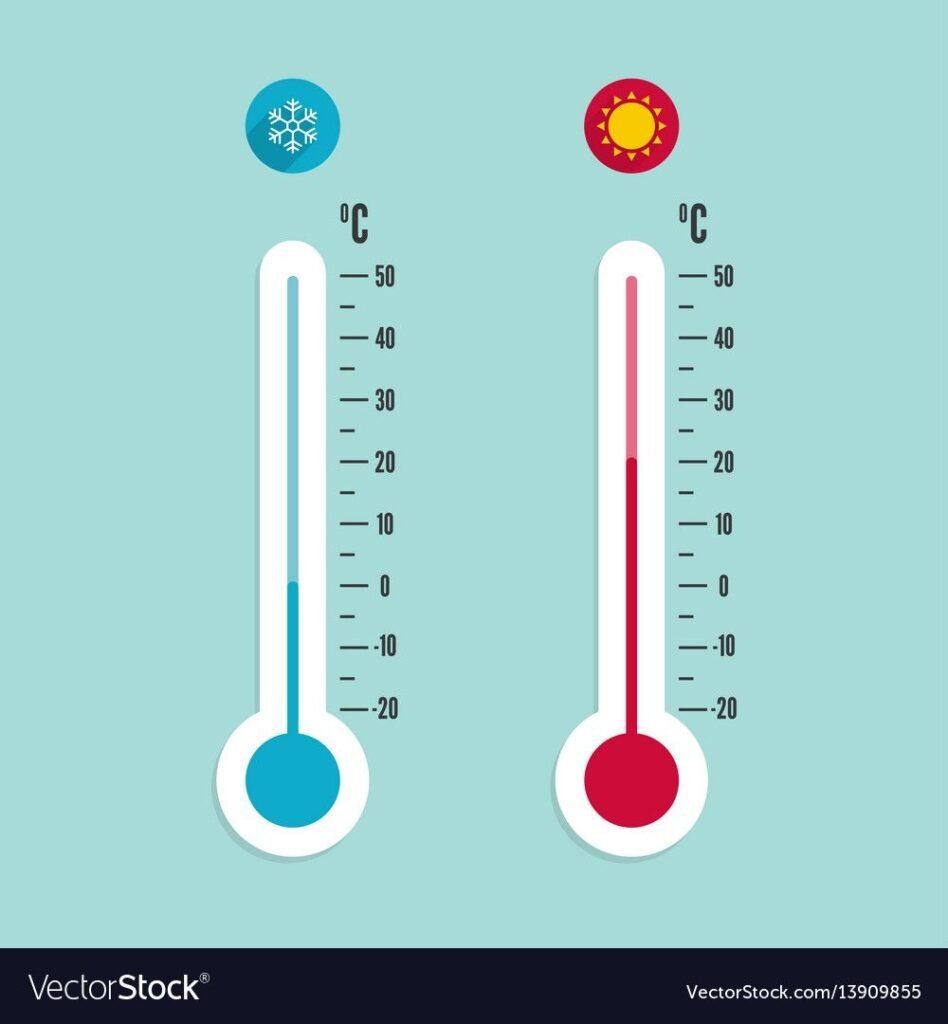
Print off these tables and have them near your kitchen, at your desk or on the wall by your study area for quick reference.
Picking the Right Formula for Your Needs
Different situations require different conversion strategies. Here’s a guide for choosing the best formula.
Use Exact Formulas When:
- Baking delicate pastries or bread
- Conducting scientific experiments
- Following medical temperature guidelines
- Calibrating equipment
- Precision matters more than speed
Use Estimation Formulas When:
- Checking weather forecasts
- Having quick conversations
- Estimating cooking temperatures
- Precision doesn’t critically matter
- You lack calculator access
Use Conversion Tables When:
- Converting common temperatures repeatedly
- Teaching temperature concepts
- Working without digital tools
- Quick reference beats calculation time
Use Apps or Online Tools When:
- Converting unusual temperatures
- Handling multiple conversions
- Accuracy is essential
- Calculator is immediately available
Many people combine methods. Learn the various estimation formulas for mental math, keep a table of common values near you, and use NIST’s temperature conversion tool when absolute precision is required.
Common Temperature Conversion Mistakes
Even the simplest of formulas can trip you up. Avoid these frequent errors.
Mistake 1: Forgetting to Subtract or Add First
Wrong: (70 × 5/9) – 32 = 6.9°C
Correct: (70 – 32) × 5/9 = 21.1°C
Just take care to follow the order of operations. Parentheses matter enormously.
Mistake 2: Using Degree Symbol with Kelvin
Wrong: 300°K
Right: 300 K
Kelvin never uses the degree sign. Writing °K marks you as a beginner.
Mistake 3: Mixing Differences and Absolute Temperatures
Converting a 10°F rise isn’t translating 10°F into Celsius (which is -12.2°C). It is to convert the difference: 10 × 5/9 = 5.6°C.
Mistake 4: Rounding Too Early
Bad: 68 – 32 = 36, round to 40, then × 5/9 = wrong answer
Good: 68 – 32 = 36, × 5 = 180, ÷ 9 = 20°C, then round if needed
Never round intermediate values before performing all calculations.
Mistake 5: Switching The Fraction Around
The conversion uses 5/9 and 9/5, not randomly placed together. Fahrenheit to Celsius uses 5/9. Celsius to Fahrenheit uses 9/5.
Just make sure that you know which way you’re converting before using the formula.
Practical Applications Across Different Fields
Temperature conversions come up all over in everyday life. Here’s where these formulas shine.
Cooking and Baking
International recipes require constant conversions. British recipes typically use Celsius. American cookbooks stick with Fahrenheit. An accurate conversion prevents you from ending up with burnt cookies and undercooked chicken.
Weather and Travel
Any foreign trip planning requires that you get to know the foreign weather forecasts. Is it jacket weather, or shorts season, at 15°C? (It’s 59°F, so pack layers!)
Science and Education
Temperature conversions are also essential in chemistry, physics and biology classes. Laboratory experiments commonly work in Celsius or Kelvin and textbooks may present Fahrenheit.
Healthcare
Body temperature monitoring switches between scales depending on your thermometer and location. Normal body temperature is 98.6°F, 37°C, and the equivalent Kelvin is 310.15 K.
HVAC and Climate Control
Thermostat scales vary by country. You don’t get your comfortable temperatures without knowing your conversions.
Manufacturing and Industry
Industrial processes specify precise temperatures. Workers have to convert between scales every time they use equipment that comes from a different country.
These aren’t some abstract math problems. They are utilities that will benefit all areas of your life: cooking, studying, traveling and professional work.
Simplest Conversions Using Digital Solutions
Understanding formulas is great, but technology provides instant accuracy.
Best Free Conversion Apps
- ConvertUnits – Offline conversion with temperature and hundreds of units
- Unit Converter Ultimate – Nice and clean UI, fast results, history tracking
- Calculator Plus – Contains all temperature scales and conversion modes
Online Conversion Websites
- Google Search – Simply enter “68 F to C” in the search field
- WolframAlpha – Provides conversions plus detailed explanations
- UnitConverters.net – Easy-to-use interface and rapid results
Smart Home Integration
Today’s smart thermostats like the Nest and Ecobee have screens to show both Fahrenheit and Celsius at once. Google Assistant and Alexa can do quick temperature conversion on the fly with a voice command.
Even if you have a calculator or an iPhone to do the math for you, knowing the formulas behind this stuff empowers you to catch errors, make quick estimates, and explain conversions to others.
Frequently Asked Questions
What is the one temperature at which Celsius and Fahrenheit are equal?
-40 degrees coincides exactly between the two systems: -40°F = -40°C. This odd convergence occurs because the two scales intersect at this temperature.
Why has the United States not adopted Celsius?
Historical reasons and the enormous expense of retooling infrastructure account for American resistance to Celsius. Replacing every thermostat, oven, weather station and textbook in the country would be a multibillion-dollar expense.
Is it possible to accurately convert temperatures in my head?
For quick estimates, yes! Use the quick formulas: °C ≈ (°F – 30) ÷ 2 or °F ≈ (°C × 2) + 30. You get to within a couple of degrees with these, sufficient for most purposes.
Which temperature scale is the most accurate?
All three scales measure temperature equally accurately. They are simply different number systems which describe the same physical phenomenon. Kelvin is the favorite among scientists for calculations, even though accuracy will be the same.
How do I remember which fraction to use?
Think “Five-Ninths to C” (Fahrenheit to Celsius uses 5/9). Reversing it uses the inverted fraction, 9/5. Celsius to Fahrenheit = 9/5.
What’s absolute zero in Fahrenheit?
Absolute zero is equal to -459.67°F, or -273.15°C, or 0 K. It is the lowest theoretical temperature and it corresponds to a complete absence of thermal energy.
Should I convert temperatures when baking?
Absolutely! Baking is chemistry, and the temperature precision can matter a great deal. A 25°F variation is all that stands between perfect cookies and burned disasters.
Why are there no negative numbers in Kelvin?
Kelvin begins at absolute zero, the coldest temperature possible. Because you can’t have negative thermal energy, there isn’t such thing as a negative temperature on the Kelvin scale.
Mastering Temperature Conversions Changes Everything
Converting temperatures can seem daunting at first. Various formulas, scales and types of mathematical operations — it feels like too much to keep in mind.
But here’s the wonderful thing: with a little bit of practice, these conversions will be second nature.
Just learn two formulas to begin with: Fahrenheit to Celsius, and Celsius to Fahrenheit. Employ them while cooking, glancing at the weather or studying. In a few weeks, you’ll be making common temperature conversions in your head without realizing it.
Then expand your skills. Study the conversions between Celsius and Kelvin for science class. Practice the mental shortcuts for rapid estimates. Hang a conversion table in the kitchen or study area.
Temperature literacy opens doors worldwide. You’ll cook recipes from any country with confidence. You’ll understand weather forecasts globally. You’ll ace science classes as temperature confusion holds you back no longer.
These conversions are used by every chef, scientist, traveler and educated person on a regular basis. They seemed complicated once. Now they’re automatic.
Your transformation starts with one formula and a single application. Pick one formula from this guide. Practice it today. Tomorrow, add another.
Soon you’ll convert temperatures as easily and instinctively as you tell time. Those equations that seemed so incomprehensible will become tools that expand your knowledge, enhance your cooking and connect you to a global community that speaks different temperature languages.
Now you have the power to convert between Fahrenheit, Celsius, and Kelvin. Use it well.