










The Practical Need for Weight Conversions
Have you been in your kitchen reading a recipe that wants 500 grams of flour and your scale measures pounds? Or perhaps you’re logging your fitness journey and the shiny new scale reports in kilograms when you’ve always seen pounds?
Weight conversions are not just about math class. They’re practical skills that come in handy when you’re making an international recipe, shipping packages, shopping for produce at the market or reaching your health goals.
The good news? You don’t have to be a mathematician to learn these conversions. With the proper moves, you can transition from one weight measurement to another as effortlessly as checking the time on your phone.
This guide gives you nine ways to convert weights that work quick and painless. Whether you like shortcuts through mental math, apps on your phone or old-school conversion charts, there’s a method to match your style.
Some of the Most Common Weight Names You Will Hear About And Their Conversions
Before we dive into conversion methods, here’s a quick guide to the weight measurements you’ll see most frequently.
Metric System:
- Milligrams (mg)
- Grams (g)
- Kilograms (kg)
Imperial System:
- Ounces (oz)
- Pounds (lbs)
The metric system is accepted throughout the world, while in the United States, imperial measurements are more frequently used. That requires a conversion for international content, travel or online shopping.
The relationship between these units is what all converter tools are based on. One kilogram equals 1,000 grams. One pound equals 16 ounces. These are the simple facts that become your building blocks.
Method 1: Traditional Multiplication – The Traditional Method
This simple problem employs conversion factors to convert from one unit to another.
The Core Conversion Numbers:
| From | To | Multiply By |
|---|---|---|
| Pounds | Kilograms | 0.453592 |
| Kilograms | Pounds | 2.20462 |
| Ounces | Grams | 28.3495 |
| Grams | Ounces | 0.035274 |
To get these pounds in kilograms, multiply the pound value by 0.453592. For instance, if your weight is 150 pounds and you want to know your weight in kilograms:
150 × 0.453592 = 68.04 kg
Going the other way is symmetric. If an item is 5 kilograms and you want pounds:
5 × 2.20462 = 11.02 lbs
This technique allows one to obtain accurate results. The downside? All those decimal numbers can be a little overwhelming if you don’t have a calculator at your elbow.
Technique #2: Quick Math Hacks – The Easy Way to Do It in Your Head
There are times you just need a ballpark figure pronto, and taking out your phone seems like overkill. Mental math tricks enable you to calculate approximate answers in your head in mere seconds.
Pounds to Kilograms (The Division Trick):
Take the pound number and halve it then subtract 10% from the answer.
Let’s convert 100 pounds:
- 100 ÷ 2 = 50
- 10% of 50 = 5
- 50 – 5 = 45 kg
The correct answer is 45.36 kg, so you are very close!
Kilograms to Pounds (The Double-Plus Cheat):
Multiply weight in kg by 2, and add 10% of original weight.
Converting 20 kilograms:
- 20 × 2 = 40
- 10% of 20 = 2
- 40 + 2 = 42 lbs
The exact answer is 44.09 lbs. You are within a few pounds, which is perfect for roughing out a ballpark.
These shortcuts are great when you’re shopping, cooking or talking to someone where you don’t need complete precision.
Method #3: Use Smartphone Apps and Digital Tools
Your smartphone already manages the calculations, navigations and communications. Why not weight conversions too?
There are dozens of free apps that focus on unit conversions. Apps such as “Unit Converter,” “Convert Units” and “Kitchen Calculator” provide on-the-spot conversions in tidy interfaces.
Benefits of Using Apps:
- Zero memorization required
- Instant accuracy
- History tracking for repeated conversions
- Works offline after installation
- Commonly includes hundreds of unit types outside of weight
Just enter what your starting amount is, select your starting unit, and then also your target! And many apps remember your favorite conversions, so you can have even speedier access next time.
For one-off calculations, the calculator on your phone along with a quick visit to Google for some conversion factors is perfectly acceptable as well. For comprehensive conversion resources and tools, you can explore detailed guides at Measurement Conversion Guide Online.
Technique 4: Printable Conversion Charts
Old-school? Maybe. Effective? Absolutely.
A paper conversion chart, taped inside your kitchen cabinet or workout journal, offers immediate reference without having to unlock devices or search the web.
Sample Kitchen Conversion Chart:
| Ounces | Grams | Pounds | Kilograms |
|---|---|---|---|
| 1 | 28.35 | 0.0625 | 0.028 |
| 8 | 226.80 | 0.5 | 0.227 |
| 16 | 453.59 | 1 | 0.454 |
| 32 | 907.18 | 2 | 0.907 |
| 48 | 1360.78 | 3 | 1.361 |
For doing conversions of common amounts repeatedly, charts work well. Bakers in particular love them, as recipes can use the same measurements over and over again.
You can even make your own chart concentrating on the ones you deal with the most. A fitness buff could list them from 100-300 lbs at 10 lb intervals and in kilos too.
Method 5: How To Round Off – This Can Serve as an Example for Daily Use
Perfect accuracy can be key in science experiments and medication dosing. For cooking dinner or guessing how much luggage weighs? Near enough tends to be close enough.
The roundoff heuristic makes the conversion much easier by employing nicer numbers.
Simplified Conversion Factors:
- Instead of 2.20462 for kg to lbs, how about just using 2.2?
- Use the rounded value of 0.45 instead of 0.453592 for lbs to kg conversion.
- To convert ounces to grams, use 28 instead of 28.3495.
These round numbers make it so much easier to do mental math and keep you very close to the number you’re seeking.
75 pounds in kg: 75 × 0.45 = 33.75 kg
The distinction is rarely relevant in practice, and you get to save a lot of mental energy.
Method 6: The Multiplication by Ratio Technique
There are those who easily remember phone numbers. Others never forget faces. If you are good with numbers, the ratio method could be your friend.
Memorize These Key Ratios:
- 1 kg ≈ 2.2 lbs
- 1 lb ≈ 0.45 kg
- 1 oz ≈ 28 g
- 1 g ≈ 0.035 oz
Once you know the conversion in your bones, it’s like carrying a calculator in your brain.
Practice it routinely to help reinforce reality. Mentally convert the weights you see on packages. When the news refers to kilograms, translate that in your head to pounds.
This takes effort up front, but pays dividends for years to come. It’s most useful when technology either fails or is unavailable.
Technique 7: Visual Comparison Benchmarks
Sometimes numbers connect to real things you can think about in your mind.
Common Item Weight References:
- Stick of butter = ~113 grams (4 oz)
- A can of soup = approx 300-400 grams (10.5 – 14 oz)
- A bag of sugar = 2kg (usually)
- 1 gallon of milk = roughly 3.78 kg (8.34 lbs)
- A nickel coin = 5 grams
When a recipe says you need 250 grams of chocolate, you can see “a bit more than two sticks of butter.” This makes abstract numbers tangible.
Athletes use similar benchmarks. One 45-pound weight plate is about 20.4 kilograms. As you get used to lifting weights, these conversions become intuitive for you.
Creating your own library of weight comparisons turns you into a human scale. You’ll be within spitting distance of weights, even without measuring devices.
Method 8: Use Spreadsheet Formulas for Batching
Do you want to convert dozens or hundreds of weights at once? There’s no way I’m going to manually type out each one of these and waste a bunch of hours doing so.
Spreadsheet applications, such as Microsoft Excel, Google Sheets and Apple Numbers can perform bulk conversions automatically.
Setting Up Your Conversion Spreadsheet:
- Set up your table so you have two columns: a column for initial weights and another for converted weights
- Put the conversion formula in the first cell of your conversion column
- Paste that formula down every row
Sample Pounds to Kilograms Conversions in Excel:
Assuming that you have the pound value starts from A2: =A2*0.453592
Now drag this formula down, and voila, all the pound values convert to kilograms in a flash!
You can make master spreadsheets that have 10 different conversion columns and all your weights of pounds with kilograms, ounces or grams is all shown at one time.
It’s great for fitness tracking, inventory control, recipe enlargement, and any other conversion-heavy scenario.
Strategy 9: Clever Kitchen Scales with Dual Readings
Every now and then, technology fixes problems you never knew you had.
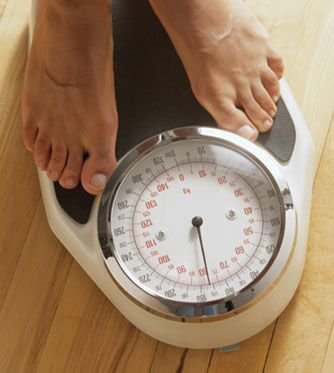
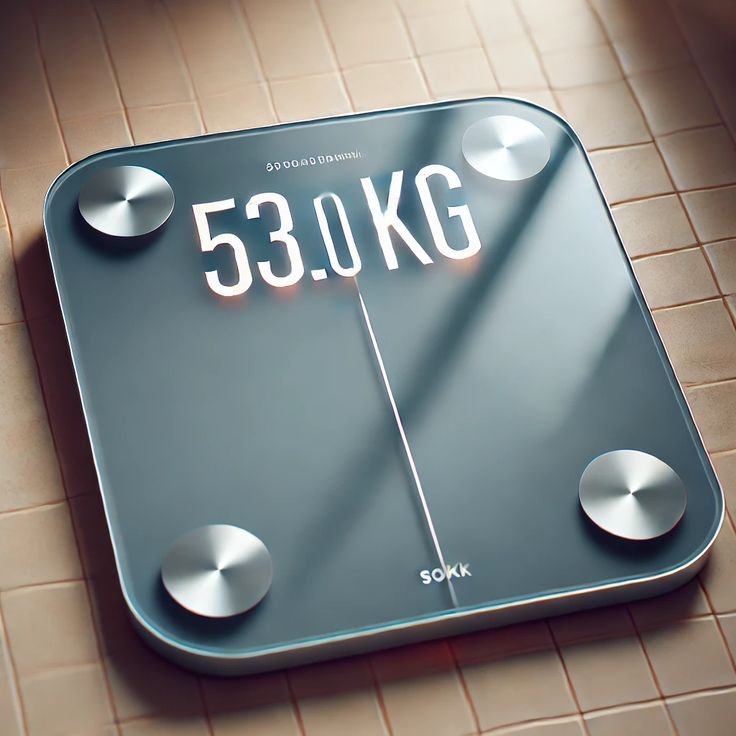
Kitchen scales today have buttons to switch immediately between metric and imperial. No need to convert, because this time the scale does it for you.
Convertible Scale Buyer’s Guide:
- Easy to read with both units displayed
- Accurate up to 1 gram or 0.1 oz
- Zero the weight of a container with tare mode
- Appropriate capacity for your needs (usually 5-11 lbs for kitchen use)
- Easy-to-clean surface
These are priced about the same as basic models. Being able to cook international recipes isn’t alone a strong enough case, but the convenience is valuable for anyone with combination meal plans on hand.
Just lay your item on the scale, press the unit button, and read your weight in one of 4 units: lbs, oz, grams, or kg. All of the math is done magically by the scale.
This is the “technique” to end all techniques, as it does away with the conversion completely.
Tips to Decide When to Use One Over the Other per Situation
Every tool isn’t for every job. Choose your method to match your situation.
Use Mental Math Shortcuts When:
- Doing casual market research and comparing prices by weight
- Traveling with luggage weight limits
- Having casual conversations
- Quick estimates are sufficient
Use Apps or Calculators When:
- Precision matters
- Converting unusual amounts
- You have your phone handy
- Sharing exact figures with others
Use Charts When:
- Repeatedly converting the same ranges
- Technology isn’t accessible
- Teaching others to convert
- Quick reference beats typing
Use Smart Scales When:
- Cooking or baking regularly
- Following international recipes
- Portioning meals
- Accuracy is essential
Combining multiple techniques creates flexibility. You might have a couple key ratios memorized for quick mental calculations, keep a chart in your kitchen and have an app on the ready.
Common Conversion Mistakes to Avoid
Even the most basic conversions confuse people. Watch out for these common mistakes.
Mistake #1: Confusing Weight Ounces and Fluid Ounces
Weight ounces and volume fluid ounces are two totally different measurements. An ounce of water weighs around 1 fluid oz but this isn’t the case for other materials. Always make certain you are using weight measurements.
Mistake #2: Rounding Too Aggressively
Rounding is easy but it also accumulates errors. Round to at least two decimal places for all practical purposes.
Mistake #3: Confusing Multiplication and Division
Going from larger to smaller units, you multiply. Smaller to larger is fewer numbers, so you divide. Reverse this and you get answers that are absurdly wrong.
Mistake #4: Forgetting Metric Prefixes
One kilogram is 1,000 grams, not hundred. One gram equals 1,000 milligrams. These multiples of 1000 avoid the crazy rounding that imperial conversions have.
Double-checking your work can avoid expensive errors, particularly when conversions will impact a recipe, shipping cost or health judgment.
Frequently Asked Questions
How do I quickly convert 1 pound to grams?
Multiply by 454. One pound is roughly 453.5922 grams, so rounding to the nearest gram you get a quick and easy answer: 454 g. For 5 pounds: 5 × 454 = 2,270 grams.
What is the simplest method to learn the conversion between a kilogram and pounds?
Keep in mind that 1 kilogram is about 2.2 pounds. Double the number of kilograms and add 10 percent for a rough estimate. This one simple hack does the trick in most everyday cases.
Can I use the same conversion factor for cooking and science?
There is a little leeway in cooking so rounded conversion factors work perfectly well. For scientific work, accurate conversions with full decimals should be used. Tune your accuracy to your need.
Why do scales show different weights when switching units?
Scales “round” measurements down to the closest displayable increment. A weight of 5.0 kg would result in it being displayed as 11.02 lbs because of different rounding points. Either of them are correct, given their resolutions.
What is the most precise method of conversion?
Exact conversion factors (0.453592 for lbs to kg, 2.20462 for kg to lbs) combined with a calculator yields the greatest precision. Digital scales with automatic conversion are just as accurate. You can also refer to resources from the National Institute of Standards and Technology (NIST) for official conversion standards.
How can I convert recipe measurements from the metric system to imperial?
Employ a conversion chart, app or multiply/divide by the appropriate factor. If you’re serious about baking and need to measure with precision, go for a scale that can show both types at once.
Building Your Conversion Confidence
At first, weight conversions can feel intimidating. Weird decimal numbers, esoteric units, and the pressure to get it right all create anxiety.
But here’s the truth: conversion becomes easier once you’ve practiced it repeatedly.
Begin with an approach that feels natural to you. Perhaps it’s downloading a conversion app or printing out a chart for your kitchen. Practice using it until the steps become routine.
Then add a second technique on top of that. Maybe memorize that 1 kg ≈ 2.2 lbs. You’ll be surprised how soon you are instinctively making easy conversions.
The methods in this guide succeed because they do not ask you to be someone you are not. Visual learners do well with charts and benchmarks. There is no doubt that math-oriented people are fans of formulas and shortcuts. Fans of technology prefer apps and smart scales.
Feel free to combine these methods. The point is not perfection; it’s practical skill that makes your life easier.
Weight conversions open doors. They allow you to follow amazing recipes from other countries. They assist you in recording your fitness progress. And they help you travel better and shop smarter.
Each master chef, accomplished dieter and alert shopper had to learn those exact same conversions. They seemed complicated once. Now they’re second nature.
Conversion is a learning process that begins with one method and develops through practice. You will wonder in a little while how these could ever have been difficult.