














A Real Life Example Of The Importance Of Weight Conversions
Have you ever been reading a recipe online and it calls for 600 grams of flour, but your kitchen scale only measures ounces? Or perhaps monitoring your fitness level and must convert kilograms to pounds? Weight conversions come up far more commonly than you’d think.
It doesn’t matter if you’re cooking, sending packages, traveling overseas, conducting a school project— or buying and selling land on the Moon — knowing how to convert weight measurements using this chart can save time and prevent costly mistakes. Each country has its own measurement systems so understanding conversions matters not just in theory but also, arguably, for survival.
This guide will take you through 10 tried and tested weight conversion formulas that really work. You’ll learn the equations, see real-life examples and find ways to make doing such weight conversions as easy as it can be.
The Two Primary Systems of Weight Measurement
Before we get too headfirst into conversions, let’s briefly discuss the two systems you will see most commonly.
The metric system measures mass in grams (g), kilograms (kg) and metric tons. This system is used by scientists, most countries around the world, and in the medical profession because it’s based on units of 10, making calculations simple.
The imperial system (commonly referred to as the US customary system) uses ounces (oz), pounds (lbs), and tons. The U.S. uses this system for most everyday measurements (which is why I still drink my water in ounces) even though many countries have converted to metric.
And understanding how both work will make you at ease using any weight measurement you come across.
Conversion 1: Grams to Ounces
This little conversion is particularly useful when you’re preparing recipes from other countries or weighing small objects.
The Formula: 1 gram = 0.035274 ounce
Simple Calculation Method:
- Take the number of grams
- Multiply by 0.035274
- That is your weight in ounces
Example: How to convert 100 grams to oz?
100 × 0.035274 = 3.5274 oz
Quick Reference Table:
| Grams | Ounces |
|---|---|
| 50 | 1.76 |
| 100 | 3.53 |
| 250 | 8.82 |
| 500 | 17.64 |
| 1000 | 35.27 |
Pro Tip: As a rough guide, 28 grams is equivalent to an ounce. It’s a great mental math trick when you are in need of a rough estimate.
Conversion 2: Ounces to Grams
This is the opposite of the preceding conversion, and just as useful for your everyday tasks.
The Conversion Formula: 1 ounce = 28.3495 grams
Simple Calculation Method:
- Take the number of ounces
- Multiply by 28.3495
- This will be your weight in grams
Example: Convert 8 oz to g
8 × 28.3495 = 226.796 g (or about 227 grams)
Common Conversions:
- 1 oz = 28 g
- 4 oz = 113 g
- 8 oz = 227 g
- 16 oz = 454 g
Practical Application: If you’re shopping for meat at a butcher that prices by the pound, but your recipe calls for grams, this becomes your new best friend.
Conversion 3: Pounds to Kilograms
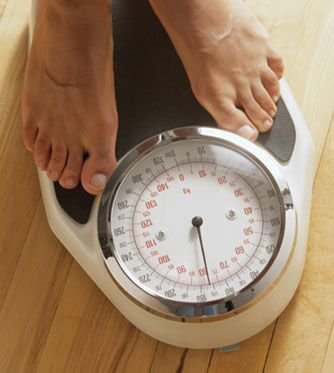
This conversion is important for traveling abroad, ensuring fitness monitoring and for posting purposes.
The Formula: 1 lb = 0.453592 kg
Simple Calculation Method:
- Take the number of pounds
- Multiply by 0.453592
- You get your weight in kg
Example: Change 150 lbs to kg
150 lbs × 0.453592 = 68.0388 kg (Approximately rounded off to 68 kg)
Weight Conversion Chart:
| Pounds | Kilograms |
|---|---|
| 10 | 4.54 |
| 50 | 22.68 |
| 100 | 45.36 |
| 150 | 68.04 |
| 200 | 90.72 |
Memory trick: To get a rough estimate in kilograms, divide pounds by 2.2. It’s not quite perfect, but it is close enough for most tasks.
Conversion 4: Kilograms to Pounds
This conversion is something anyone who’s ever stepped on a scale in another country knows well.
The Formula: 1 kg = 2.20462 pounds
Simple Calculation Method:
- Take the number of kilograms
- Multiply by 2.20462
- The quotient is your weight in pounds
Example: Change 70 kilograms to pounds
70 kg × 2.20462 = 154.3234 pounds (or 154 pounds)
Quick approximation: For everyday estimates, double kilograms. The difference will hardly matter for most applications.
Use This When: You need to watch luggage weight limits, weigh yourself on the go, buy produce from overseas markets or know product specifications in other countries.
Conversion 5: Grams to Kilograms
This metric to metric conversion is the easiest one because both measurements are from the same system.
The Formula: 1 kilogram = 1000 grams
Simple Calculation Method:
- Take the number of grams
- Divide by 1000
- The answer is your weight in kilograms
Example: Change 2,500 grams to kilograms
2,500 ÷ 1000 = 2.5 kg
Quick Reference:
| Grams | Kilograms |
|---|---|
| 100 | 0.1 |
| 500 | 0.5 |
| 1000 | 1.0 |
| 2500 | 2.5 |
| 5000 | 5.0 |
Quick Trick: Move the decimal three places left. Like, 3.750 kilogram for what was earlier 3,750 grams.
Conversion 6: Kilograms to Grams
The reverse of the previous conversion, also very simple and often used.
The Formula: 1 kg = 1000 g
Simple Calculation Method:
- Take the number of kilograms
- Multiply by 1000
- That’s your weight in grams
Example: You want to convert 3.5 kilograms to grams
3.5 × 1000 = 3,500 grams
Trick: Shift the decimal place three spaces to the right. So 0.75 kg is instantly 750 grams.
Use in the Real World: Baking recipes, laboratory measurements, shipping service and nutrition labels make use of this unit conversion on a daily basis.
Conversion 7: Ounces to Pounds
This relationship is useful for cooking measurements and package weights.
The Formula: 1 pound = 16 ounces
Simple Calculation Method:
- Take the number of ounces
- Divide by 16
- The answer you get is your weight in pounds
Example: What is 48 oz in lbs?
48 ÷ 16 = 3 pounds
Common Conversions Table:
| Ounces | Pounds |
|---|---|
| 8 | 0.5 |
| 16 | 1.0 |
| 24 | 1.5 |
| 32 | 2.0 |
| 48 | 3.0 |
Kitchen Tip: Keep in mind 1 pound of butter is 4 sticks, and each stick is equal to 4 ounces. This helps when recipes are given in other measurements.
Conversion 8: Pounds to Ounces
Find the reverse value for if you’d like to convert larger units into smaller ones.
The Conversion: 1 pound = 16 ounces
Simple Calculation Method:
- Take the number of pounds
- Multiply by 16
- This is how much that result weighs in ounces
Example: Change 2.5 lb to oz
2.5 × 16 = 40 ounces
Practical Application: When dividing product to put in small bags or when calculating whether your shipment will meet applicable weights.
Conversion 9: Metric Ton to Kilogram
This conversion is useful for industrial applications, transporting cargo and large measurements.
The Formula: 1 metric ton = 1000 kilograms
Simple Calculation Method:
- Take the metric tons
- Multiply by 1000
- The answer is your weight in kilograms
Example: Change 2.3 metric tons to kilograms
2.3 × 1000 = 2,300 kg
Large Weight Reference:
| Metric Tons | Kilograms |
|---|---|
| 0.5 | 500 |
| 1.0 | 1,000 |
| 2.5 | 2,500 |
| 5.0 | 5,000 |
| 10.0 | 10,000 |
Industry applications: Building materials, weights of vehicles, pig iron, cast iron and cargo shipping metric ton widely used.
Conversion 10: Pounds to Grams
This method of cross-system conversion serves as a perfect tool for connecting metric and imperial measurements.
The Formula: 1 lb = 453.592 g
Simple Calculation Method:
- Take the number of pounds
- Multiply by 453.592
- The result is your weight in grams
Example: Turn 5 lbs to grams
5 × 453.592 = 2,267.96 grams (about 2,268 grams)
Everyday Examples:
- 0.5 lbs = 227 grams
- 1 lb = 454 grams
- 2 lbs = 907 grams
- 5 lbs = 2,268 grams
Shopping Convenience: This useful converter allows you to easily compare the price of a product for an amount in one unit versus another.
Tips for Accurate Weight Conversions
Use these tested points and converting becomes a lot easier for you to do.
Use a Calculator: Always use a calculator for accurate measurements – particularly when it comes to cooking or science. Your phone already has one built in, so you have no excuse for miscalculations if accuracy is needed.
Round Correctly: Determine how accurate you really have to be. For recipes, rounding will often be good enough, to the nearest whole number. How many decimal places would you use for science experiments or prescriptions?
Double-Check Your Work: After you suddenly just get done converting, ask yourself if the answer is reasonable. For example, if 10 pounds converts to 200 kilograms and you know pounds are not that much more or less than a kilogram, something has gone wrong.
Conversion Charts: Print or save digital copies of conversion tables for easy access. Storing them in full view in your kitchen or workspace saves time.
Know the Basic Relationships: Something everyone should know is that 1 kg ≈ 2.2 lbs and 1 oz ≈ 28 g, which takes care of most everyday values without consulting a table.
Common Conversion Mistakes to Avoid
Even the most experienced among us makes these mistakes so be on the lookout.
Getting Multiply and Divide Mixed Up
Using the incorrect operation is a common error. When we carry out a conversion from a smaller unit to a larger one (for example, from ounces to pounds) you divide. When moving from larger to smaller units in weight (pounds to ounces), multiply.
The Wrong Conversion Factor
Be sure you are converting with the correct number. Mixing 2.2 (kg to lbs) and 0.45 (lbs to kg), will give completely wrong answers.
Forgetting Decimal Points
When converting metric measurements, the placement of decimal points is crucial. 2,500 grams is 2.5 kg, not 25 kg or 0.25 kg.
Rounding Too Early
If you’re doing several conversions in a row, don’t round at all until the last step. Mistakes made during the early rounding accumulate.
Practical Applications Across Different Fields
You encounter weight conversions in even more places than you might realize.
In the Kitchen: Converting international recipes constantly. Perhaps your French pastry recipe calls for 250 grams of flour, but you only have a measuring cup that tells you the amount in ounces. The ability to convert fast lets you try recipes from everywhere on the planet.
At the Gym: Weightlifting machines from other countries use different measurements. A 45-pound barbell plate translates to roughly 20 kilograms. Knowing these conversions will give you a good benchmark of your fitness no matter where you are training.
For Shipping: Weight matters for postage and though there are many carriers – the international rate quotes in both pounds and kilograms. A good conversion can save money and headaches.
Science Class: Lab experiments rely on accurate measurements. Interchanging between grams and ounces or kilograms and pounds with accuracy can be a game changer between an experiment being successful or not.
Traveling: Baggage weight limits differ around the world. Airlines could list limits in kilograms, versus pounds on your scale at home.
Handy Tools for Fast Conversion
Technology makes weight conversions much faster now!
Online Conversion Calculators: There are websites with free conversion calculators where you just put a number in and pick your units then get the answer. These are great when you have internet. The National Institute of Standards and Technology (NIST) provides reliable conversion resources.
Smartphone Apps: Specific conversion apps also work offline and might offer extras like saving favorites or arranging for multi-conversions simultaneously.
Smart Digital Kitchen Scales: Today’s digital scales take the hard work out of converting weights into different units by doing it for you.
Printable Charts: Hang on the wall in your kitchen for easy conversion without any devices.
Frequently Asked Questions
How many grams to a pound?
One pound contains 453.592 grams. For rough mental math, call this 454 grams and you’re not far off.
What is the most simple way to change kilograms into pounds?
Multiply kilograms by 2.2. This will give you a rough estimate that’s close enough for most practical purposes. For exact conversions, use 2.20462.
Why do countries have different systems of weight?
It’s mostly for historical reasons. The metric system was invented in France in the late 1700s and has flourished around the world because of its simplicity. The imperial system that had been introduced was retained by the United States.
Do I just have to memorize all these conversion factors?
No, not everything needs to be memorized. Concentrate on the ones most often used and that you use every day, then have a list tucked away somewhere or use a calculator for others.
How accurate do these conversions need to be?
It depends on what you are doing. Cooking can handle a little here or there, but science experiments or medical doses need precision. Always consider the context.
What is the distinction between weight and mass?
Yes, in a technical sense — but not for everyday use. Weight is defined as the force of gravity acting on an object’s mass. For practical conversions on earth, the difference is insignificant.
Can I switch between metric tons and US tons?
Yes, but they’re different. One metric ton is 1,000 kilograms (approximately 2,204.6 pounds) and one US ton is 2,000 pounds (roughly 907.2 kilograms). Don’t confuse them.
What is the best conversion to memorize first?
Begin with kilograms to pounds (multiply by 2.2) and grams to ounces (divide by 28). Of these two, all are common.
Wrapping Up Your Conversion Knowledge
Conversions between cooking and baking weights don’t need to be complicated. Now, you have the 10 formulas that you can rely on to convert between ounces, pounds, kilograms and metric tons confidently.
The key is practice. Begin incorporating these conversions into your life. Convert your weight from pounds to kilograms. Experiment with recipes written in another measurement system. Look up the weight of packages in both units. The more you do this, the more instinctual calculating becomes.
Keep in mind that tech is here to support you. You’ve got calculators and apps and digital scales to help you in getting precise measurements when you want them. But once you understand the nature of things, you are never a slave to it.
Bookmark this guide as a quick reference. Print out the conversion tables and set them in a convenient place. In no time, you’ll be doing a lot of these conversions in your head with little or no effort.
Weight measurement conversions have many uses. They allow you to follow any recipe, ship packages abroad, track your fitness goals precisely and understand product specifications from anywhere in the world. Powerful knowledge to carry around with you.
Begin small, work on it regularly and pretty soon you will be converting just as easily! You’ve got this!