



Why Volume Conversions Matter More Than You Think
Have you ever tried to cook a recipe from another country and been basically swimming in confusion over the measurements? Or perhaps you’re on a science project and need to convert milliliters into cups? You’re not alone.
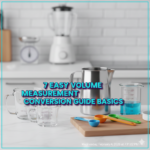
You’d be surprised at how often you encounter volume conversions. Whether you are making cookies, measuring medicine, filling your car’s gas tank or working on homework, understanding how to change between different units of volume saves time and mistakes.
The good news is that volume conversions don’t need to be complicated. There are ways to do these conversions quickly and accurately, however. This guide will show you nine simple tricks to measuring liquids or volumes that are useful for students, home cooks and anyone else who happens to need their liquid measured accurately.
Begin at the beginning, and grow confident in your skills as you learn each one.
The Foundation: Typical Volume Units You’ll Want to Familiarize Yourself With
Before we dive into conversion methods, let’s review the most common volume measurements you’ll be seeing.
Metric System Units:
- Milliliters (mL) – Units of measurement for medicine, anything less than an ounce
- Liters (L) – Bottles of soda, bottles of milk
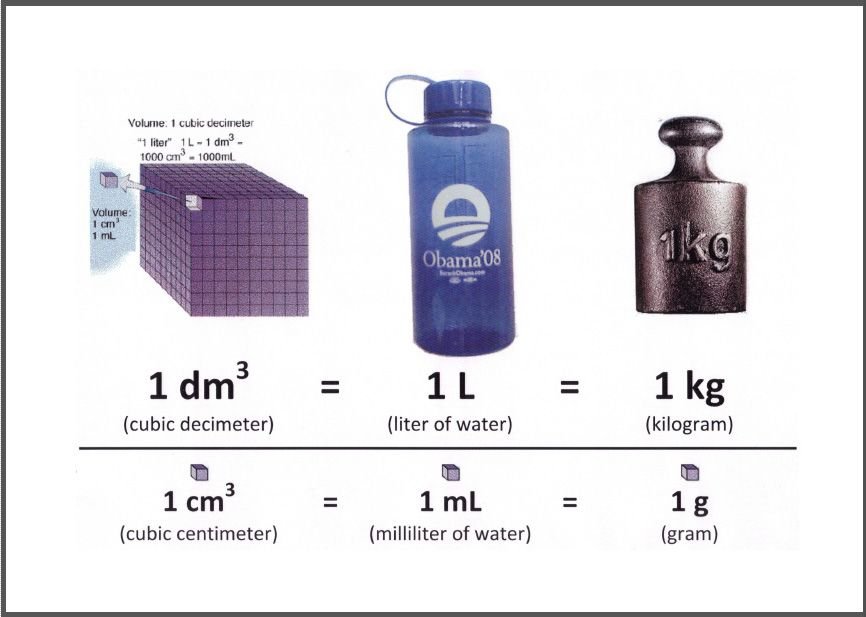
- Cubic centimeters (cm³) – This is the same as milliliters, used in science
US Customary Units:
- Teaspoons (tsp) – Very small amounts for cooking
- Tablespoons (tbsp) – Slightly bigger cooking measurements
- Fluid ounce (fl oz) – Drinks and small bottles
- Cups – Basics for baking and cooking
- Pints – Tubs of ice cream, small containers of milk
- Quarts – Large milk containers
- Gallons – Large milk jugs, gasoline tanks
Imperial Units (UK):
British pints and gallons are a bit different from the US ones.
These are the units you’ll learn to convert first.
Method 1: The Memory Trick – Crafting Memorable Conversions
The simplest way to convert volumetric volumes as a human being is just using memory of different conversions that you are exposed to all the time in your daily life.
Essential Conversions to Remember:
| From | To | Multiply By |
|---|---|---|
| Liters | Milliliters | 1000 |
| Gallons | Liters | 3.785 |
| Cups | Milliliters | 237 |
| Tablespoons | Teaspoons | 3 |
| Fluid ounces | Milliliters | 30 |
Make flashcards of these simple conversions. Practice them while waiting for the bus, or during commercial breaks. And once these are lodged in your brain, you’ll solve the vast majority of day-to-day conversion problems in your head.
Pro Tip: Use rounded numbers to help estimates come close quickly. Recall that 1 gallon is approximately 4 liters and 1 cup is about 240 mL. When it’s not so important to be perfectly accurate, these approximations work well.
Method 2: Metric Conversions Using the Ladder Method
There is an inherent structure of the metric system related to powers of ten. Consider a ladder with every step being one unit.
The Metric Volume Ladder:
- Kiloliters (kL) – Top rung
- Hectoliters (hL)
- Decaliters (daL)
- Liters (L) – Middle point of reference for volume
- Deciliters (dL)
- Centiliters (cL)
- Milliliters (mL) – Bottom rung
How It Works:
The next step down the ladder is multiplied by 10. Adding 1 means moving up by a factor of 10 at each step.
Example: Change 2.5 liters to milliliters.
- Start at liters (L)
- Count down to milliliters (mL): 3 steps
- Multiply: 2.5 × 10 × 10 × 10 = 2,500 mL
Answer: 2,500 mL
Example: Change 5,600 mL to liters.
- Start at milliliters (mL)
- Step up to liters (L): 3 steps
- Divide: 5,600 ÷ 10 ÷ 10 ÷ 10 = 5.6 L
This intuitive format for converting unit measurements simplifies and reduces compounding errors during conversion.
Method 3: The Rule of the Fraction or Ratio
Not everyone processes things by decimals but fractions. This method employs basic ratios to convert volumes.
Setting Up Your Ratio:
Set up the proportion so that “what you have over what you want” is equal to “what you have over what you don’t want.”
Example: If 1 cup is equal to 8 fluid ounces, then how many fluid ounces are there in 3.5 cups?
- Set it up: 1 cup / 8 fl oz = 3.5 cups / X fl oz
- Cross Multiplication: 1 × X = 8 × 3.5
- Answer: X = 28 fl oz
Why This Works:
Ratios preserve the scale of a given quantity. You are essentially asking, “This equals that, so this other amount equals what?”
This feature is particularly helpful when you are converting cooking measurements, or up- and down-scaling recipes. How much milk would you need to make a recipe that serves 4 people, with the use of 2 cups of milk, for 6 people? Use proportions to find out.
Method 4: Conversion Factor Chain Technique
This method is ideal for complicated conversions where a lot of steps are involved. You multiply through by conversion factors that eliminate units until you obtain your desired result.
Step-by-Step Process:
- Write down your starting measurement
- Multiply by conversion factors (which equal 1)
- Cancel matching units
- Calculate the final answer
Example: Change 2 gallons to milliliters.
2 gallons × (4 quarts/1 gallon) × (2 pints/1 quart) × (2 cups/1 pint) × (237 mL/1 cup)
Note how gallons, quarts, pints and cups all cancel out to leave milliliters.
Answer: 2 × 4 × 2 × 2 × 237 = 7,584 mL
When to Use This:
This device is a great operating model for chemistry problems, engineering calculations, or any other time you need to work accurately with unit conversions outside of your comfort zone.
Method 5: Digital Resources and Calculator Hacks
Technology makes conversions easier — and faster — than ever before. Wisely applied digital tools can shave minutes from every conversion.
Best Digital Resources:
Online Converters:
- Google’s built-in converter (simply search for “2 gallons to liters”)
- UnitConverters.net
- ConvertUnits.com
Mobile Apps:
- Unit Converter Ultimate
- Kitchen Calculator PRO
- Convert Units for Free
Calculator Features: Many scientific calculators have built-in unit conversion functions. In your calculator’s manual, find the hidden features they don’t tell you about.
Smart Home Devices: Just say, “Alexa/Siri/Google Assistant: How many milliliters in 3 cups?” They will reply immediately and with the right answer.
The Catch:
Although digital tools deliver instant results, knowing the math behind conversions lets you spot mistakes and develop problem-solving skills. Technology should be a supplement to learning, not a replacement.
Method 6: The Method of Visual Inspection
For some people, the most effective way to understand size is through the physical relationships between volumes. This is a method that sees the objects of everyday life as references.
Common Visual References:
| Volume | Everyday Item |
|---|---|
| 1 milliliter | A little water drop |
| 5 mL | One teaspoon |
| 15 mL | One tablespoon |
| 240 mL | One coffee mug (8 ounces) |
| 1 liter | A large bottle |
| 2 liters | A big soda bottle |
| 4 liters | Two gallon-sized milk cartons |
Creating Mental Pictures:
When you need to convert 500 mL to cups, think about two coffee mugs.
For 3 gallons to liters, consider: “Three big milk jugs are about equal to around 12 liters total.”
Hands-On Practice:
Gather containers from your kitchen. Fill measuring cups and pour into various sized containers. This physical experience creates an intuitive understanding that numbers alone cannot provide.
Use a 2-liter soda bottle and practice pouring into cups. You’ll soon learn to estimate that 2 liters is about 8 cups.
Method 7: The Cook and Bake At-A-Glance
It is from cooking that we most often encounter real-world volume conversions. Keep these kitchen conversions handy.
Essential Cooking Conversions:
| Measurement | Equals |
|---|---|
| 3 teaspoons | 1 tablespoon |
| 4 tablespoons | 1/4 cup |
| 16 tablespoons | 1 cup |
| 1 cup | 8 fl oz |
| 2 cups | 1 pint |
| 2 pints (4 cups) | 1 quart |
| 4 quarts | 1 gallon |
For more comprehensive guides on measurement conversions across different units, visit this measurement conversion resource for additional tools and calculators.
Recipe Scaling Trick:
When you’re doubling or halving a recipe, employ this simple trick:
- Write all original measurements
- Do this for each, multiplying by your scaling factor (2 for doubling it || 0.5 to halve it)
- Turn any awkward results into something usable (e.g. 1.5 tablespoons becomes 4.5 teaspoons)
International Recipe Conversions:
Many Europeans cook by weight rather than volume, but when they use volume, they measure in milliliters.
- American 1 cup = 237 mL
- Australian 1 cup = 250 mL
- UK 1 cup = 284 mL
Most recipes don’t depend on such slight variations, but when you’re precision-baking, specific measurements are needed.
Method 8: The Dimensional Analysis Power Method
This is a high-level method that scientists and engineers like, for it precisely converts any unit into another through orderly steps.
The Framework:
- Start with your unit and the target unit
- Write down all known conversion factors between them
- Set up a multiplication chain
- Cancel units diagonally
- Compute the answer
Example: Change 50 fluid ounces into liters.
Known conversions:
- 1 fluid ounce = 29.57 mL
- 1,000 mL = 1 L
Work: 50 fl oz × (29.57 mL / 1 fl oz) × (1 L / 1000 mL)
Calculation: 50 × 29.57 ÷ 1,000 = 1.48 L
Why Scientists Love This:
Unit errors in complicated calculations are avoided by dimensional analysis. It forces you to monitor units carefully, and errors are apparent before it is too late.
Practice Problem: Turn 10 gallons into cubic centimeters with this approach. You will need to know: 1 gallon = 3.785 L and 1 L = 1,000 cm³.
Method 9: The Trick of Estimation and Rounding Technique
When the precision does not need to be perfect, this technique teaches smart approximations.
When to Estimate:
- Shopping comparisons
- Quick cooking adjustments
- Initial problem-solving checks
- Situations where precision doesn’t matter
Smart Rounding Rules:
For Metric Conversions:
- Round to nearest 5 or 10 for small volumes
- Round to nearest 100 for moderate volumes
- Round to nearest 1,000 for large values
For US Customary:
- Remember: 1 US gallon ≈ 4 liters (actually, 3.785)
- 1 qt ≈ 1 L (really 0.946)
- 1 cup ≈ 250 mL (actually 237)
The 10% Rule:
10% of exact answer is good enough for non-critical use cases. So you are free to think about simpler numbers in your mind.
Example: Change 7.3 liters to gallons.
- Exact: 7.3 ÷ 3.785 = 1.93 gallons
- Estimate: 7.3 ÷ 4 ≈ 1.8 gallons
The estimate gives you a number for whether you need one or two gallon containers.
Common Mistakes in Conversion and How to Prevent Them
Even those who have good techniques are repeatedly tripped by some errors.
Mistake 1: Conflating Weight and Volume
Remember that pounds and ounces can be used to measure weight but also volume. An ounce (weight) is not the same as a fluid ounce (volume).
Mistake 2: Choosing Wrong Conversion Factors
Double-check your conversion numbers. The interchange of 1 quart = 0.946 L with 1 L = 0.946 quarts makes big mistakes.
Mistake 3: Rounding Too Early
Don’t round units as you go through your calculation. This is how you avoid multiplying when you are supposed to divide and vice versa.
Mistake 4: Cubic vs. Regular Units Forgotten
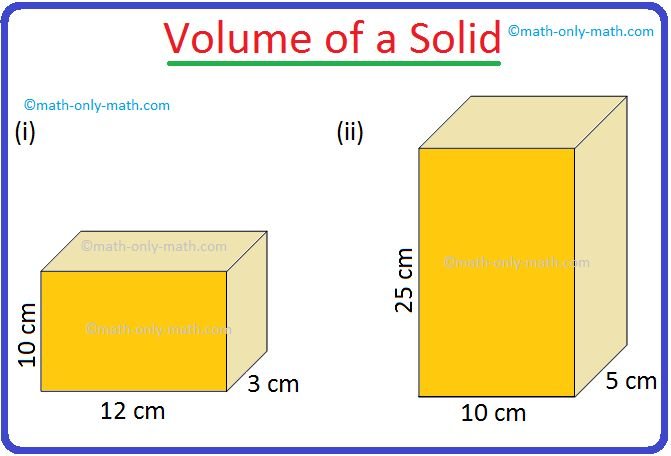
Cubic centimeters (cm³) are volume and just plain old centimeters (cm) are length. Don’t confuse these in your calculations.
Creating Your Own Conversion Cheat Sheet
Create a personalized cheat sheet of conversions you use frequently.
What to Include:
- Your most frequently used start & end units
- Conversion factors you always forget
- Visual references to help trigger your memory
- Space for practice problems
- Common mistakes to avoid
Design Tips:
Create your reference sheet colorful and visually appealing. Make metric and US customary units different colors. Include tiny illustrations or symbols next to each classification.
Save one on your phone, another in your notebook and print it out for your fridge if you cook at home a lot.
Frequently Asked Questions
Q: How can one easily remember gallon to liter conversions?
A: You should recall that 1 gallon is roughly equal to 4 liters (exactly it is 3.785). If you want a quick estimate, multiply gallons by 4 to get approximate liters. When you need precision use 3.785 as the conversion factor.
Q: Why do US and UK measurements differ?
A: The systems for the US and UK diverged after the United States standardized measurements in the 1800s. There are 473 mL in a US pint and 568 mL in a UK pint. This is important when working from recipes from other countries.
Q: Do I have to memorize all of these conversion factors?
A: No. Commit to memory the 5-10 conversions you use most frequently. For anything else, lean on digital tools or reference charts. Be mindful of the way you are learning rather than just memorizing every single number.
Q: How can I convert metric to US customary when cooking?
A: Memorize the following key conversions: 1 cup = 237 milliliters, 1 tablespoon = 15 milliliters, 1 teaspoon = 5 milliliters. Most recipes are pretty forgiving, so you’ll have no problems just rounding to 1 cup = 240 mL for cooking.
Q: Why are there ounces and fluid ounces?
A: Fluid ounces measure volume of space liquid takes up, and ounces measure the weight (or heaviness) of something. They are not at all equivalent measures that just happen to coincide in name.
Q: Could I apply these methods to swimming pool sized volumes?
A: Yes! These are all the sorts of methods that work at every scale. Gallons or cubic meters are often applicable for swimming pools. An average pool contains approximately 20,000 gallons or 75,700 liters. The transformation algorithms are completely scalable.
Putting It All Together
And now you know nine surefire ways for how to convert volume measurements! There’s a place for each in your situation, available tooling and personal learning style.
Begin with the memory trick and ladder system for easy conversions. As you get better, play with it for more complex problems. Keep digital resources in your pocket for quick checks, but push yourself to estimate first.
Practice is the path to perfection. Next time you are cooking, intentionally translate recipe measurements. When you fill your gas tank, do some mental math: How many liters are you pumping? Make routine tasks turn into conversion practice.
Just remember that we all make mistakes when learning. If you receive an answer that seems incredible, retrace your steps to find the mistake. Every mistake shows you something important in the conversion process.
It may be daunting learning to make volume conversions, but really all it is, is multiplication and division with units attached. Now that you have these nine methods in your volume converting toolbox, you are prepared to take on any conversion problem thrown at you—be it in the kitchen or classroom—or wherever life brings you.