




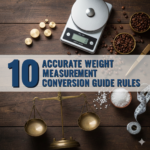





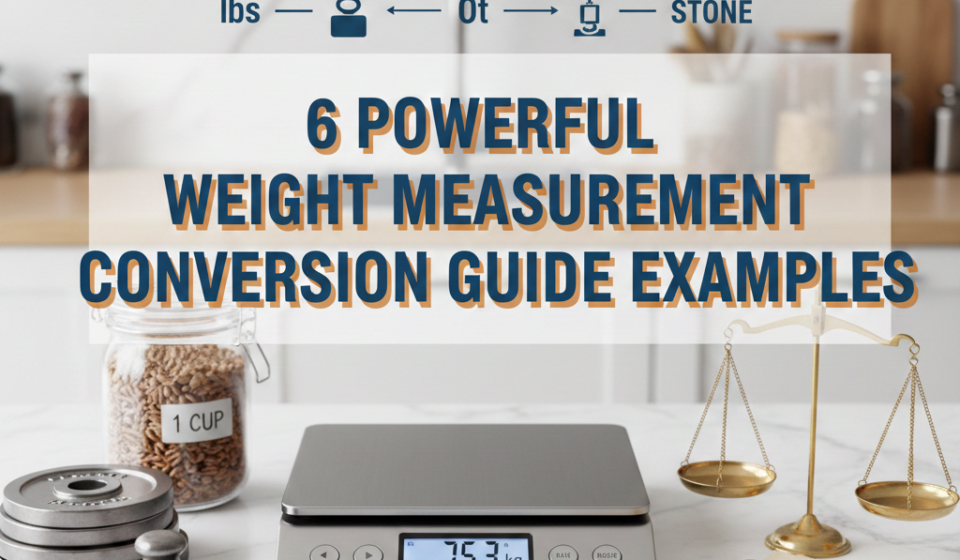

Why Weight Conversions Matter in Your Daily Life
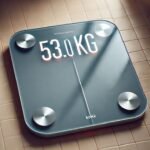
Have you ever stood in your kitchen staring at a recipe that calls for 500 grams of flour when your scale only shows pounds? Or maybe you’re tracking your fitness progress, but your new scale displays kilograms instead of the pounds you’re used to seeing?
Weight conversions aren’t just for math class. They’re practical skills that pop up when you’re cooking international recipes, shipping packages, buying produce at the market, or monitoring your health goals.
The good news? You don’t need to be a mathematician to master these conversions. With the right techniques, you can switch between different weight measurements as easily as checking the time on your phone.
This guide breaks down nine proven methods that make weight conversions quick and painless. Whether you prefer mental math shortcuts, smartphone apps, or old-school conversion charts, you’ll find a technique that fits your style.
The Most Common Weight Units You’ll Encounter
Before jumping into conversion techniques, let’s get familiar with the weight measurements you’ll see most often.
Metric System:
- Milligrams (mg)
- Grams (g)
- Kilograms (kg)
Imperial System:
- Ounces (oz)
- Pounds (lbs)
The metric system dominates most of the world, while the United States primarily uses the imperial system. This creates the need for conversions when dealing with international content, travel, or online shopping.
Understanding the relationship between these units forms the foundation for all conversion techniques. One kilogram equals 1,000 grams. One pound equals 16 ounces. These basic facts become your building blocks.
For more comprehensive guidance on various measurement conversions, visit Measurement Conversion Guide Online to explore additional conversion resources.
Technique 1: The Classic Multiplication Method
This straightforward approach uses conversion factors to transform one unit into another.
The Core Conversion Numbers:
| From | To | Multiply By |
|---|---|---|
| Pounds | Kilograms | 0.453592 |
| Kilograms | Pounds | 2.20462 |
| Ounces | Grams | 28.3495 |
| Grams | Ounces | 0.035274 |
To convert pounds to kilograms, multiply the pound value by 0.453592. For example, if you weigh 150 pounds and want to know your weight in kilograms:
150 × 0.453592 = 68.04 kg
Going the other direction works the same way. If an item weighs 5 kilograms and you need pounds:
5 × 2.20462 = 11.02 lbs
This method provides accurate results every time. The downside? Those decimal numbers can feel overwhelming without a calculator handy.
Technique 2: Quick Mental Math Shortcuts
Sometimes you need a ballpark figure fast, and pulling out your phone feels like overkill. Mental math shortcuts give you reasonably close answers in seconds.
Pounds to Kilograms (The Division Trick)
Divide the pound number by 2, then subtract 10% of that result.
Let’s convert 100 pounds:
- 100 ÷ 2 = 50
- 10% of 50 = 5
- 50 – 5 = 45 kg
The exact answer is 45.36 kg, so you’re incredibly close!
Kilograms to Pounds (The Double-Plus Trick)
Double the kilogram number, then add 10% of the original number.
Converting 20 kilograms:
- 20 × 2 = 40
- 10% of 20 = 2
- 40 + 2 = 42 lbs
The precise answer is 44.09 lbs. You’re within a couple of pounds, which works great for quick estimates.
These shortcuts shine when you’re shopping, cooking, or having conversations where exact precision isn’t critical.
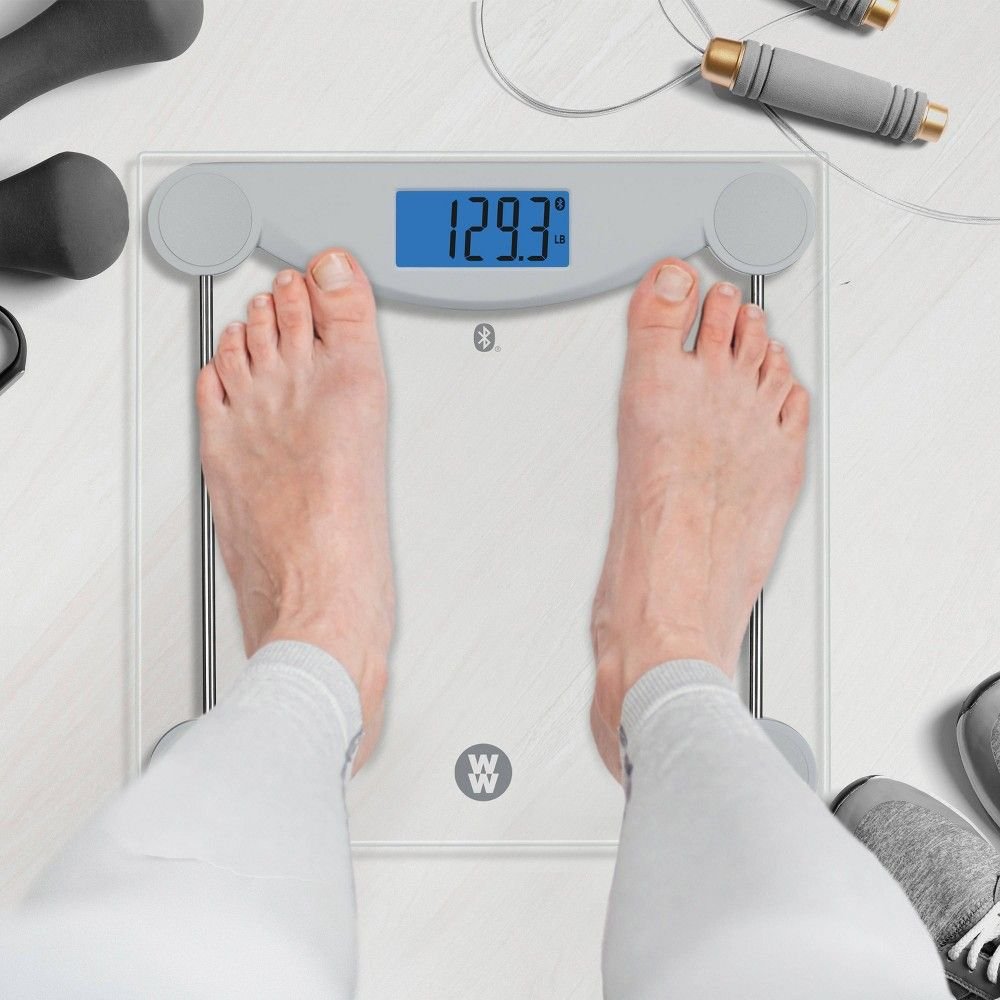
Technique 3: Smartphone Apps and Digital Tools
Your smartphone already handles calculations, navigation, and communication. Why not weight conversions too?
Dozens of free apps specialize in unit conversions. Apps like “Unit Converter,” “Convert Units,” and “Kitchen Calculator” offer instant conversions with clean interfaces.
Benefits of Using Apps
- Zero memorization required
- Instant accuracy
- History tracking for repeated conversions
- Works offline after installation
- Often includes hundreds of unit types beyond weight
Simply type in your starting value, select your starting unit, choose your target unit, and watch the magic happen. Many apps also save your favorite conversions for even faster access next time.
For occasional conversions, your phone’s built-in calculator combined with a quick web search for conversion factors works perfectly fine too. You can also use reliable online tools like Google’s unit converter for instant results.
Technique 4: Printable Conversion Charts
Old-school? Maybe. Effective? Absolutely.
A printed conversion chart taped inside your kitchen cabinet or workout journal provides instant reference without unlocking devices or searching online.
Sample Kitchen Conversion Chart
| Ounces | Grams | Pounds | Kilograms |
|---|---|---|---|
| 1 | 28.35 | 0.0625 | 0.028 |
| 8 | 226.80 | 0.5 | 0.227 |
| 16 | 453.59 | 1 | 0.454 |
| 32 | 907.18 | 2 | 0.907 |
| 48 | 1360.78 | 3 | 1.361 |
Charts work brilliantly for repeated conversions of common amounts. Bakers especially love them since recipes often repeat similar measurements.
You can create custom charts focusing on the ranges you use most frequently. A fitness enthusiast might chart weights from 100-300 pounds in 10-pound increments with kilogram equivalents.
Technique 5: The Rounding Strategy for Everyday Use
Perfect accuracy matters for science experiments and medication dosing. For cooking dinner or estimating luggage weight? Close enough usually works just fine.
The rounding strategy simplifies conversions by using friendlier numbers.
Simplified Conversion Factors
Instead of 2.20462 for kilograms to pounds, just use 2.2.
Instead of 0.453592 for pounds to kilograms, round to 0.45.
For ounces to grams, use 28 instead of 28.3495.
These rounded numbers make mental math dramatically easier while keeping you within a small margin of error.
Converting 75 pounds to kilograms: 75 × 0.45 = 33.75 kg (exact answer: 34.02 kg)
The difference rarely matters for practical purposes, and you save significant mental energy.
Technique 6: The Ratio Memorization Method
Some people remember phone numbers easily. Others never forget faces. If you have a knack for remembering numbers, the ratio method might be your perfect match.
Memorize these key ratios
1 kg ≈ 2.2 lbs
1 lb ≈ 0.45 kg
1 oz ≈ 28 g
1 g ≈ 0.035 oz
Once these numbers live in your memory, you carry a conversion calculator in your brain everywhere you go.
Test yourself regularly to strengthen recall. When you see weights on packages, quickly convert them mentally. When news mentions kilograms, translate to pounds in your head.
This technique requires upfront effort but pays dividends for years. It’s particularly valuable when technology fails or isn’t available.
Technique 7: Visual Comparison Benchmarks
Sometimes understanding weights means connecting numbers to real objects you can picture.
Common Item Weight References
- A stick of butter = approximately 113 grams (4 oz)
- A can of soup = roughly 300-400 grams (10.5-14 oz)
- A bag of sugar = typically 2 kg (4.4 lbs)
- A gallon of milk = about 3.78 kg (8.34 lbs)
- A nickel coin = 5 grams
When a recipe calls for 250 grams of chocolate, you can visualize “a bit more than two sticks of butter.” This makes abstract numbers tangible.
Athletes use similar benchmarks. A 45-pound weight plate equals roughly 20.4 kilograms. Once you lift weights regularly, you develop an intuitive feel for these conversions.
Building your personal library of weight comparisons transforms you into a human scale. You’ll estimate weights more accurately even without measuring tools.
Technique 8: Spreadsheet Formulas for Batch Conversions
Need to convert dozens or hundreds of weights at once? Manually calculating each one would waste hours.
Spreadsheet programs like Microsoft Excel, Google Sheets, or Apple Numbers automate bulk conversions effortlessly.
Setting Up Your Conversion Spreadsheet
- Create two columns: one for original weights, one for converted weights
- Enter your conversion formula in the first cell of the conversion column
- Copy that formula down for all rows
Sample Formula for Pounds to Kilograms in Excel
If your pound values are in column A starting at row 2: =A2*0.453592
Drag this formula down, and every pound value instantly converts to kilograms.
You can create master spreadsheets with multiple conversion columns, allowing you to see pounds, kilograms, ounces, and grams simultaneously.
This technique excels for fitness tracking, inventory management, recipe scaling, and any scenario involving numerous conversions.
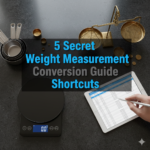
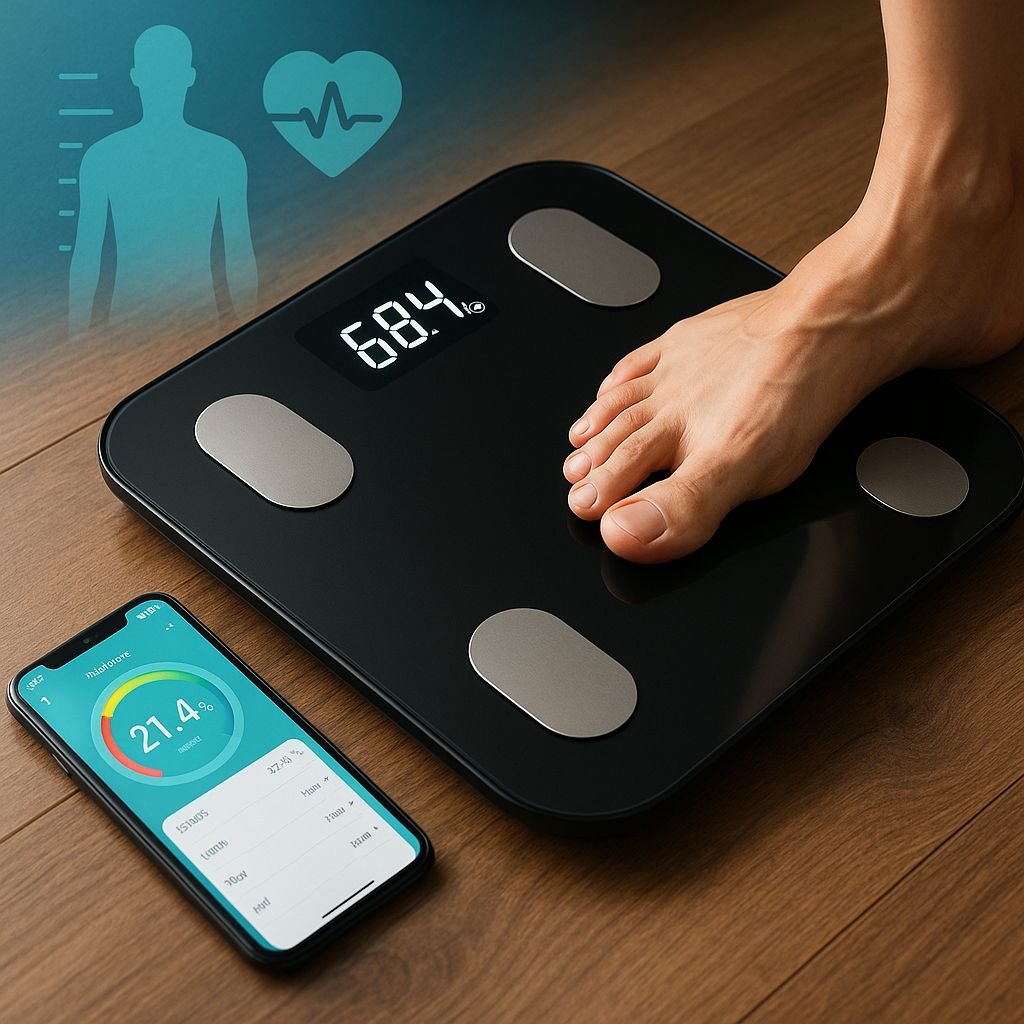
Technique 9: Smart Kitchen Scales with Dual Displays
Technology sometimes solves problems before you even realize they exist.
Modern kitchen scales feature buttons that toggle between metric and imperial units instantly. No conversion needed because the scale does it automatically.
What to Look for in a Convertible Scale
- Clear display showing both unit options
- Accurate to at least 1 gram or 0.1 ounce
- Tare function to zero out container weight
- Capacity suitable for your needs (typically 5-11 lbs for kitchen use)
- Easy-to-clean surface
These scales cost roughly the same as basic models. The convenience factor makes them worthwhile investments for anyone who regularly uses international recipes or follows meal plans with mixed units.
Simply place your ingredient on the scale, press the unit button, and read your measurement in whichever system you prefer. The scale handles all the math invisibly.
This represents the ultimate “technique” because it eliminates the conversion step entirely.
Choosing the Right Technique for Different Situations
Not every technique suits every scenario. Match your method to your circumstances.
Use mental math shortcuts when:
- Shopping and comparing prices per weight
- Traveling with luggage weight limits
- Having casual conversations
- Quick estimates are sufficient
Use apps or calculators when:
- Precision matters
- Converting unusual amounts
- You have your phone handy
- Sharing exact figures with others
Use charts when:
- Repeatedly converting the same ranges
- Technology isn’t accessible
- Teaching others to convert
- Quick reference beats typing
Use smart scales when:
- Cooking or baking regularly
- Following international recipes
- Portioning meals
- Accuracy is essential
Combining multiple techniques creates flexibility. You might memorize key ratios for quick mental conversions, keep a chart in your kitchen, and have an app as backup.
Common Conversion Mistakes to Avoid
Even simple conversions trip people up. Watch out for these frequent errors.
Mistake 1: Confusing ounces with fluid ounces
Weight ounces and volume fluid ounces are completely different measurements. A fluid ounce of water weighs approximately one ounce, but this doesn’t hold true for other substances. Always confirm you’re working with weight measurements.
Mistake 2: Rounding too aggressively
While rounding simplifies calculations, excessive rounding compounds errors. Keep at least two decimal places for most practical purposes.
Mistake 3: Mixing up multiplication and division
Going from larger to smaller units means more numbers, so you multiply. Going from smaller to larger means fewer numbers, so you divide. Getting this backward produces wildly wrong answers.
Mistake 4: Forgetting metric prefixes
One kilogram equals 1,000 grams, not 100. One gram equals 1,000 milligrams. These thousand-based jumps differ from the imperial system’s varied conversions.
Double-checking your work prevents costly mistakes, especially when conversions affect recipes, shipping costs, or health decisions.
Frequently Asked Questions
How do I convert 1 pound to grams quickly?
Multiply by 454. One pound equals approximately 453.592 grams, so rounding to 454 gives you a fast, accurate answer. For 5 pounds: 5 × 454 = 2,270 grams.
What’s the easiest way to remember kilogram to pound conversion?
Remember that 1 kilogram equals roughly 2.2 pounds. Double the kilogram number and add 10% for a close estimate. This simple trick works for most everyday situations.
Can I use the same conversion factor for cooking and science?
Cooking allows for small variations, so rounded conversion factors work fine. Scientific work requires exact conversions using the full decimal values. Match your precision to your purpose.
Why do some scales show different weights in different units?
Scales round measurements to the nearest displayable increment. A weight showing as 5.0 kg might display as 11.02 lbs due to different rounding thresholds. Both are accurate within their precision limits.
Which conversion technique is most accurate?
Using exact conversion factors (0.453592 for lbs to kg, 2.20462 for kg to lbs) with a calculator provides the highest accuracy. Digital scales with automatic conversion are equally precise.
How do I convert recipe measurements from metric to imperial?
Use a conversion chart, app, or multiply/divide by the appropriate factor. For baking where precision matters, consider investing in a scale that displays both units simultaneously.
What’s the difference between a metric ton and a regular ton?
A metric ton (or tonne) equals 1,000 kilograms or 2,204.6 pounds. A standard (short) ton in the US equals 2,000 pounds or 907.2 kilograms. A British (long) ton equals 2,240 pounds.
How accurate should my conversion be for medical use?
Medical dosing requires high precision. Use exact conversion factors (not rounded values) and always validate with a healthcare provider. Do not rely on rough conversions for drug doses.
Building Your Conversion Confidence
Weight conversions feel intimidating at first. Strange decimal numbers, unfamiliar units, and the pressure to get it right create anxiety.
But here’s the truth: conversion gets easier every single time you practice.
Start with one technique that feels comfortable. Maybe that’s downloading a conversion app or printing a chart for your kitchen. Use it consistently until the process feels natural.
Then layer in a second technique. Perhaps memorizing that 1 kg ≈ 2.2 lbs. Before long, you’ll find yourself doing quick conversions without conscious effort.
The techniques in this guide work because they meet you where you are. Visual learners thrive with charts and benchmarks. Math-minded people love formulas and shortcuts. Technology enthusiasts prefer apps and smart scales.
Mix and match these methods freely. The goal isn’t perfection; it’s practical skill that makes your life easier.
Weight conversions open doors. They let you follow amazing recipes from other countries. They help you track fitness progress accurately. They make traveling smoother and shopping smarter.
Every master chef, successful dieter, and savvy shopper had to learn these same conversions. They seemed complicated once. Now they’re second nature.
Your conversion journey starts with a single technique and grows with practice. Soon you’ll wonder why these ever seemed difficult at all.