








































4 Secret Volume Measurement Fixes That Saved My Recipe
(And Might Save Yours Too)
I didn’t realize how fragile a recipe could be until I ruined the same lemon loaf three times in one week.
The first one sank in the middle like it had given up halfway through life. The second one came out dense enough to patch drywall. The third looked perfect—until I sliced it and found a damp, gummy line running straight through the center.
Same ingredients. Same oven. Same pan.
What changed?
The way I measured.
If you’ve ever wondered why a friend’s cookies come out fluffy while yours spread into shiny puddles, or why your bread sometimes rises like a dream and sometimes refuses to budge, there’s a good chance volume measurement is the quiet saboteur.
Over time—and after a lot of failed batches—I found four subtle fixes that completely changed my results. They weren’t flashy techniques. No special equipment. No obscure ingredients.
Just four quiet adjustments in how I measured volume.
Here’s what they were—and why they matter.
Why Volume Measurement Fails So Easily
Before we get into the fixes, it helps to understand the core problem:
Volume measures space, not weight.
A cup of flour doesn’t weigh the same every time you scoop it. It depends on:
- How packed it is
- The humidity
- Whether you sifted first
- How you filled the cup
- Even how you stored it
Two people can both measure “1 cup” and be off by 20–30 grams without realizing it. In baking, that difference is enormous.
Let’s look at how dramatic the variation can be.
How Much Does “1 Cup of Flour” Actually Weigh?
| Method Used | Average Weight (grams) |
|---|---|
| Scooped directly from bag | 150–165g |
| Stirred, then scooped | 140–150g |
| Spoon-and-level method | 120–130g |
| Sifted before measuring | 110–120g |
That’s up to a 50 gram difference—nearly 40% swing in some cases.
Imagine baking a cake with 40% extra flour.
That’s not a small mistake. That’s structural damage.
Now let’s get into the fixes.
Fix #1: Stop Scooping Flour Directly From the Bag
This one alone changed everything.
For years, I dipped the measuring cup straight into the flour bag. It was fast. Efficient. Felt normal.
It was also compacting flour into the cup like wet sand.
When you scoop, you compress the flour under pressure. The deeper the bag, the denser the scoop. You can easily add 20–30% more flour without noticing.
The Fix: Spoon and Level
Instead of scooping:
- Stir the flour first (it settles over time).
- Spoon it gently into the measuring cup.
- Overfill slightly.
- Level off with the flat side of a knife.
No tapping. No shaking.
Just level.
Why It Works
Flour contains tiny air pockets. Scooping destroys them. Spooning preserves them.
Here’s the difference visually:
Scooped Flour:
[██████████████]Spoon-and-Level:
[██████████    ]
The denser the flour, the drier and heavier your final product becomes.
After switching methods, my cakes stopped sinking and my cookies stopped spreading like lava.
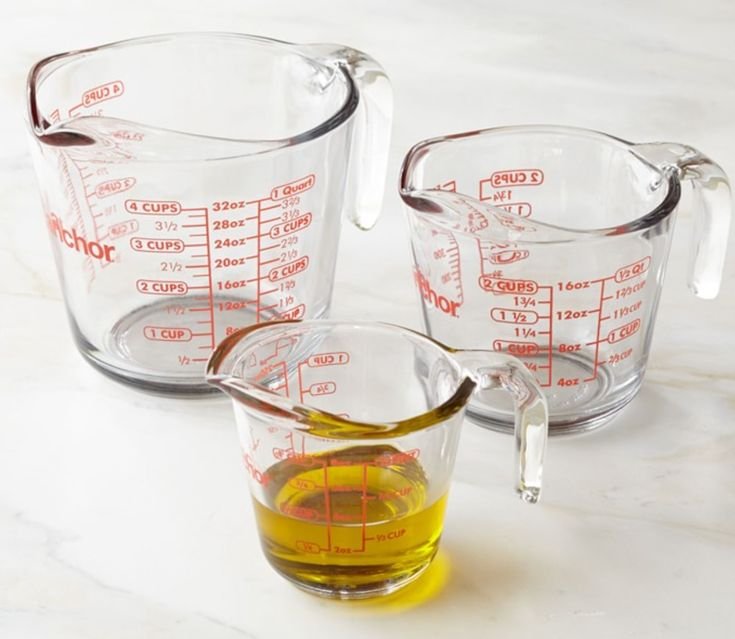
Fix #2: Use the Right Cup for Liquids vs. Dry Ingredients
I always assumed a cup was a cup.
It’s not.
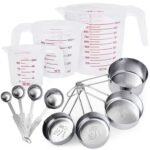
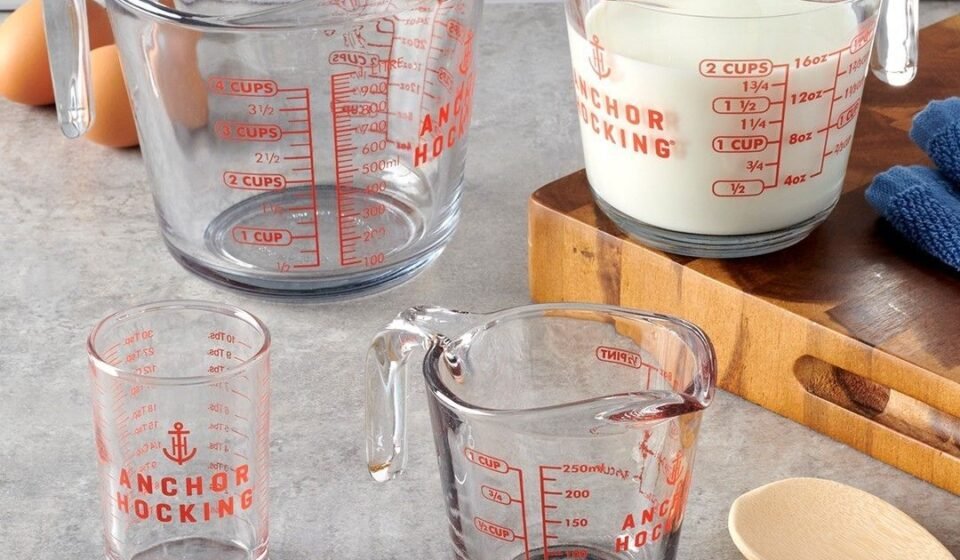
Dry measuring cups are meant to be filled to the top and leveled off.
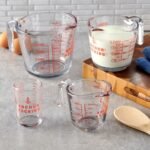
Liquid measuring cups are meant to be filled to a marked line and read at eye level.
If you use a dry cup for liquids, you’re guessing. If you use a liquid cup for flour, you’re eyeballing.
Structural Differences
| Feature | Dry Measuring Cup | Liquid Measuring Cup |
|---|---|---|
| Designed to be leveled | Yes | No |
| Has pour spout | No | Yes |
| Measurement lines | No | Yes |
| Read at eye level | No | Yes |
When I started measuring milk and oil in a proper liquid cup—and checking at eye level instead of from above—I realized I’d been under-measuring by 1–2 tablespoons regularly.
That small difference was affecting moisture balance.
Eye-Level Rule
If you look down at liquid from above, the measurement appears higher than it is.
You must crouch down so the line is perfectly horizontal with your eyes.
It feels tedious. It saves recipes.
Fix #3: Understand Ingredient Density (Not All Cups Are Equal)
Here’s something that changed how I read recipes:
One cup of sugar ≠ one cup of flour ≠ one cup of honey.
Volume is constant. Density is not.
Density Comparison Chart
| Ingredient | 1 Cup Weight (Approx.) |
|---|---|
| All-purpose flour | 120–130g |
| Granulated sugar | 200g |
| Brown sugar | 210–220g (packed) |
| Butter | 227g |
| Honey | 340g |
| Cocoa powder | 85–100g |
Look at cocoa powder.
It’s dramatically lighter than flour. If you pack it, you can double its effective weight.
That’s why brownies can turn bitter or dry if cocoa is overpacked.
The Brown Sugar Trap
Brown sugar is supposed to be packed.
But what does “packed” mean?
It means firmly pressed so it holds shape when turned out.
Here’s a quick guide:
Loose Fill:      Falls apart instantly.
Light Pack:      Crumbles with slight touch.
Proper Pack:     Holds shape, breaks cleanly.
Overpacked:      Rock-solid mass.
Overpacking brown sugar increases sweetness and moisture unexpectedly.
Once I started packing consistently—firm, but not compressed like concrete—my cookies stopped becoming syrupy disks.
Fix #4: Switch to Weight for Problem Recipes
I resisted using a kitchen scale for years.
It felt unnecessary.
It wasn’t.
The first time I baked the lemon loaf using grams instead of cups, it came out perfect. No sinking. No gummy line.
Weight removes the air-variable completely.
Why Weight Wins
- Immune to packing errors
- Immune to humidity changes
- Reproducible every time
- Easier to scale recipes
Here’s a comparison:
| Measurement Method | Margin of Error | Consistency |
|---|---|---|
| Scooped cups | High | Low |
| Spoon-and-level | Moderate | Medium |
| Weight (grams) | Very low | Very high |
If a recipe keeps failing—even when you think you followed it exactly—convert it to grams.
Many professional bakers consider cups unreliable for that reason.
How These Fixes Changed My Results
After implementing these four changes, here’s what improved:
- Cakes rose evenly
- Muffins domed instead of flattening
- Cookies stopped overspreading
- Bread texture became consistent
- Frostings stopped turning runny
The difference wasn’t dramatic in effort.
It was dramatic in outcome.
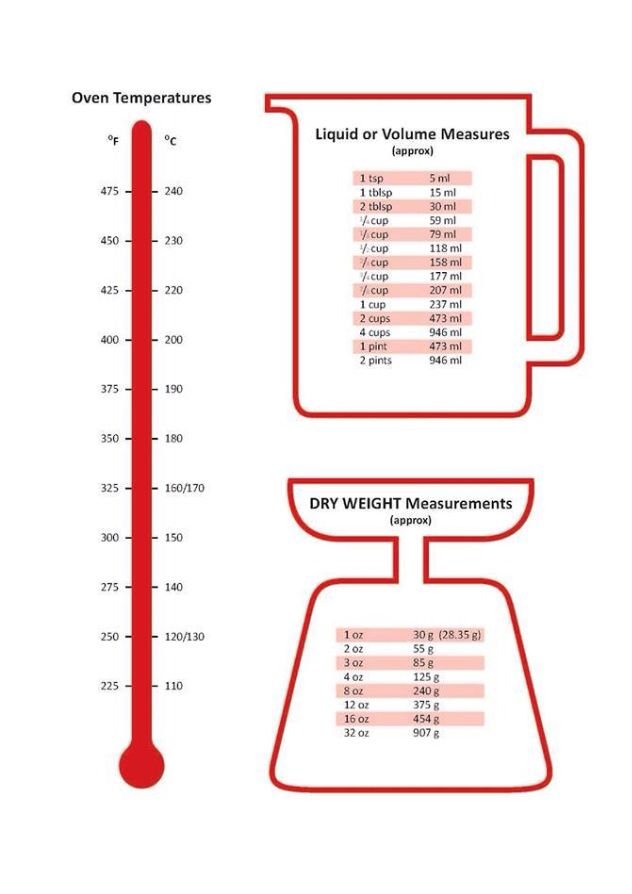
A Quick Diagnostic Chart for Your Next Recipe
If something goes wrong, use this:
| Problem Observed | Likely Measurement Issue |
|---|---|
| Cake sinks in middle | Too much flour or too much liquid |
| Cookies spread too thin | Too little flour or overpacked sugar |
| Dry, crumbly texture | Overmeasured dry ingredients |
| Gummy interior | Excess moisture or dense flour scoop |
| Bread too dense | Packed flour or inaccurate liquids |
Measurement isn’t glamorous.
But it’s foundational.
Bonus Tip: Humidity Matters More Than You Think
On humid days, flour absorbs moisture from air.
If you live in a humid climate, you may need slightly less liquid—or measure flour by weight for reliability.
Even professional kitchens adjust for humidity.
Final Thoughts
The frustrating part about volume mistakes is that they’re invisible.
You can follow a recipe exactly and still fail.
But once you control how ingredients are measured, baking becomes predictable.
Reliable.
Calm.
Those four fixes didn’t just save one lemon loaf.
They gave me confidence in every recipe afterward.
And that might be the most important ingredient of all.
Frequently Asked Questions (FAQs)
1. Why do professional bakers prefer weight over volume?
Because weight eliminates inconsistencies caused by packing, settling, and air content. It provides accuracy and repeatability—especially important in commercial kitchens.
2. Is spoon-and-level always accurate?
It’s much more accurate than scooping, but still slightly variable compared to weighing. For casual baking, it works well. For precision baking, weight is better.
3. Should I sift flour before or after measuring?
It depends on the recipe. If it says “1 cup sifted flour,” measure first, then sift. If it says “1 cup flour, sifted,” sift first, then measure.
4. Why do my cookies spread even when I measure correctly?
Other factors include butter temperature, oven temperature, and sugar ratio. But incorrect flour measurement is one of the most common causes.
5. Do liquid and dry measuring cups actually matter?
Yes. Liquid cups allow accurate eye-level reading and prevent spillage. Dry cups are designed to be leveled precisely.
6. Is investing in a kitchen scale worth it?
If you bake more than occasionally, absolutely. It reduces error, saves time, and dramatically improves consistency.