
























Why You Should Care About Converting Temperatures
Temperature is kind of everywhere throughout your day. You check the weather forecast. You set your oven for baking. You take your temperature when you’re feeling ill. You set the thermostat for your all around comfort.
But: The world has three popular temperature scales. The United States favors Fahrenheit. Celsius rules almost everywhere else. Kelvin appears in scientific contexts.
Tackling temperature conversions is not just to get by in science class. It’s about preparing recipes properly, getting around weather reports when traveling, following medical directions and making sense of scientific information.
Here, we offer 21 critical facts on temperature measurement conversions in a definitive guide that compactly describes the most significant aspects. These aren’t random trivia points. They’re practical takeaways that help to solve real problems and address common questions.
Let’s take a closer look at the temperature conversion facts that do make a difference in how you experience your environment.
Fact 1: Three Temperature Scales Predominate Worldwide
There are a few different ways to measure temperature. The world’s populace predominantly uses three – all inspired by largely different projects.
The Fahrenheit thermometer was developed by Daniel Gabriel Fahrenheit in 1724. This scale is applied on a daily basis in the United States, several Caribbean countries and some territories.
Celsius (also known as Centigrade) was created by Anders Celsius in 1742. Almost all the nations around the globe have made Celsius as an official unit for measuring temperature.
Kelvin was introduced by Lord Kelvin in 1848. Scientists use this absolute temperature scale; it makes sense because it has absolute zero, the lowest possible temperature, as its starting point.
Each of these scales has different applications and contexts. And just like the bread baking beginner makes the mistake of mixing up their scales, the same happens with frequency when we don’t know which scale to apply!
Fact 2: The Basic Conversion Formulas Are Easier Than They Seem
A lot of people are leery of temperature changes because the formulas are scary. Deconstruct them to break them down into manageable, accomplishable tasks.
Fahrenheit to Celsius: C = (F – 32) × 5/9
Celsius to Fahrenheit: F = (C × 9/5) + 32
Celsius to Kelvin: K = C + 273.15
Kelvin to Celsius: C = K – 273.15
Those formulas never fail. Write them on a post-it note, or record them onto your phone until they are automatic.
Fact 3: The Freezing and Boiling of Water Define the Scales
The water is reference points for Celsius and Fahrenheit scales, albeit in slightly different manners.
In Celsius:
- Water freezes at 0°C
- Water boils at 100°C
In Fahrenheit:
- Water freezes at 32°F
- Water boils at 212°F
In Kelvin:
- Water freezes at 273.15 K
- Water boils at 373.15 K
In treating a live application, the memory of these anchor points allows you to quickly gauge temperatures. Say someone tells you it’s 30°C outside, it means that it’s below boiling but high above the freezing point—actually feeling quite toasty.
Fact 4: We Can Use Mental Math Shortcuts to Do Common Conversions
You need not have a calculator for converting from °F to °C always! These shortcuts provide close approximations.
Celsius to Fahrenheit (Quick Method)
- Double the Celsius temperature
- Add 30
Example: 20°C to Fahrenheit
- 20 × 2 = 40
- 40 + 30 = 70°F
- (Exact answer: 68°F)
To Convert Fahrenheit to Celsius (Quick Way)
- Subtract 30 from Fahrenheit
- Divide by 2
Example: 80°F to Celsius
- 80 – 30 = 50
- 50 ÷ 2 = 25°C
- (Exact answer: 26.7°C)
These are only rough estimates and apply to typical temperatures between 0°C and 40°C (32°F to 104°F).
Fact 5: Body Temperature Scale Differences Are Important
Normal human body temperature illustrates why conversion accuracy is important to health.
Normal Body Temperature:
- 98.6°F (Fahrenheit)
- 37°C (Celsius)
- 310.15 K (Kelvin)
In various countries, health workers are using different scales. This is important when you’re traveling overseas, helping you understand what a fever reading means and the medical advice provided.
A fever typically starts around:
- 100.4°F or higher
- 38°C or higher
This information is crucial when sick or with family members living abroad.
Fact 6: Cooking Temperatures Need to Be Converted Precisely
Baking and cooking both require precise temperature conversions. One negative or positive 25-degree error and you can ruin your dish.
Common Cooking Temperature Conversions:
| Fahrenheit | Celsius | Typical Use |
|---|---|---|
| 325°F | 163°C | Slow baking |
| 350°F | 177°C | Regular baking |
| 375°F | 191°C | Cookies, cakes |
| 400°F | 204°C | Vegetable roasting |
| 425°F | 218°C | Pizza, crunchy products |
| 450°F | 232°C | Very high-heat roasting |
A lot of international recipes give temperatures in Celsius. American ovens display Fahrenheit. Conversion is the key, then your cooking will be a success.
Fact 7: Scales Applied in Weather Forecasting Vary Throughout the World
Interpreting weather predictions means knowing which temperature scale a forecast is based on.
Temperature Perception Guide:
| Celsius | Fahrenheit | How It Feels |
|---|---|---|
| -18°C | 0°F | Extremely cold |
| -10°C | 14°F | Very cold |
| 0°C | 32°F | Freezing |
| 10°C | 50°F | Cool |
| 20°C | 68°F | Comfortable |
| 30°C | 86°F | Hot |
| 38°C | 100°F | Very hot |
| 43°C | 109°F | Dangerously hot |
Weather reports also help you to ensure you are packing the right type of clothing as well as plan any activities smartly.
Fact 8: Negative Temperatures Don’t Mean the Same Thing in Each Scale
Negative numbers are present in both Fahrenheit and Celsius but indicate different temperatures.
-40°F = -40°C. This is the only temperature where the scales Fahrenheit and Celsius actually meet.
Below that unique crossover:
- -50°F = -45.6°C
- -50°C = -58°F
Above the crossover, Fahrenheit goes with lower and lower numbers for the same temperature; on up to 0°F which is -17.8°C.
Knowing about negative temperatures is relevant when it comes to winter weather safety, frozen food storage and scientific purposes.
Fact 9: Kelvin Does Not Use Negative Numbers
Kelvin begins at absolute zero, the lowest possible theoretical temperature. 0 K is the coldest of anything.
Why Kelvin Avoids Negatives
At zero K, which is absolute zero, molecular motion ceases. But since nothing can be colder than zero motion, Kelvin temperatures never fall into the negative.
This makes Kelvin perfect for scientific calculations which need:
- Gas laws
- Thermodynamics
- Space science
- Quantum mechanics
Room temperature is about 293 K, which seems a bit more abstract than 20°C or 68°F.
Fact 10: The Symbol ° Works in a Different Way for Kelvin
Notice the difference in notation:
- 25°C (Celsius uses the degree symbol)
- 77°F (Fahrenheit uses the degree symbol)
- 298 K (Kelvin doesn’t use the degree symbol)
Scientific writing demands this precision. Writing “298°K” identifies you as uneducated about correct temperature notation.
The explanation lies in Kelvin being an absolute scale as opposed to a relative one like Celsius and Fahrenheit.
Fact 11: Old Temperature Records Tell a Story of Extremes
The Earth has an enormous temperature range, so reliable measuring scales are important.
Recorded Temperature Extremes:
Hottest: 134°F (56.7°C) in Death Valley, California, in 1913
Coldest: -128.6°F (-89.2°C) in Antarctica, 1983
In Kelvin:
- Hottest: 329.85 K
- Coldest: 184 K
These extremes illustrate why we need temperature scales that accurately accommodate such tremendous ranges.
Fact 12: There Are Times When You Care About Precision More Than Others
Various circumstances require varying degrees of conversion precision.
Casual Precision (±2 degrees):
- Daily weather checking
- Adjusting home thermostat
- General conversation
Standard Precision (±0.5 degrees):
- Cooking and baking
- Medical temperature taking
- Science experiments
High Precision (±0.1 degrees or less):
- Laboratory research
- Industrial processes
- Climate science
When conversion accuracy matches a requirement, time is saved without sacrificing mandated precision.
Fact 13: Temps in the Oven Are Often Off from What’s Read on Thermometers
Your oven’s thermometer may not be accurate. Ovens, studies have shown, can be off by as much as 25-50 degrees Fahrenheit.
Why This Matters for Conversions
If you have to convert a recipe from 180°C, the nearest ‘common’ setting would be 350°F. But if your oven is either running even hotter or cooler, perhaps your actual temperature is 325°F or 375°F.
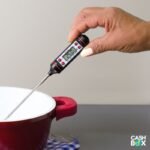
Solution: Double-check with an oven thermometer to ensure the real temperature. They’re $10-15 and they will stop baking disasters.
Fact 14: Accuracy of Temperature Conversion Apps Is Not Definite
Digital tools render conversions instantaneous, but not all apps are created equal when it comes to accuracy.
What to Look For
- Displays several decimal places for scientific applications
- Shows all 3 primary scales at once
- Works offline for travel situations
- Contains common temperature references (body temp, water freezing/boiling)
Free options include:
- Google’s integrated converter (search for “70F to C”)
- Unit Converter apps with high ratings
- Scientific calculator apps
Be sure to confirm important conversions with the math, rather than simply taking an unfamiliar app’s word for it. For comprehensive conversion resources and tools, visit Measurement Conversion Guide for additional support.
Fact 15: We Don’t Feel the Same Temperature That Is Recorded
Weather services provide both the temperature and the “feels like” temperature, which take into consideration humidity and wind.
This difference holds for any temperature scale but the conversion formulas are alike.
Heat Index Example:
- Actual temperature: 90°F (32°C)
- With humidity: Feels like 105°F (41°C)
Wind Chill Example:
- Actual temperature: 30°F (-1°C)
- With wind: Feels like 15°F (-9°C)
Translate the real and perceived temperatures when you are considering outdoor activities in locations around the world.
Fact 16: Some Chemical Processes Have Critical Temperature Thresholds
Most chemical reactions can only be performed successfully within certain temperature parameters, thus conversions are necessary for safety and efficacy.
Examples:
Bread yeast starts working around 105-115°F (40-46°C). Too cold and it won’t work. Too hot and you kill it.
For dark chocolate the correct range or temperature is between 88-91°F (31-33°C). And a few degrees off messes up the texture.
Many scientific experiments may specify temperatures in Celsius or Kelvin while the equipment is calibrated in Fahrenheit.
Fact 17: Fahrenheit is More Granular in Common Daily Temperatures
There is an interesting difference between Fahrenheit and Celsius in common usage.
Typical daily temperature range:
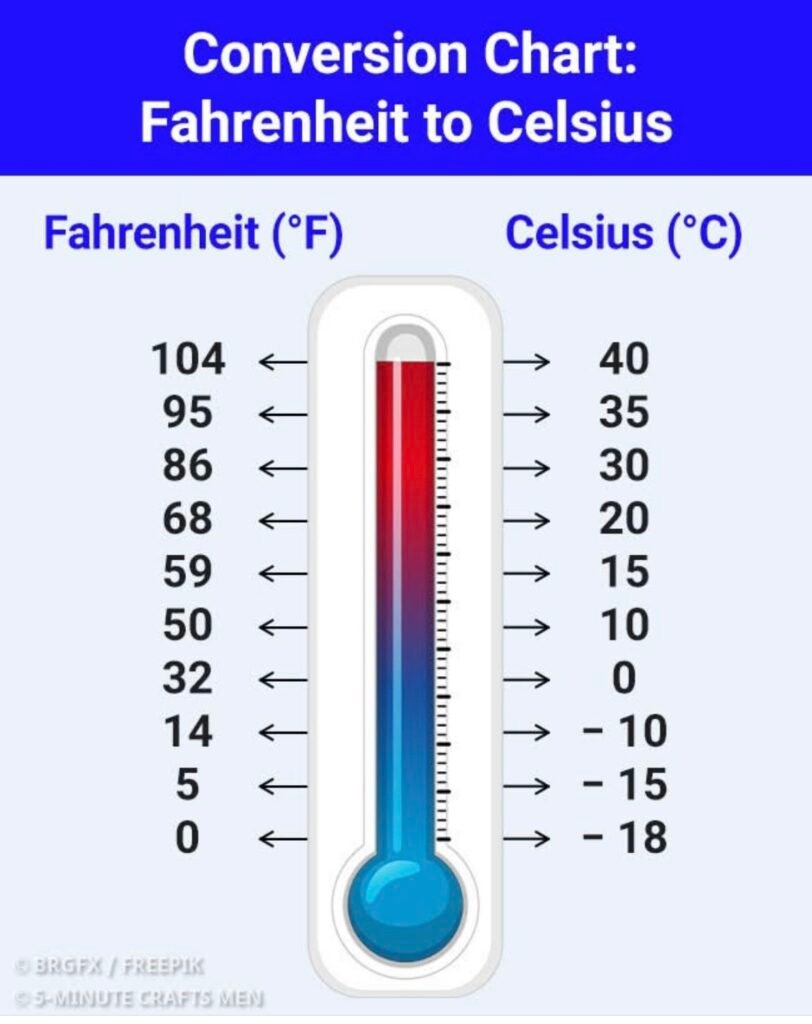
- In Fahrenheit: 0 to 100°F (100-degree range)
- In degrees Celsius: -18°C to 38°C (56-degree range)
The smaller Fahrenheit unit also allows for greater precision without the use of decimals. There is a discernible difference between 70°F and 71°F. In Celsius, they each become around 21°C.
This doesn’t make one scale superior — just different in application.
Fact 18: Space Temperatures Are Figured on All Three Scales
The example of space exploration shows that scientists require multiple ways to measure temperature.
Outer Space Temperatures:
- Deep space: 2.7 K (-270.45°C or -454.81°F)
- Sunlit side of moon: 127°C (260°F or 400 K)
- Shadowed side of moon: -173°C (-280°F or 100 K)
These extreme conditions range hundreds of degrees in either direction beyond standard earth temperatures and demonstrate the flexibility required in temperature scales.
Fact 19: History Explains Why There Are More Than One Scale
Recognizing the source of each scale explains why we haven’t united as a globe.
Fahrenheit (1724):
- Based on three reference points including human body temperature
- Calculated to avoid negative values in typical weather
- Became standard in English-speaking countries
Celsius (1742):
- Based on water’s freezing and boiling points
- Simpler decimal relationships
- Accepted by scientific community and most countries
Kelvin (1848):
- Based on absolute zero
- Essential for thermodynamics
- Standard in scientific research worldwide
Each scale was developed to address particular challenges then faced.
Fact 20: Real Problems Have Resulted from Errors in Temperature Conversion
Historically, many people have suffered untold consequences because of errors in conversions.
Famous Examples:
The Mars Climate Orbiter, which crashed in 1999, was lost partly because of a mixup between metric and imperial measurements — including figures related to temperature. The loss: $327 million.
Medical dosing errors occur when healthcare providers misread Fahrenheit vs. Celsius on thermometers, potentially leading to incorrect treatment.
Industrial disasters have also occurred due to errors in the conversion of temperature at the time of manufacture.
These examples illustrate why it is important to know the value of correct conversions for more than just academic exercises.
Fact 21: Understanding All Three Is Essential for Scientific Literacy
How adept you are at converting temperatures is an indicator of overall scientific literacy.
Skills Developed:
- Mathematical reasoning
- Unit conversion principles
- Scientific notation comfort
- International perspective
- Critical thinking about measurements
Students who understand temperature conversions are able to reach for a much higher level of understanding in chemistry, physics and earth science. The conversion abilities translate across measurement styles such as distance, volume and weight.
Practical Tips for Converting Between Temperature Scales
Now that you know the vital aspects, it’s time to understand how to make them powerful.
For Home Cooking
Put up a conversion chart on your fridge with the most common oven temperatures in both Fahrenheit and Celsius. This eliminates repeated calculations.
Get a kitchen thermometer that reads in both scales at once for meat and making candy.
For Travel
Use an offline conversion app before international travel. Internet connectivity isn’t always reliable.
Find your destination’s “comfortable range” on the local temperature scale. Is 25°C warm or cool for the climate in that place?
For Scientific Work
ALWAYS write down which scale you are using. Ambiguity causes errors.
Verify conversions when temperature has any effect in an experiment. One wrong move and you can negate hours of labor.
For Daily Weather
If your personal geography is in Fahrenheit but you’d like to think in Celsius (or vice versa), practice those fast mental math tricks on a daily basis. After two weeks, conversions happen without effort.
Typical Temperature Conversion Errors to Avoid
Even the experienced commit these errors. Awareness prevents them.
Mistake 1: Not Subtracting 32 First
When converting from Fahrenheit to Celsius you have to subtract 32 BEFORE multiplying by 5/9. Reverse the order, and you get answers that are way off base.
Mistake 2: Using 273 Instead of 273.15 for Kelvin
If you’re doing science, use the whole 273.15 when you turn Celsius into Kelvin. The .15 matters for precision.
Mistake 3: Confusing the Factors in Multiplication
Keep in mind: To get from C to F, you multiply by 9/5 or 1.8. Going from F to C requires 5/9 (about 0.556). Swapping them produces incorrect results.
Mistake 4: Using Degree Symbols to Represent Kelvin
Write 300 K, not 300°K. This is not mere pedantry – it tells us whether you are distinguishing correctly between various temperature scales.
Frequently Asked Questions
Why don’t we use Celsius in the United States like everyone else?
The U.S. standardized measurements before the whole world adopted the metric system. Changing now would mean replacing infrastructure, retraining entire industries and updating countless systems, at astronomical cost. Cultural familiarity also creates resistance.
Which system of temperature measurement is more precise?
All three scales are equally accurate — they simply have different reference points and degree sizes. Kelvin is the scientific choice, as it begins at absolute zero and eliminates the need for negative numbers in many calculations.
Is it possible to convert temperatures using only a calculator?
Yes. Break up the equation into steps: For 25°C to Fahrenheit, calculate (25 × 9/5) + 32 = 77°F. Modern calculators and smartphones make this simple.
Does any thermostat in the world use different temperature scales?
Thermostats usually show the scale common to their region. A thermostat in France reads Celsius; one in Texas reads Fahrenheit. Some smart thermostats have the ability to toggle between scales.
Which temperature conversion is the most meaningful for people’s daily lives?
The Celsius-Fahrenheit conversion is most commonly used in cooking, travel and weather-related problems. Master this one first; worry about Kelvin if science demands it.
How do scientists communicate temperatures internationally?
Scientists usually stick to Celsius or Kelvin, not Fahrenheit, in their research papers. This provides global standardization in scientific literature regardless of the researcher’s country of origin.
Are there temperature scales other than these three?
Yes, though rarely used today. There are Rankine and Réaumur scales, but these have fallen by the wayside. The three scales described here cover virtually all modern applications. For more information about temperature measurement systems, you can visit NIST’s temperature resources.
Why does -40°F equal -40°C?
This mathematical coincidence happens precisely at the intersection of both conversion formulas. It’s the only temperature at which Fahrenheit and Celsius are equal.
Your Temperature Conversion Action Plan
So there you have 21 pivotal facts about converting temperature measurements. Here’s how to apply this wisdom.
This Week:
- Learn the boiling and freezing points of water in all three measures
- Practice quick mental math tricks with daily weather reports
- Save the formulas on your phone
This Month:
- Convert any temperature in a recipe you come across
- Check weather reports in both Fahrenheit and Celsius
- Test your knowledge with typical temperature conversions
Ongoing:
- When traveling outside the US, apply conversion skills
- Help others understand temperature differences
- Keep tabs on which scale you need for context
With practice, mysterious temperature conversions become handy tools. The 21 facts herein provide the cornerstone for solid temperature knowledge across all three major scales.
Whether you are baking cookies, preparing for a trip, tracking your health or learning about science, these conversion skills work for you every day. The world has many temperature languages — now you speak all of them.
Start applying these facts today. In a month, you’ll do temperature conversions just as naturally as you read the time on a clock. The quantities that once baffled you will become second nature, unlocking mysteries of better cooking, safer travel and deeper scientific understanding.