












12 Simple Length Measure Conversion Reference Conversions
Once you’ve learned how to convert from one unit of length to another, a whole world of possibilities is available! From cooking dishes from around the world, to getting a sense of how tall you are in other units, these math and conversion skills become quite useful more frequently than you may expect.
The following comprehensive guide tells you 12 most common but important length conversions (ones you should have learned at school level). We’ll break them down, with clear examples, helpful hints and memory aides that make converting measurements a breeze.
The Two Systems For Measuring You Must Know
But, before we start converting the most common units of length, it may be helpful to become a bit more acquainted with both two primary measurement systems used throughout the world.
The metric system includes measurements such as millimeters, centimeters, meters and kilometers. In most countries around the world it is this system that is used because multiples of 10 are easy.
The imperial system includes inches, feet, yards, and miles. This system is mostly used in the United States, and a handful of other countries.
Understanding how to convert between these systems can be valuable for being able to accurately document measurements, whether at home or abroad.
Conversion 1: Millimeters to Inches
From the smallest commonly-used measure to one of the larger ones, millimeters frequently appear in technical specifications, jewelry sizing and precise work.
The Conversion Formula
1 millimeter = 0.0394 inches
To change millimeters into inches, divide by 25.4.
Practical Example
Your new phone case is 3 millimeters thick. How thick is that in inches?
Calculation: 3 ÷ 25.4 = 0.118 inches
That’s just a little more than 1/10 of an inch — pretty slim!
Quick Reference Chart
| Millimeters | Inches |
|---|---|
| 1 | 0.04 |
| 5 | 0.20 |
| 10 | 0.39 |
| 25 | 0.98 |
| 50 | 1.97 |
| 100 | 3.94 |
When You’ll Use This
This is important to know when purchasing phone accessories, measuring small parts, reading technical drawings, and using any digital precision equipment.
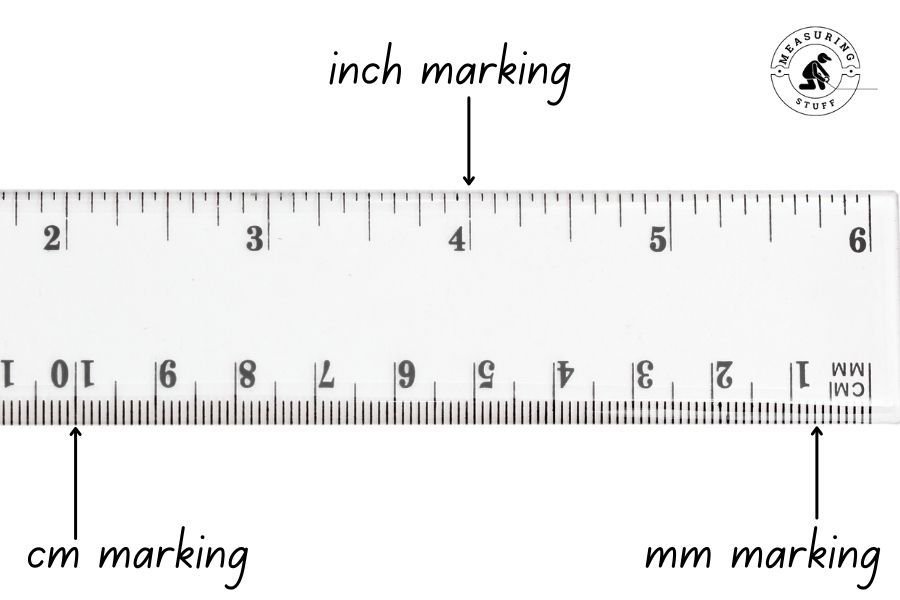
Conversion 2: Inches to Millimeters
Reversing the ratio of our previous conversion, this one is handy when you need to convert imperial measurements into metric ones.
The Conversion Formula
1 inch = 25.4 millimeters
To convert inches to mm just multiply your inch measurement by 25.4.
Practical Example
You’re drilling a hole that should measure 0.5 inches in diameter, but your drill bits are marked in millimeters.
Calculation: 0.5 × 25.4 = 12.7 mm
Choose the 12.7mm to 13mm drill bit for this job.
Real-World Application
This is particularly useful when converting between screen sizes, wrench sizes and hardware. A common 1/4 inch bolt is also the equivalent of 6.35 millimeters.
Conversion 3: Centimeters to Feet
This makes conversion easier for long distances as the distance is simpler.
The Conversion Formula
1 centimeter = 0.0328 feet
Take your centimeter measurement and divide by 30.48 to get feet.
Practical Example
Your table is 75 centimeters tall. What’s that in feet?
Calculation: 75 ÷ 30.48 = 2.46 ft
That’s 2 feet and 5.5 inches tall — a typical desk height.
Helpful Conversion Table
| Centimeters | Feet (Rounded) |
|---|---|
| 30 | 0.98 |
| 50 | 1.64 |
| 100 | 3.28 |
| 150 | 4.92 |
| 200 | 6.56 |
For a complete list of measurement tools and guides visit Measurement Conversion Guide for more reference.
Conversion 4: Feet to Centimeters
Stepping the other way, this particularly comes up when in discussions with international contacts or ordering products from abroad.
The Conversion Formula
1 foot = 30.48 centimeters
To convert feet to centimeters, multiply by 30.48.
Practical Example
You are 5.5 feet tall and want to convert height to centimeters in order to complete a form.
Calculation: 5.5 × 30.48 = 167.64 cm
Rounded to 168 cm for most purposes.
Everyday Uses
Furniture sizes, room dimensions, and ceiling heights also call for this conversion talent.
Conversion 5: Meters to Yards
These two are surprisingly near the same length and one has a slightly easier conversion to remember.
The Conversion Formula
1 meter = 1.094 yards
Multiply meters by 1.094 to get yards.
Practical Example
An Olympic-size swimming pool is 50 meters long. How many yards is that?
Calculation: 50 × 1.094 = 54.7 yards
This is why a pool length can sometimes be reported as 50 meters or 55 yards, when you check the back of your local swim team’s T-shirt.
Side-by-Side Comparison
| Meters | Yards |
|---|---|
| 1 | 1.09 |
| 5 | 5.47 |
| 10 | 10.94 |
| 25 | 27.34 |
| 50 | 54.68 |
| 100 | 109.36 |
Sports Connection
Both are used in track and field. A 100-meter dash is roughly the equivalent of 109 yards — barely shorter than an American football field.
Conversion 6: Yards to Meters
Reversing the previous conversion, this is useful if you have fabric measurements, or in a home garden with plots.
The Conversion Formula
1 yard = 0.914 meters
Multiply yards by 0.914 to get meters.
Practical Example
Your back yard is 30 yards long. A friend wants to know how many meters that is.
Calculation: 30 × 0.914 = 27.42 meters
Barely over 27 meters of outdoor space!
Material Shopping
Different countries have different measurements. If the pattern indicates 3 yards and you’re working in meters: 3 × 0.914 = 2.74 meters (round up to either 2.75 or 3 meters).
Conversion 7: Kilometers to Feet
This type of conversion is somewhat of an oddity and results when dealing with elevation differences or converting longer metric distances to imperial measures.
The Conversion Formula
1 kilometer = 3,280.84 feet
You will get feet if you multiply kilometers by 3,280.84.
Practical Example
The altitude of a mountain peak above its base is 2 km. How many feet is that?
Calculation: 2 × 3,280.84 = 6,561.68 ft
That’s over a mile high!
Elevation Reference
| Kilometers | Feet |
|---|---|
| 0.5 | 1,640 |
| 1 | 3,281 |
| 2 | 6,562 |
| 3 | 9,843 |
| 5 | 16,404 |
Aviation Connection
Feet belong in the pilots’ world of altitude. Commercial aircraft usually fly at around 10 kilometers (33,000 feet) above sea level.
Conversion 8: Feet to Kilometers
Convert from small imperial units to large metric ones and it allows you to put the distances into perspective.
The Conversion Formula
1 foot = 0.0003048 kilometers
Foot value can be converted to kilometer by dividing by 3,280.84.
Practical Example
You were hiking a trail that gained 5,000 feet in elevation. How many kilometers is that?
Calculation: 5,000 ÷ 3,280.84 = 1.52 kilometers
A hard standing climb of more than 1.5 km!
Hiking Applications
Trail descriptions sometimes mix units. Knowing this conversion helps you accurately compare hikes of different lengths.
Conversion 9: Inches to Yards
This conversion is convenient whenever you have to translate small measurements into larger ones.
The Conversion Formula
1 inch = 0.0278 yards (or just remember that 36 inches = 1 yard)
Divide the inches by 36 to find yards.
Practical Example
For a project you need 108 inches of ribbon. How many yards should you purchase?
Calculation: 108 ÷ 36 = 3 yards
It’s a lot easier to say “3 yards” at the craft store!
Quick Conversion Guide
| Inches | Yards |
|---|---|
| 12 | 0.33 |
| 18 | 0.50 |
| 36 | 1.00 |
| 72 | 2.00 |
| 108 | 3.00 |
| 144 | 4.00 |
Conversion 10: Yards to Inches
The inverse conversion is useful when you want more precise measurement.
The Conversion Formula
1 yard = 36 inches
Multiply the number of yards by 36 to convert them into inches.
Practical Example
A football field is 100 yards (excluding the end zones). How many inches is that?
Calculation: 100 × 36 = 3,600 inches
That is 3,600 inches of playing field!
Sewing and Crafts
You may find fabric patterns that call for “1/2 yard” of the stuff. To visualize it better, convert that: 0.5 × 36 = 18 inches.
Conversion 11: Centimeters to Meters
It is a basic metric conversion that you need to know for everyday units of measurements.
The Conversion Formula
1 centimeter = 0.01 meters (or 100 cm = 1 meter)
Simply divide the answer in centimeters by 100 to find how many meters it really is.
Practical Example
The diagonal measurement of your TV screen is 140 centimeters. What’s that in meters?
Calculation: 140 ÷ 100 = 1.4 meters
A good 1.4-meter wide screen for movie nights!
Simple Conversion Chart
| Centimeters | Meters |
|---|---|
| 50 | 0.5 |
| 100 | 1.0 |
| 150 | 1.5 |
| 200 | 2.0 |
| 250 | 2.5 |
| 300 | 3.0 |
Why This Matters
This transformation is employed for the dimensions of rooms, furniture, and for human body measurements. It’s among the simplest, because you only have to shift the decimal two places.
Conversion 12: Meters to Centimeters
Finishing our set of a dozen conversions, this one runs the other way.
The Conversion Formula
1 meter = 100 centimeters
To convert meters to centimeters, multiply by 100.
Practical Example
You have 2.5 meters of kitchen counter space. How many centimeters is that?
Calculation: 2.5 × 100 = 250 centimeters
Great for designing your kitchen floor plan!
Daily Applications
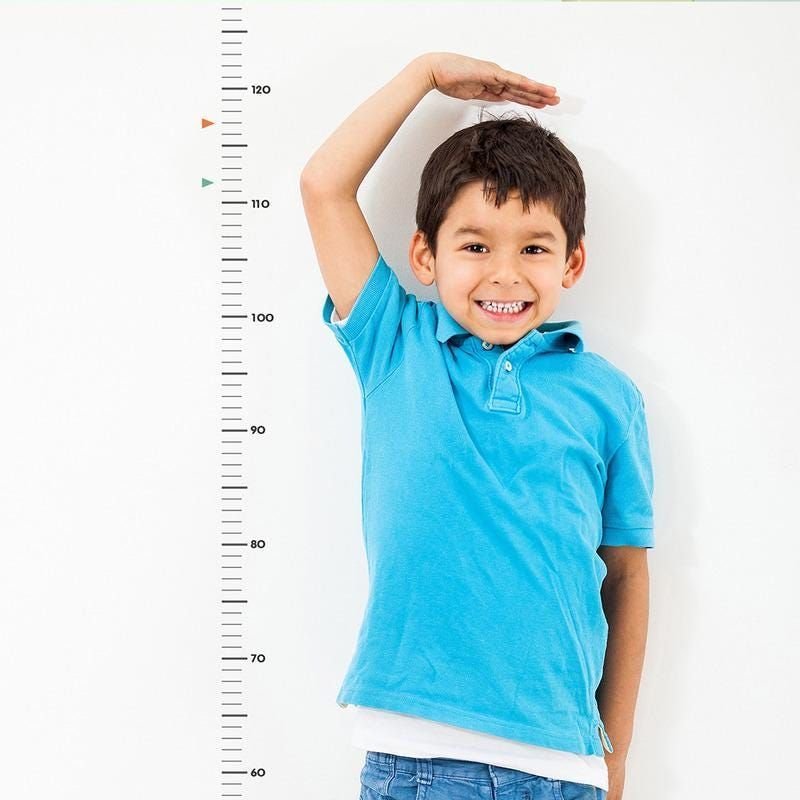
It is not uncommon for height to incorporate both in measurements. A person who is 1.75 meters tall is 175 centimeters — same height, different words.
The National Institute of Standards and Technology says basic metric conversion is necessary for international trade and scientific research.
Memory Tricks for Quick Conversions
Keeping track of all these conversions can become simpler if we employ helpful shortcuts:
The One-Inch Rule: The width of your thumb equals about 1 inch or 2.5 centimeters. Use this for quick estimates.
The Meter-Yard Match: A meter is about 1.09 yards, so they’re good to use as rough equivalents. Just give yourself a bonus of about 10 percent when converting meters to yards.
The Foot-Thirty Rule: Thirty centimeters is almost exactly one foot (actually 30.48 cm). This makes mental math calculations lightning fast.
The 36 Connection: Know that 1 yard equals 36 inches and about 91 centimeters.
Avoiding Common Conversion Errors
Even the best of people make mistakes when converting measurements. Here’s how to avoid them:
Look For Math Direction: Are you INCREASING or DECREASING the number? Converting centimeters to inches results in a smaller number (divide).
Don’t Round Too Soon: Perform calculations with at least two decimal places. Only round your final answer.
Write the Units: Always write the units (cm, in, m, ft) while performing calculations. This goes a long way to catching errors before they cause issues.
Double-Check Key Measurements: For important projects, verify your conversions with a calculator or conversion tool.
Tools to Help You Convert
It’s great to learn how to do these conversions — this gives you an understanding of measurements, a handy skill. But sometimes, you just need the answer:
Smartphone Apps: Free apps that convert instantly and will work offline.
Online Calculators: Specialized converters for construction, cooking or science available on websites.
Physical Rulers: Dual measurement rulers on both sides, measured in inches and centimeters.
Conversion Charts: Print out the conversion chart for your workshop, kitchen, or office.
When Precision Really Matters
Some situations demand exact conversions:
Medical Settings: Accurate conversion for medication dosages and medical equipment specifications is essential for good patient care.
Construction Work: Accurate measurements are required for building codes and structural calculations.
Scientific Experiments: Research and lab work require precise unit conversions.
Manufacturing: Parts have to fit together exactly, so they must be closely specified.
For everyday cooking or rough estimation of distances, rounding to the nearest tenth is often just fine.
Frequently Asked Questions
What is the single most important conversion?
The conversion of inches to centimeters (1 inch = 2.54 cm) is mostly useful for real life — specifically when you’re shopping online internationally or reading about a product in a foreign place.
Which number system should I use?
Use the system unit of your locale for local projects. For international communication there is a more general acceptance of metric measurements.
Can I use a phone to convert measurements?
Absolutely! Phone calculators are pretty good for quick conversions. But when you understand the process, it lets you estimate quickly and catch errors.
Why are there 2 measurement systems?
Differences in the historical development can be seen from region to region. The Metric System was designed based on science, the Imperial system developed out of historic measures.
Do I even need to learn about all 12 conversions?
Concentrate on the conversions you use frequently. If you regularly cook international recipes, give priority to those measurements. If you work in construction, concentrate on building-related conversions.
What if I want to convert units outside of these?
Use two-step conversions. For instance, if you want to convert millimeters to feet, then you can get it done by first converting from millimeters to inches and then converting from inches to feet.
How can I become quicker at these mental conversions?
Practice with everyday objects. Estimate, and then check with a ruler or calculator. The more you do, the faster you get.
Are these conversions exact or approximate?
The above equations are exact. But for practical use rounding off to 2-3 decimal places is accurate enough.
Building Your Conversion Skills
It does take a bit of practice to master these 12 easy length measurement conversions, but you will feel the reward for doing it soon enough! Begin with the conversions you will use most frequently and slowly grow your ability.
Here’s a simple practice plan:
Week 1: Concentrate on inches-centimeters and feet-meters conversions. Measure items in your house using both units.
Week 2: Put yards-meters and miles-kilometers together. Plan a trip and calculate distance in both directions.
Week 3: Work on small conversions, such as millimeters-inches or centimeters-meters.
Week 4: Combine all the conversions. Test yourself a few random times throughout the day.
Wrapping Up Your Conversion Journey
These 12 length conversions are the most frequently used and will help you convert them into each other in most daily situations. You can shop online, travel abroad, work on home projects and help with homework more easily.
Keep in mind that perfection isn’t important — comprehension and application are what count most. Use the conversion formulas as your base, apply the memory tricks to speed you up and do not be ashamed to pull out the tools when you need them.
Repetition is key, the more you do these conversions, the easier it gets. Before you know it, you’ll look at a measurement and be able to convert it immediately into another unit. That’s when you’re really good at it.
Keep this guide close at hand as a reference, add practice to it on a regular basis and your confidence with measurements will soar. The world is on different measurement systems but by now, you are fluent in both languages.