




Why You Need to Know Volume Conversions in Your Life
You’re working from a recipe out of a British cookbook, but it wants you to use 250 milliliters of milk. Your cup scale only displays ounces. Sound familiar?
Volume measurement conversions are not just for laboratory scientists wearing white coats. Each day individuals have to make unit conversions between various volumes. Home cooks can chop and change between metric and imperial measures. DIYers blend paint or cleaners. Students complete science homework. Healthcare workers measure liquid medications.
Messing up these conversions can destroy a recipe, squander costly materials or pose a danger to safety. This is why clear and correct volume conversion rules are so important.
This compendium lists ten key rules to get volume conversions right every time. No matter if you’re measuring cups or liters, gallons or milliliters, these tips will help you convert your way to the finish line every time. For more comprehensive guides on various measurement conversions, explore additional resources to support your everyday calculations.
With no further interruptions, let’s meet the rules that are going to make you a volume conversion pro.
Rule 1: Be Best Friends with Your Base Units
Before you can convert anything, however, you need to know the basic volume units in each measurement system.
Metric System Base Units:
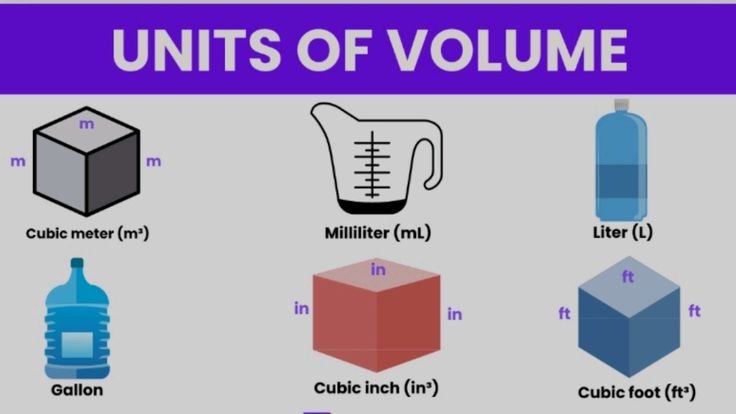
Milliliter (mL) – minimum unit of volume
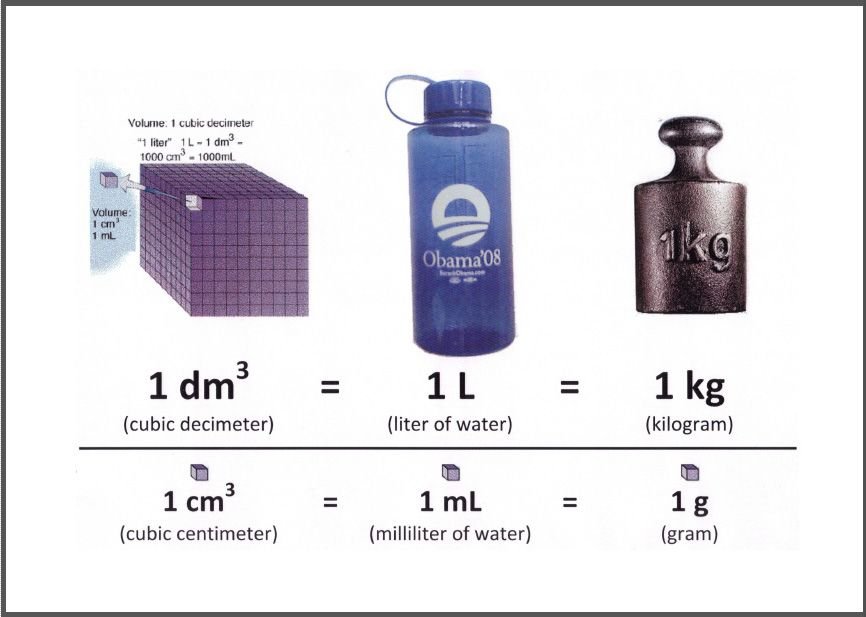
Liter (L) – main volume unit of the metric system
- 1 liter equals 1,000 milliliters
Imperial System Base Units:
Fluid ounce (fl oz) – the smallest common size
Cup (c)
Pint (pt)
Quart (qt)
Gallon (gal) – the largest common liquid unit
The metric system is based on the decimal system of measurement; it provides easy conversions between related units. You only need to multiply or divide by 1,000 when converting between milliliters and liters.
The imperial system is trickier. Its units fail to adhere to clean patterns. You need to memorize certain conversion factors.
Here is an easy table of imperial volume conversions:
| Units | Equals |
|---|---|
| 1 cup | 8 fluid ounces |
| 1 pint | 2 cups (16 fluid ounces) |
| 1 quart | 2 pints (4 cups) |
| 1 gallon | 4 quarts (16 cups) |
Rule 2: Master the Key Cross-System Conversion Factors
Most volume conversion problems require switching between metric and imperial systems. Memorize these essential conversion factors:
Critical Conversions to Know:
1 fluid ounce = 29.5735 milliliters (round to 30 mL for everyday use)
1 cup = 240 milliliters (metric cups are 250 mL)
1 pint = 473 milliliters (about 0.473 liters)
1 quart = 946 milliliters (about 0.946 liters)
1 gallon = 3.785 liters
1 liter = 33.814 fluid ounces (about 4.2 cups)
You don’t need to memorize every decimal place. For cooking and most household tasks, rounding to simpler numbers works fine. Use 30 mL per fluid ounce instead of 29.5735. Use 240 mL per cup instead of 236.588.
When You Need Exact Numbers:
Save precise conversion factors for situations where accuracy matters:
- Scientific experiments
- Medical dosing
- Professional baking
- Industrial applications
For these cases, keep a calculator handy or use the exact conversion factors.
Rule 3: Always Write Out Your Conversion Process
Even when a conversion seems simple, write it down. This prevents mental math errors and creates a record you can check later.
Follow This Three-Step Process:
Step 1: Write what you’re converting (include units)
Step 2: Write the conversion factor as a fraction
Step 3: Calculate and write the answer (include units)
Example: Convert 3 quarts to liters
Given: 3 quarts
Conversion factor: 1 quart = 0.946353 liters
Solution: 3 quarts × 0.946353 L/quart
Calculate: 2.839 liters
Round appropriately: 2.84 liters
This method can help avoid mental math mistakes and ensures you stay organized in your conversions.
Never overlook this step, no matter how many times you’ve done the conversion. That’s when mistakes sneak in.
Rule 4: Rely on Dimensional Analysis for Complicated Conversions
Dimensional analysis sounds difficult, but it is an easy approach that makes multi-step conversions fail-proof.
The trick is to write conversion factors as fractions and then to multiply them in a chain so that the units you don’t want cancel out.
How Dimensional Analysis Works:
Let’s convert 5 gallons to milliliters.
Step 1: Write down what you are converting
5 gallons
Step 2: Establish conversion fractions such that units will cancel out
5 gal × (3.78541 L / 1 gal) × (1000 mL / 1 L)
Step 3: Cancel matching units
- The “gal” on top and bottom cancel each other
- The “L” on top and bottom cancel each other
- Only “mL” remains
Step 4: Multiply the numbers
5 × 3.78541 × 1000 = 18,927.05 mL
No matter how many conversion steps it needs, this trick works with any conversion. The units encourage you to get the calculation right.
This is particularly useful when you need to convert unusual units, or when you want to perform multiple conversions at once.
Rule 5: Round Strategically Based on Your Needs
It’s not necessary to be that precise in everything. Appropriate rounding is what can make your work quicker and your answer useful.
When to Use Different Precision Levels:
High Precision (3-4 decimal places):
- Medical dosing calculations
- Laboratory experiments
- Chemical mixing for industrial purposes
- Wherever there’s accuracy and safety involved
Medium Precision (1-2 decimal places):
- Professional cooking and baking
- Home construction projects
- Mixing fertilizers or pesticides
- Automotive fluid measurements
Low Precision (round to whole number or nearest fraction):
- Casual home cooking
- General household cleaning
- Gardening and lawn care
- Everyday beverage serving
Consider your measuring tools too. If you are using a basic one-cup measure that has only whole-cup or half-cup markings on it, calculating to three decimal places is pointless. Your tools can’t even measure that closely.
Match the conversion precision to your application and to your measurement apparatus.
In most home cooking, rounding to the nearest quarter cup or 25 milliliters is just the ticket. For experiments in your science class, you might need precision to the nearest milliliter.
Rule 6: Create Your Own Quick Reference Chart
Those standard conversion charts are helpful, but when it comes to specific conversions for your daily tasks, custom is best.
Generate a reference table that contains only the conversions you really need to use in everyday tasks. This enables you to find the information you want more quickly.
Example Custom Conversion Chart for Home Bakers:
| What I Have | What I Need | Quick Conversion |
|---|---|---|
| 1 cup | mL | 240 mL |
| 1/2 cup | mL | 120 mL |
| 1/4 cup | mL | 60 mL |
| 1 tbsp | mL | 15 mL |
| 1 tsp | mL | 5 mL |
| 250 mL | Cups | About 1 cup |
| 500 mL | Cups | About 2 cups |
Hang this chart on the wall of your workspace somewhere. Laminate it for durability. Keep it updated as you encounter additional conversions that you use frequently.
You will start to remember them after a while of looking at them. Before that, the chart will save you from Googling every conversion.
Digital options work too. Keep a note in your phone of your most-used conversions. Snap a picture of a complete chart to have in your photo library.
The key is accessibility. When you need it, your reference should be there instantly.
Rule 7: Verify with the Inverse Conversion
This “sanity check” prevents calculation mistakes from causing problems for you.
After you solve the problem, convert your answer back to the original unit. If you don’t end up with your starting number, you made a mistake somewhere.
Example Verification Process:
Original problem: How many fluid ounces are in 3 liters?
Calculation: 3 L × 33.814 fl oz/L = 101.442 fl oz
Reverse conversion: 101.442 fl oz to liters
Math: 101.442 fl oz ÷ 33.814 fl oz/L = 3 L ✓
The reverse transformation checks your answer, verifying accuracy. If the numbers don’t correspond (allowing for rounding), figure out what went wrong.
It adds a minute or two, but it’s worth it for crucial conversions. Do you want to waste time double-checking, or would you prefer the confidence not to ruin an expensive recipe by adding too much?
For high-stakes use cases such as medication dosing, or mixing chemicals in a lab, always double-check with a reverse conversion.
Rule 8: Consider Temperature Compensation for Liquid Volumes
Here’s something a lot of people forget: liquids expand when you heat them and contract when you cool them.
For everyday cooking and housework, this temperature variation doesn’t make much difference. But in meticulous scientific measurements or industrial applications, temperature can have large effects on volume readings.
Water demonstrates this clearly. A liter of room-temperature (20°C) water has a weight close to 998 grams. Water at 80°C with the same mass occupies slightly more volume.
When Temperature Matters:
Volume measurements are temperature-dependent in these situations:
- Stoichiometric reactions
- Industrial manufacturing processes
- Calibrating measurement equipment
- High-precision scientific experiments
- Brewing beer or wine (fermentation volume depends on temperature)
Most volume measurements are standardized at room temperature (typically 20°C or 68°F). This might cause your measurements to be slightly off, especially if you’re working with either very hot or very cold liquids.
For home use, forget about this. Your soup will turn out the same whether the broth is measured at 10°C or 25°C.
Rule 9: Know the Difference Between Liquid and Dry Measuring Tools
This is the rule that prevents a commonly repeated mistake.
Dry measuring cups and liquid measuring cups ARE NOT interchangeable even though they measure the same volume.
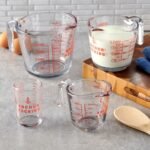
Liquid Measuring Cups:
- Clear containers with measurements on the side
- Easy-to-pour spout for no-mess dispensing of liquids
- Additional space at the top above the fill line
- Intended to fill right up to the line while sitting flat
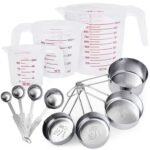
Dry Measuring Cups:
- Individual cups (1 cup, ½ cup, etc.)
- No pour spout
- Intended to be completely filled and leveled off
- Best for dry ingredients like flour or sugar
If an incorrect tool type is used, it will result in loss of measurement accuracy. Dry ingredients measured in liquid cups tend to get packed down differently. Measuring liquids in dry cups is messy and cannot be read at eye level.
When measuring volume, keep in mind that the same number of cups or tablespoons may not mean you are measuring the same amount of material; a liquid ingredient and a dry one do not measure with the same precision.
For volume conversions, the math doesn’t change based on tool type. But for real precision in practice, you’ll want to match your measuring tool to what you’re measuring.
Rule 10: Develop Visual Estimates of Common Volumes
This last rule is there to help you catch conversion mistakes before putting them to use.
Visualize typical quantities in your mind. This intuition is what you need to be able to tell if a conversion result makes sense.
Build Your Volume Intuition:
Visualize these common volumes:
- 1 tsp = the tip of your finger
- 1 tablespoon = 1/2 of a ping-pong ball
- 1/4 cup = large egg volume
- 1 cup = size of a baseball
- 1 liter = just a bit more than a quart of milk
- 1 gallon = large milk jug
Now practice estimating volumes in your daily life. When you pour a glass of water, estimate how much is in it before measuring. Pour oil into a measuring cup and eyeball it before checking the measurement.
This ability catches mistakes like accidentally multiplying instead of dividing. You know instantly that something’s wrong when your answer doesn’t match your mental volume model.
It’s also useful for making rough estimates when you don’t need exact conversions. If a recipe calls for “about 2 cups” and you are looking at your liter bottle, you can eyeball that it’s about the right quantity without doing math.
Common Volume Conversion Errors to Watch Out For
Smart people make these mistakes all the time. Watch out for them.
Mistake 1: Mixing up fluid ounces and weight ounces
Fluid ounces measure volume. Weight ounces measure mass. They’re completely different. A cup of water weighs about 8 ounces by weight and takes up 8 fluid ounces of space. But 1 cup of honey weighs approximately 12 oz by weight but still has a volume of about 8 fl oz.
Mistake 2: Thinking all international cups are the same
United States cups hold 240 mL. Metric cups (used in Australia and some other countries) hold 250 mL. Japanese cups hold 200 mL. Make sure to check whether the recipe uses metric or imperial measurements.
Mistake 3: Failing to convert all ingredients in a recipe
If you’re converting one ingredient from cups to milliliters, convert everything. Combining measurement systems in a single recipe is problematic and causes confusion.
Mistake 4: Rounding too early in multi-step conversions
Maintain full precision during all calculations. Round only your final answer. Rounding intermediate steps compounds errors.
Mistake 5: Relying blindly on online converters
Online conversion tools are convenient, but not foolproof. They may contain programming errors or use different rounding conventions. Always verify important conversions manually. For reliable reference information on measurement standards, consult the National Institute of Standards and Technology for authoritative guidance.
Applications in Practice: How to Apply Conversions
Let’s take a look at how these rules work in real situations.
Cooking Example:
A French macaron recipe uses 200 mL of egg whites. You have American measuring cups.
- 200 mL ÷ 240 mL per cup = 0.833 cups
- Round to nearest usable amount: 5/6 cup or ~13 tablespoons
Gardening Example:
Your fertilizer bottle says “Mix 50 mL per 5 L of water.” You own a 2-gallon watering can.
- First, convert gallons to liters: 2 gal × 3.785 L/gal = 7.57 L
- Set up the ratio: (50 mL / 5 L) = (x mL / 7.57 L)
- Solve for x: x = (50 × 7.57) / 5 = 75.7 mL of fertilizer
Home Improvement Example:
You require 3 quarts of paint primer. The store offers it in liter cans.
- 3 quarts × 0.946 L/quart = 2.838 L
- Purchase a 3-liter can (you’ll have some left over for touch-ups)
These examples illustrate why conversion skills are important beyond simply passing math class. They reduce costs and waste, and help projects succeed.
Frequently Asked Questions
What is the simplest way to convert cups into liters?
To convert cups to liters, multiply the number of cups by 0.24. For a rough estimate, divide cups by 4 to get approximate liters (since 4 cups is about 1 liter).
Is a UK gallon the same as a US gallon?
No. One US gallon equals 3.785 liters. A UK (imperial) gallon equals 4.546 liters. Double-check the gallon system you’re using—it’s particularly important with British recipes.
How many milliliters in a tablespoon?
One tablespoon equals 15 milliliters, in both US and metric calculations. It is one of the few perfect correspondences between systems.
Can I use the same conversions for cooking and chemistry?
The basic conversion factors are the same, but chemistry requires much more precision. For lab work, use the full decimal values. Rounded numbers are enough for most cooking.
Why do my converted recipe measurements sometimes turn out wrong?
Conversions rarely ruin a recipe. The problem usually isn’t botched math but mismeasured or incorrect wet/dry measures. Flour in particular varies in density depending on measurement method. When possible, bakers should use weights.
What is the fastest way to convert between metric and imperial volumes?
For a rough, fast estimate: 1 cup ≈ 250 mL, 1 liter ≈ 1 quart, and 1 gallon ≈ 4 liters. These are close enough for most purposes.
Final Thoughts: Practice Makes Perfect
Converting volumes is not rocket science, but it does take careful attention and plenty of practice.
Begin by learning the base units in each system. Memorize the important cross-system conversion factors. Use dimensional analysis for more complicated conversions. Always double-check important calculations.
Build your personal reference materials. Make a chart for your most-used conversions. Create mental images of common volumes.
Most importantly, practice regularly. Convert whenever you come across the need. Test yourself and try to guess sizes before you actually measure. These skills become second nature the more you work with them.
Everyone makes conversion mistakes sometimes. The difference between beginners and pros isn’t perfection—it’s having systems in place to catch and fix mistakes before they become problems.
That’s what these ten rules provide: a step-by-step plan for consistently correct volume conversions.
Keep this guide handy. Reference it whenever you need to. Before you know it, you will be converting volumes without even thinking about it.
Your cooking will improve. Your DIY projects will succeed. Your homework will get easier. All because you learned these fundamental volume conversion techniques.
Now go out there and begin converting confidently!