


































Why Everyday Life Requires Length Conversions
You’re browsing desks online and the width indicates 152 cm. Your room is 5 feet wide. Will it fit? This is a common situation which demonstrates that knowledge of length conversions isn’t just something you learn in school, it’s a practical part of life.
Length conversion calculations enable us to compare and convert between different units of length measurement. Whether you are cooking from a recipe born across the globe; making furniture or scheduling home renovations; trying to understand your children’s homework, these conversions pop up all the time.
Most of the world uses the metric system (millimeters, centimeters, meters, kilometers), but here in the United States we use the imperial system (inches, feet, yards, miles). Knowing how to transition between the two correctly can save you time, money and pain.
This tutorial dissects ten must-follow rules in normalized length calculations. There are no complicated formulas or difficult math—only simple, practical methods you’ll be able to use right away.
Rule 1: Memorize Your Basic Conversion Factors Cold
Key to success: Answering questions based on accurate conversions begins with learning/memorizing key conversion factors. These numbers serve as bridges between disparate systems of measure.
Essential Metric Conversions:
- 10 millimeters = 1 centimeter
- 100 centimeters = 1 meter
- 1,000 meters = 1 kilometer
Essential Imperial Conversions:
- 12 inches = 1 foot
- 3 feet = 1 yard
- 5,280 feet = 1 mile
Critical Cross-System Conversions:
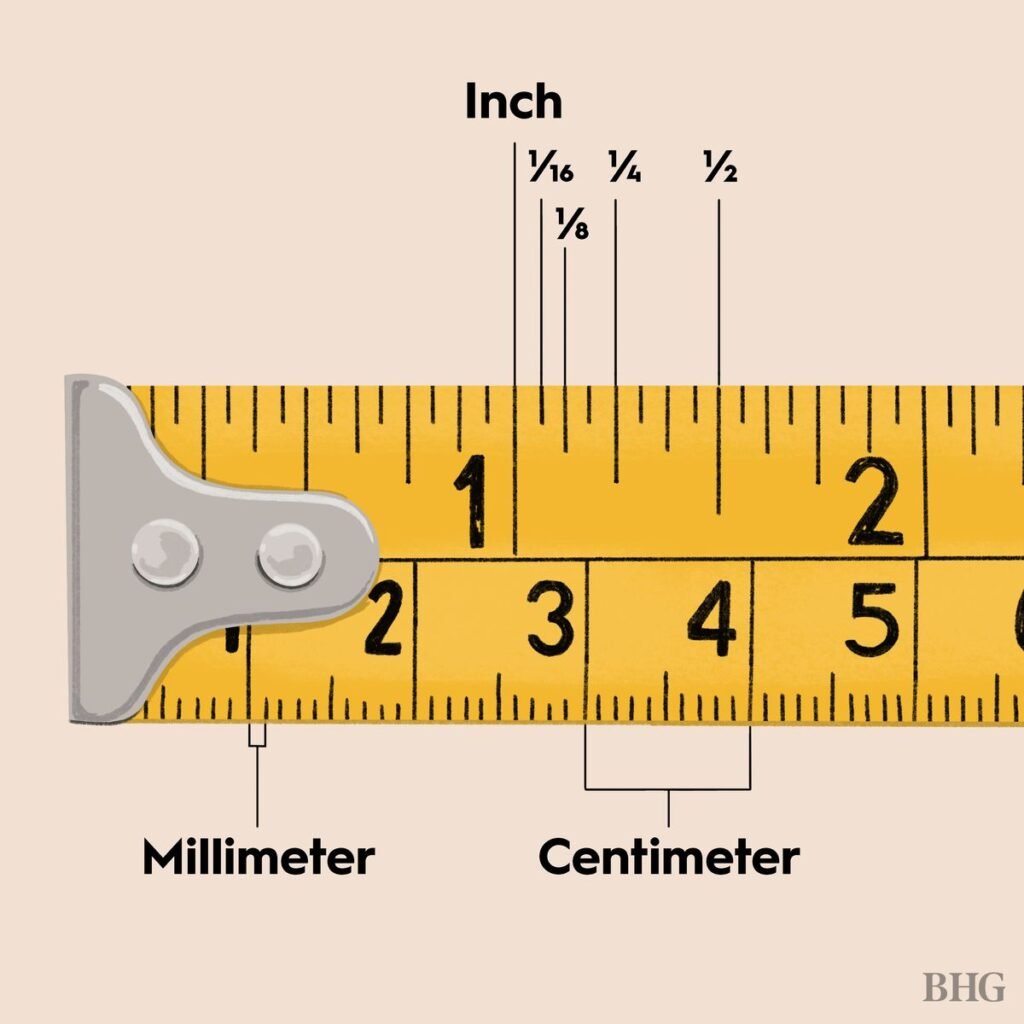
- 1 inch = 2.54 centimeters (exact result)
- 1 foot = 30.48 centimeters
- 1 meter = 39.37 inches
- 1 kilometer = 0.621 miles
Write these on a sticky note and put it somewhere you’ll see it every day. You’ll have it down within a week.
Your biggest weapon is that 2.54 centimeters per inch conversion. It’s an officially defined amount and never moves, the ideal anchor for calculations. For a comprehensive guide to all measurement conversions, visit measurementconversionguide.online.
Rule 2: Pick the Right Direction for Your Conversion
Multiplying is the way of converting bigger units to smaller units. When we go from a smaller unit to the larger one, we DIVIDE. This simple rule will help you avoid making the most common mistakes with conversions.
Run that one through your own logic machine: If you’re reducing some big thing to pieces in inches, of course there will be more small pieces. There are 12 inches in one foot so you multiply by 12.
On the other hand, when you convert inches to feet, you are taking small units and regrouping them into larger ones. You divide by 12 because there are 12 inches in a foot.
Quick Reference:
- Meters to centimeters? Multiply (going smaller)
- Inches to feet? Divide (going larger)
- Kilometers to meters? Multiply (going smaller)
- Centimeters to meters? Divide (going larger)
This thought pattern prevents you from having to completely memorize the individual formulas for each type of conversion.
Rule 3: Chain Method for More Complex Conversions
There are also times when you want to convert to units that are not directly related. The chain is a method of breaking down complex conversions into more manageable parts.
For example, you want to convert yards into centimeters. There’s no simple conversion factor everyone knows. Instead, concatenate ones you do know:
Example: 5 yards to centimeters
- Yards to feet: 5 yards × 3 = 15 feet
- Feet to inches: 15 × 12 = 180 inches
- Inches to centimeters: 180 × 2.54 = 457.2 cm
These are straightforward conversions with a standard approach. By connecting them, you solve hard problems without hard math.
This technique can be applied to any conversion path. Map where your starting unit can go to and where your ending unit is, then do it one link at a time.
Rule 4: Round to Get Practical Accuracy
Perfect precision isn’t always necessary. Strategic rounding speeds up the conversion process while still maintaining a useful degree of accuracy for practical applications.
These simplified conversions are excellent for ordinary use:
- 1 inch ≈ 2.5 cm (not 2.54)
- 1 meter ≈ 3.3 feet
- 1 kilometer ≈ 0.6 mile (rather than 0.621)
And turn to exact conversions when precision is called for: a construction project, scientific measurements, legal documents. For estimates use rough conversions: shopping, travel plans or easy calculations in your head.
Rounding Guidelines:
| Decimal Places | Example | Use Case |
|---|---|---|
| 0-1 | 5 meters ≈ 16 feet | Rough estimates |
| 1-2 | 10 inches = 25.4 cm | Reasonable approximations |
| 2-3 | 15.5 ft = 472.44 cm | Precise calculations |
You should round your final answer, not until at the end. Over-rounding too early introduces errors into your calculation.
Rule 5: Make Sure With the Reverse Conversion
The reciprocal conversion approach traps errors before they create trouble. Convert your answer back to the original unit after doing the conversion. If you get your starting number, then obviously the conversion is correct.
Example verification:
Original: 50 centimeters to inches
50 ÷ 2.54 = 19.69 inches
Reverse check: 19.69 × 2.54 = 50.01 cm ✓
The slight difference (50.01 instead of exactly 50) just comes from rounding in the intermediate step. This verifies that you have converted the value correctly.
This trick takes seconds, but it saves from errors costing hundreds of dollars. It’s especially useful when using important measurements, such as medication dosages, construction materials or recipe conversions.
If your back-end conversion isn’t what you expected, then that means one of a few things: you used the wrong conversion factor; you multiplied (or divided) when you should have divided (or multiplied), or you committed some number-crunching mistake.
Rule 6: Make a Personal Reference Sheet of Conversions
There is only so much room in your brain for numbers. Rather than learning everything off by heart, create your own conversion quick reference sheet with the conversions that you most often use.
Sample Reference Sheet Sections:
For Home Projects:
- Typical lumber sizes in imperial and metric equivalents
- Paint coverage rates
- Flooring measurements
- Window dimensions
For Cooking:
- Recipe measurement conversions
- Oven temperature conversions
- Ingredient package sizes
For Travel:
- Distance conversions for driving
- Height/weight conversions for forms
- Clothing size conversions
Laminate your sheet or upload a digital copy to your phone. Update it as you realize the ones you’re constantly needing.
Arrange the conversions according to context not alphabetically. All cooking conversions show up in a single place when you’re cooking. This context grouping is what helps you find information more quickly.
Rule 7: Learn Metric Prefixes for Easy Scaling
The allure of the metric system is its steady base 10 structure. Knowledge of prefixes makes it unnecessary to use distinct conversion factors.
Common Metric Prefixes:
| Prefix | Symbol | Meaning | Example |
|---|---|---|---|
| Kilo- | k | × 1,000 | 1 kilometer = 1,000 meters |
| Hecto- | h | × 100 | 100 meters = 1 hectometer |
| Deca- | da | × 10 | 10 meters = 1 decameter |
| Base | m | = 1 | 1 meter = 1 meter |
| Deci- | d | ÷ 10 | 1 decimeter = 0.1 meter |
| Centi- | c | ÷ 100 | 1 centimeter = 0.01 meter |
| Milli- | m | ÷ 1,000 | 1 millimeter = 0.001 meter |
To move between units in the metric system, you can just shift the decimal place. Converting 3.5 kilometers to meters? Move the decimal three places to the right: 3,500 meters.
Converting 450 centimeters to meters? Place the decimal 2 units to the left: 4.5 meters.
For all the metric measures – length, weight or volume – this prefix system works exactly the same. Learn it once, use it everywhere.
Rule 8: Formidable Mental Benchmarks Should Be Easy to Remember
Mental benchmarks allow you to calculate conversions on the fly without a calculator. These real-world references help to develop measurement intuition.
Useful Length Benchmarks:
Inches and Centimeters:
- Thumb width ≈ 1″ ≈ 2.5 cm
- Width of a credit card ≈ 3.375 inches ≈ 8.5 cm
- Length of a dollar bill ≈ 6″ ≈ 15 cm
Feet and Meters:
- Your height ≈ 5-6 feet = 1.5-1.8 meters
- Door height ≈ 7 ft. or 2.1 m
- Parking spot ≈ 18 feet ≈ 5.5 meters
Miles and Kilometers:
- 5K run ≈ 3.1 miles
- 10K run ≈ 6.2 miles
- Marathon ≈ 26.2 miles ≈ approx. 42 kilometers
Build your personal benchmark collection. Try to measure personal objects in both systems. After a while, you’ll develop a kind of instinct for whether a measurement “makes sense.”
Rule 9: Take Precision Requirements into Account in Different Areas
There is no single level of precision, it depends on the context. Using too much precision just takes longer, and if you’re not precise enough, you run into issues.
Precision Requirements by Field:
Construction and Carpentry:
- Standard: ±1/16 inch (±1.6 mm)
- Finished: ±1/32 inch (±0.8 mm)
- Measure twice, cut once
Medical and Pharmaceutical:
- Exact conversions mandatory
- No rounding during dosage calculations
- Lives depend on accuracy
Athletic Performance:
- Track and field: ±1 mm
- Swimming: ±0.01 seconds/meters
- Official records require certified measurements
Everyday Shopping:
- Furniture: ±1 inch (±25 mm) is often acceptable
- Clothing: Standard size ranges
- Rough estimates often sufficient
Calibrate your precision for your purpose. Over-precision complicates simple tasks. Under-precision leads to costly errors in important applications.
Rule 10: Use Technology, While Respecting the Math
In the digital age, conversions are immediate and precise. But knowing the math makes sure you catch errors and remain independent of equipment.
Best Digital Conversion Tools:
- Google search (search “5 feet how many meters”)
- Smartphone calculator apps
- Dedicated conversion apps
- Online conversion websites (such as NIST)
- Spreadsheet formulas
The benefits of technology are speed, accuracy with high numbers and the ability to deal with more complex conversions. You spare yourself from arithmetic errors and gain time while converting.
But technology has limitations. Batteries run out, internet connections drop and apps break. Knowing these principles of conversions means you’re not powerless when your phone is nowhere to be found.
Balanced Approach:
- Technology – For more complicated or exact conversions
- Understand the math behind conversions
- Confirm technology findings for crucial measures
- Keep mental math for getting an estimate
Technology is great for converting 1,847 millimeters into feet and inches. Back of the envelope math is enough to know whether a 2 meter table fits through a 7-foot door.
Building Your Conversion Confidence
With these ten rules, length conversions go from difficult challenge to basic easy task. Begin by memorizing the simple conversion factors and selecting the right direction. Proceed through chain conversions and controlled rounding.
Practice these rules daily with actual measurements around you. Convert the proportions of your phone, desk, room or car. Every single one of these is a lesson you’re learning that you can take with you and use in your journey or life path.
Remember that accuracy requirements vary. Rough estimates do not need to be as precise as professional work. To the extent possible, dial in your effort.
The reverse conversion validation can spot errors before they become relevant. This one practice probably eliminates more errors than anything else.
Design your own personalized reference books for life. Don’t memorize conversions if you use them infrequently — look them up efficiently!
Finally, establish mental benchmarks that will link measurements to real-world objects. These informal references concretize and humanize abstract numbers.
There’s nothing mysterious — or anything more useful, really — about length conversions. Armed with the ten rules above, you should be able to convert away without feeling lost.
Frequently Asked Questions
How to remember metric conversions?
Consider “King Henry Died By Drinking Chocolate Milk” for kilo, hecto, deca, base, deci, centi and milli. The metric system is tens-based, so just shift the decimal point in or out as appropriate to cross over the prefix.
Why are we still dealing with two separate systems of measurement?
In the United States, the imperial system survives mainly due to historical reasons while people preferred the metric system because it’s easier. Both systems exist because it costs billions of dollars to change an entire country’s infrastructure, the road signs it uses and the driving habits its people have formed.
How precise must I be in my conversions?
It depends on your purpose. Shopping estimates can be loose (±10 percent), but construction requires a margin of error that’s measured in 1/16-inch increments. In medical and scientific work everything goes to the required number of decimal places without any round-off.
Is it possible for me to convert measurements in my head?
Yes, for common conversions. Remember that 1 inch is roughly equal to 2.5 cm, a meter is about equal to 3.3 feet and a mile is approximately 1.6 kilometers. You can use these to estimate roughly in your head.
What is the one conversion you should memorize?
The 2.54 cm per inch conversion. It’s precise, officially defined and sits between imperial and metric systems. All other conversions derive from it.
How can I not get confused when to multiply and divide?
Recall: when working from larger units to smaller, you multiply (1 foot decomposes into 12 inches). So you will divide as you go from smaller to larger (12 inches equal 1 foot).
Are online converters always accurate?
The vast majority are reliable, but mistakes do occur. Verify all key conversions from the reverse conversion perspective. Convert the answer back to your original unit in order to check if the result is valid.
So, if I want to learn both units, how do I?
If you travel internationally, shop online across borders or work in science, engineering or medicine, it is fantastically useful to understand both systems. But even in everyday situations just a little knowledge goes a long way to avoiding confusion and error.